
India opened its medal account at the Glasgow 2026 Commonwealth Games through Jhandu Kumar’s bronze in para powerlifting, while Indian boxers made a strong start and swimmers advanced. Reporting from Glasgow, Anjana Sasi analyses India’s opening day and the challenges ahead.
Glasgow: As the first full day of competition began on Friday, the atmosphere inside the SEC Armadillo and surrounding venues was one of tension and quiet expectation. The Glasgow 2026 programme, limited to ten sports and running until August 2, has already reshaped the competitive landscape. India, with a smaller contingent of approximately 126 athletes, arrived knowing that the medal tally would differ significantly from Birmingham four years ago. Traditional strengths in several disciplines are missing; the focus has shifted to boxing, weightlifting, athletics, gymnastics, para powerlifting and a few other events.
Friday delivered the first tangible return. In the men’s heavyweight para powerlifting event, Jhandu Kumar produced a composed, progressive performance that secured bronze and opened India’s account. Beginning with a solid 181 kg lift, he improved to 190 kg on his second attempt, registering 130.9 points. A final attempt at 196 kg was unsuccessful, yet the second lift proved decisive, holding off the challenge from the later group. The technical execution was clean, the bar path stable, and the timing of the successful second lift shrewd under pressure. It was a podium finish earned through precise load management rather than raw spectacle, providing the Indian camp with an early psychological boost.
Elsewhere in the same discipline, the lightweight category proved less forgiving. Ashok Kumar Malik finished fourth and Parmjeet Kumar seventh, both competitive but short of the podium. The narrow margins underlined the depth of the field and the unforgiving nature of the points system that governs para powerlifting at this level.
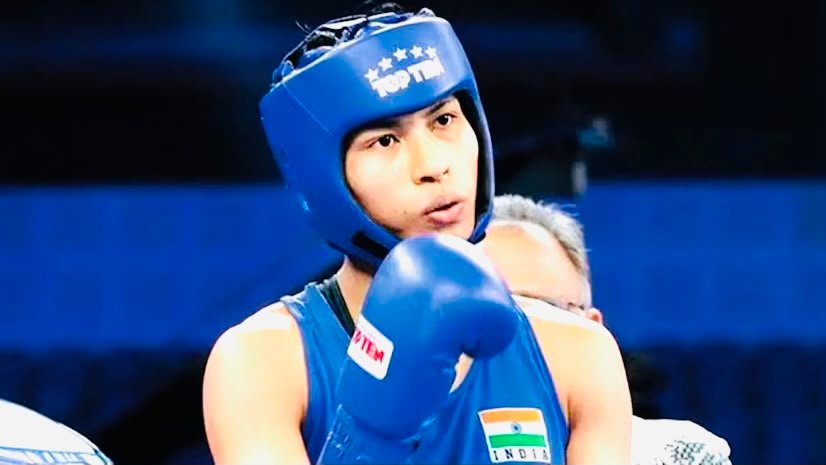
Boxing offered early momentum of a different kind. Jadumani Singh Mandengbam opened India’s campaign in the men’s 55 kg category with a dominant 5-0 unanimous decision over Scotland’s Aaron Cullen. From the opening bell, he dictated the range and tempo, using a sharp jab to disrupt the home boxer’s rhythm while maintaining control across all three rounds. The unanimous verdict reflected tactical discipline rather than mere aggression. Meanwhile, Lovlina Borgohain’s path in the women’s 75 kg category has already guaranteed her at least a bronze medal. Drawn with a bye into the semi-finals, she enters the later stages with the security of a podium place already assured—a structural advantage that removes early-round risk and allows focused preparation for the decisive bouts.
Swimming produced qualifications rather than medals. Srihari Nataraj advanced from the men’s 50 m backstroke heats into the semi-finals, while para-swimmer RVVBK Budigina progressed from the men’s 100 m freestyle S13 heats. These results keep Indian hopes alive in the pool without yet translating into podium contention.
The men’s artistic gymnastics team competition on Friday offered limited reward. The Indian quartet of Tapeshwarnath Das, Swathish KP, Tapan Mohanty and Yogeshwar Singh completed the team and individual qualification rounds without mounting a serious challenge for medals, reflecting the gap that still exists between India and the stronger Commonwealth programmes in the apparatus and team disciplines.
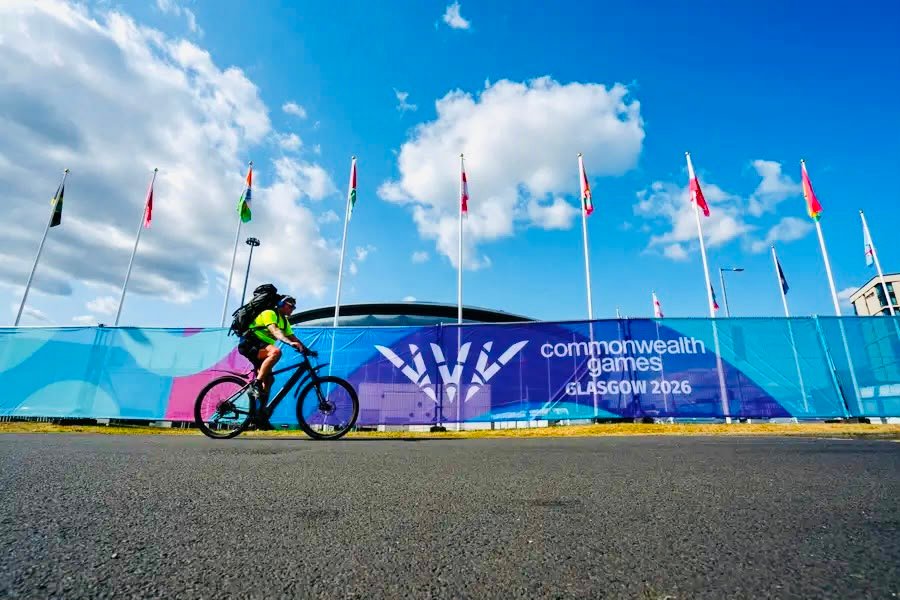
Looking Ahead to Saturday, July 25
Saturday’s programme shifts the emphasis towards progression and early-round consolidation rather than immediate medal opportunities.
In artistic gymnastics, the women’s team of Pranati Nayak, Nishka Agarwal, Eshita Rewale and Protistha Samanta will contest both the team final and the individual qualification rounds. Consistency across all four apparatuses will be critical, and any individual score that reaches the all-around or apparatus final thresholds would represent meaningful progress.
Boxing continues with Sachin Siwach taking on Canada’s Keoma Al-Ahmadieh in the men’s 60 kg round of 32. A controlled, high-tempo approach similar to Jadumani’s opening performance will be required to navigate the early rounds.
In the pool, Dhakshan Shashikumar and Aryan Nehra compete in the men’s 400 m freestyle heats, where qualification for the final remains the realistic objective.
Lawn bowls sees the women’s pairs of Rupa Rani Tirkey and Pinki Singh face Tonga in sectional play, while Putul Sonowal takes on Malaysia’s Izzat Shameer Dzulkeple in the men’s singles. Both contests form part of the longer sectional phase, where point accumulation and tactical bowling accuracy matter more than any single result.
India’s women’s 3×3 wheelchair basketball team opens its campaign against Wales in Pool B. Early cohesion and defensive structure will be crucial if they are to build momentum through the group stage.
Medal Expectations in Context
The reduced programme in Glasgow has already tempered national expectations. With several of India’s historically productive sports absent, a realistic overall target sits in the mid-thirties to low-forties rather than a repeat of the 61 medals secured in 2022. Boxing, weightlifting, athletics and selected para events remain the primary sources of gold and multiple medals.
Lovlina’s guaranteed podium finish, combined with the early bronze from para powerlifting, provides a solid foundation. The coming days will test whether the boxing contingent can convert early momentum into a deeper medal haul and whether the gymnasts and swimmers can produce individual breakthroughs from the qualification rounds.
From the vantage point of the first full day of competition, India has begun with measured efficiency rather than explosive dominance. The bronze from Jhandu Kumar and the structural security surrounding Lovlina Borgohain provide early validation. Saturday’s programme will reveal whether that foundation can be expanded through the next phase of the competition. The Games remain young, the margins tight, and the analytical focus now turns to execution under the growing weight of expectation.


