

Startup Frontier 1.0 brings government, industry, academia and investors together; 1,500 students to receive industry-certified data centre training
Maharashtra is seeking to take its startup and innovation ecosystem beyond major cities and into every district and educational institution, while 1,500 diploma and engineering students will receive industry-certified training in data centre infrastructure and operations.
Mumbai: Maharashtra’s next phase of startup growth must focus not merely on increasing the number of enterprises but on building an innovation ecosystem that reaches every district, educational institution and aspiring entrepreneur, Additional Chief Secretary Manisha Verma has said. Speaking at Startup Frontier 1.0, Verma said innovation becomes meaningful only when it contributes to ease of doing business and ease of living. The event was presided over by Maharashtra Governor and Chancellor of Ratan Tata Maharashtra State Skills University Jishnu Dev Varma. Maharashtra Minister for Skill Development, Employment, Entrepreneurship and Innovation Mangal Prabhat Lodha also participated in the programme.
Startup Frontier 1.0 brought together founders, investors, industry leaders, mentors, representatives of academia and government, and students on a common platform. Verma complimented Dr Apoorva Palkar, Vice Chancellor of Ratan Tata Maharashtra State Skills University, and her team for curating the event in collaboration with the Maharashtra State Innovation Society.
“Maharashtra is already India’s leading startup ecosystem, with nearly 36,000 DPIIT-recognised startups—the highest in the country. Leadership, however, brings responsibility,” Verma said. She added that the state’s objective should not remain limited to creating more startups. The larger goal, she said, must be to build an innovation ecosystem capable of reaching every district, every educational institution and every aspiring entrepreneur. Verma emphasised that startup development cannot be pursued in isolation from skilling, employment generation and institutional collaboration.
Under Viksit Maharashtra 2047 and the Maharashtra Startup, Entrepreneurship and Innovation Policy 2025, the state is adopting what she described as an ecosystem-based approach. The model seeks to bring startups, incubators, mentors, domain experts, investors, academia and government together, allowing each stakeholder to contribute to the development of entrepreneurship and innovation.
According to Verma, the convergence of skilling, innovation and entrepreneurship can create not only successful startups but also quality employment and sustainable economic growth.
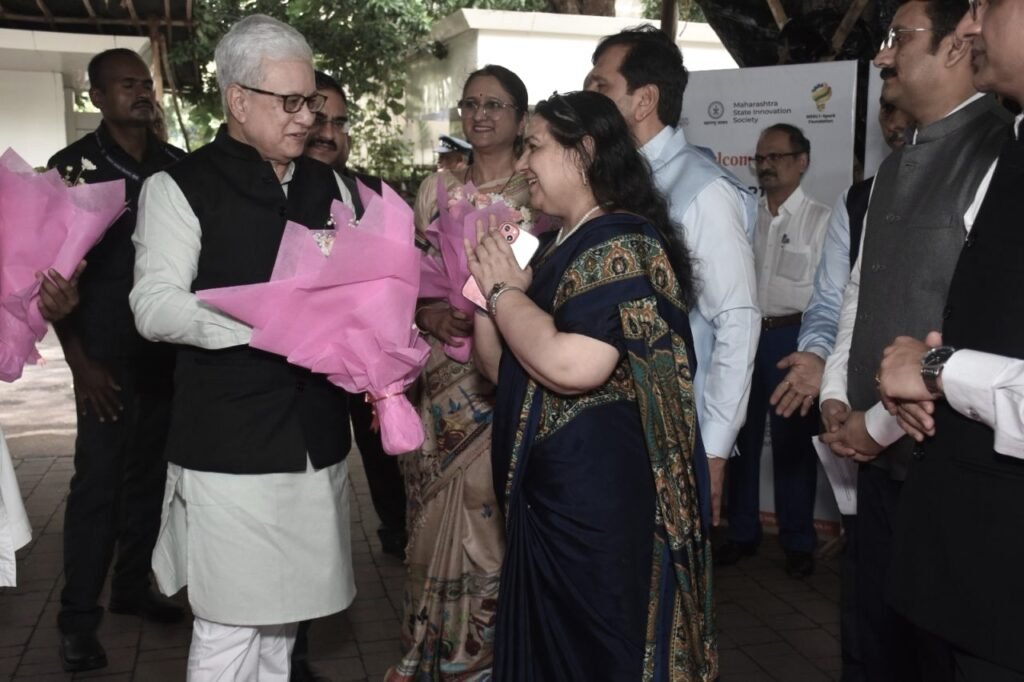
The event also marked the announcement of two significant initiatives aimed at strengthening industry-linked education and preparing students for emerging sectors. Through a partnership with IIT Madras Pravartak, 1,500 diploma and engineering students will receive industry-certified training in data centre infrastructure and operations. The training programme will be fully supported through corporate social responsibility funding. The initiative is intended to provide students with industry-relevant skills in a sector that requires specialised technical knowledge and trained personnel.
The event also strengthened industry-academia collaboration through the Medical Laboratory Technology Lab developed with Metropolis Healthcare. The partnership reflects the broader emphasis on linking educational institutions with industry expertise so that students can receive practical exposure alongside academic training.
Governor Jishnu Dev Varma also virtually inaugurated the HP Creative Garage Labs during the programme. The laboratories will expand students’ access to future-ready skills in areas such as artificial intelligence, cybersecurity, blockchain, gaming and programming. These initiatives formed part of the event’s larger objective of connecting students and educational institutions with industry, technology, entrepreneurship and innovation networks.
Verma’s address placed particular emphasis on moving Maharashtra’s startup ecosystem beyond its existing centres and ensuring that opportunities are available across regions and institutions. While the state already leads the country in the number of DPIIT-recognised startups, she indicated that the next test of leadership would be the ability to make innovation more inclusive and geographically accessible. The focus, therefore, is expected to shift from startup numbers alone towards the quality, reach and economic impact of the ecosystem supporting entrepreneurs.
The government’s approach under Viksit Maharashtra 2047 and the Maharashtra Startup, Entrepreneurship and Innovation Policy 2025 seeks to align skilling with entrepreneurship while bringing academic institutions, investors, mentors and government agencies into a coordinated framework. Such collaboration, Verma said, can help Maharashtra create an environment where innovation results in practical improvements for businesses and citizens. “Maharashtra has the talent, the ambition and the ecosystem to lead India’s next chapter of innovation,” she said.


