

Part VI of VI | India’s Energy Security Series
Managing vulnerability is not the same as eliminating it.
Mumbai: Over the past few years, India has demonstrated something many analysts once doubted — the ability to navigate major global energy disruptions without descending into chaos. Despite wars, sanctions, shipping disruptions and geopolitical tensions, the country largely avoided severe fuel shortages or widespread panic. Petrol pumps remained functional. LPG supply chains continued operating. Refineries adapted. Crude sourcing patterns shifted rapidly. India absorbed shocks that many believed would destabilise energy-importing economies. This was not accidental.
It reflected a combination of strategic flexibility, diplomatic balancing, infrastructure expansion and crisis management capability. During the recent tensions in West Asia, Union Petroleum Minister Hardeep Singh Puri stated that India possessed around 60 days of crude reserves, 60 days of LNG availability and 45 days of LPG reserves. He also pointed to the rapid increase in domestic LPG production capacity during the crisis period. The message from the government was clear: India is no longer as vulnerable as it once was. To a significant extent, that claim is valid.
India today is far better prepared than it was two decades ago. Strategic petroleum reserves have been created. Refining capacity has expanded dramatically. Import diversification has increased. Russian crude purchases demonstrated policy flexibility. LNG infrastructure has grown. Renewable energy capacity has expanded rapidly. Solar power generation has scaled at globally significant levels. India’s energy system, despite its weaknesses, has become more resilient. But resilience and sovereignty are not identical concepts. This distinction may define the next phase of India’s energy journey.
Resilience means the ability to withstand shocks. Sovereignty means reducing dependence on external systems altogether. India has improved first. The second remains unfinished and this is where the debate becomes more complex.
For a country of India’s size and economic ambitions, complete energy independence may not be realistic in the foreseeable future. Even some of the world’s largest economies continue to rely on global energy trade networks in different ways. The modern energy system itself is deeply interconnected. The real question therefore is not whether India can eliminate imports completely. The real question is whether India can gradually reduce the strategic vulnerability created by those imports. That requires moving beyond short-term crisis management into long-term structural transformation and that transformation must happen simultaneously across multiple sectors.
The first challenge remains domestic exploration. India cannot realistically reduce dependence if oil and gas exploration continues to stagnate. The decline of mature fields, limited major discoveries, regulatory complexity and investment uncertainty continue to affect upstream expansion. Without stronger domestic production, import dependence will remain structurally embedded. The second challenge is natural gas infrastructure. India wants to increase the share of gas in its energy mix, but higher gas consumption without parallel domestic production growth could simply shift vulnerability from oil to LNG imports. This means pipeline infrastructure, storage capacity, pricing clarity and exploration policy must evolve together.
Third, renewable energy expansion must continue at scale. India has already emerged as one of the world’s major solar power markets. But renewable growth now faces a second-generation challenge — storage. Solar and wind expansion alone cannot ensure energy stability without battery systems, grid modernisation and backup infrastructure. The next stage of India’s energy transition will depend not just on generating renewable energy, but on storing and distributing it reliably.
Fourth, nuclear energy may re-enter strategic discussion more seriously over the coming decade. Globally, several countries are reconsidering nuclear power not merely for climate reasons, but for energy security reasons. For India, nuclear energy presents both opportunity and political sensitivity. But as energy demand continues rising, dismissing nuclear power entirely may become increasingly difficult.
Fifth, transportation transformation will matter enormously. India imports vast amounts of crude not only for industry, but also for mobility. Electric vehicles, public transportation systems, ethanol blending and alternative fuels therefore become strategic tools, not just environmental initiatives. Every reduction in fuel imports improves long-term resilience.
Sixth, efficiency itself is becoming strategic. The cheapest energy is often the energy not consumed. Smarter industrial systems, energy-efficient buildings, improved logistics and lower transmission losses can significantly reduce future pressure on imports. This broader shift requires India to think about energy not merely as a commodity issue, but as a national capability issue.
Because energy today influences everything: economic growth, inflation, military preparedness, digital infrastructure, industrial competitiveness and geopolitical leverage.
In many ways, energy security has become the foundation beneath modern sovereignty itself. This is why the next phase of India’s rise may depend less on headline GDP growth and more on how sustainably that growth is powered.
If India’s future economy remains overwhelmingly dependent on external hydrocarbons, then every geopolitical disruption will continue carrying strategic risk. But if India can gradually diversify, modernise and strengthen domestic capability, then vulnerability itself can begin shrinking over time. That transition will not happen quickly. Nor will it happen through slogans alone. It will require long-term policy continuity, technological investment, infrastructure modernisation, regulatory reform and strategic patience across decades.
But the direction matters. India may not achieve complete energy independence in the near future. Yet reducing dependence itself can become a form of strategic power and perhaps that is the more realistic definition of energy sovereignty in the modern world — not isolation from global systems, but the ability to withstand them without fear.
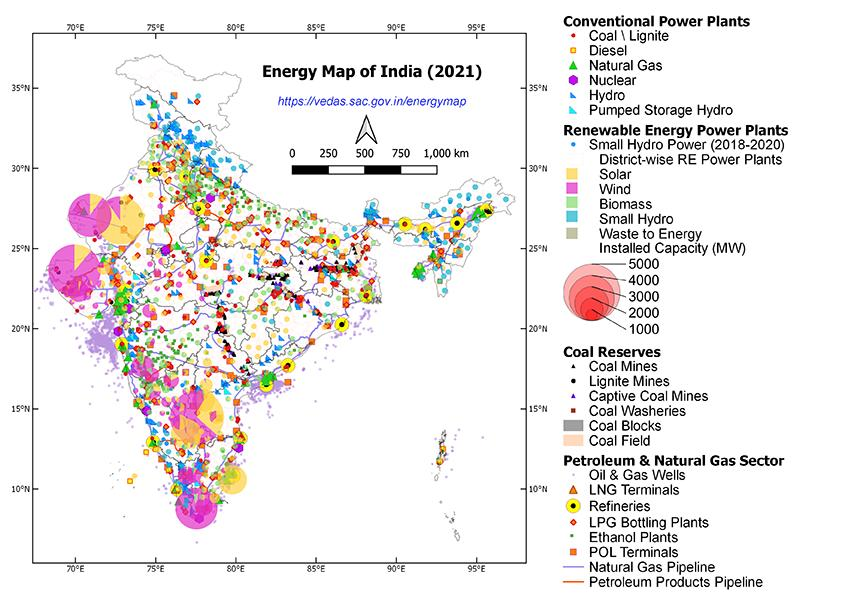
That is the larger lesson emerging from India’s energy paradox. The country’s future will not be determined only by how much energy it consumes. It may ultimately be determined by how intelligently it secures it.
Series Conclusion
India’s Energy Security Series | Parts I–VI
By Vivek Bhavsar
Author Signature
Vivek Bhavsar is Editor-in-Chief of TheNews21. He writes on power, policy and the structural risks shaping India’s economic and strategic future.


