

Amid rising tensions in the Middle East, US President Donald Trump has delivered a blunt message to countries facing fuel shortages due to disruptions in the Strait of Hormuz.
With nearly 20% of global oil and gas supply passing through this critical route, the situation has worsened after Iran’s retaliatory strikes following US-Israeli military action. Reports suggest that oil and gas vessels in the region have been targeted, intensifying the global energy crisis.
“Build Courage or Buy from US” — Trump’s Advice
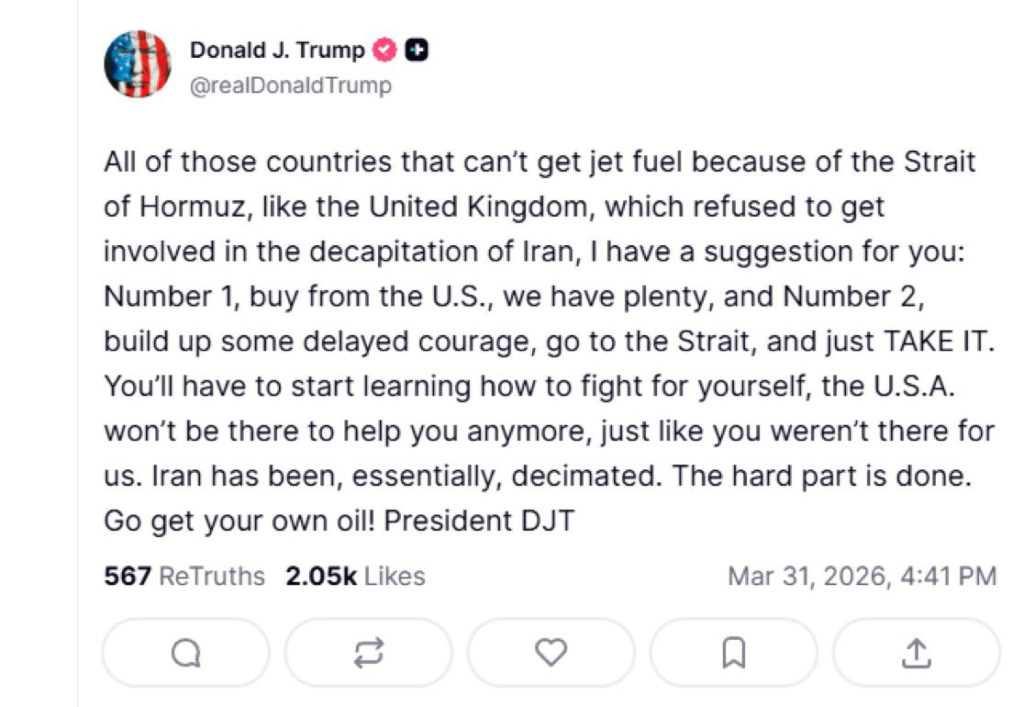
In a post on Truth Social, Trump suggested that affected countries, including the United Kingdom, should either purchase fuel from the United States or take independent action to secure access to the Strait.
He said, “All of those countries that can’t get jet fuel because of the Strait of Hormuz, like the United Kingdom, I have a suggestion for you, number one buy from the US we have plenty and number two build up some delayed courage go to the Strait and just take it, you will have to start learning how to fight for yourself the USA will not be there to help you anymore, go get your own oil.”
Threat to ‘Obliterate’ Iran’s Energy Infrastructure
Earlier, Trump issued a sharp warning to Iran, stating that the US could destroy key energy infrastructure if tensions escalate further.
He warned that facilities such as power plants, oil wells, and the strategically crucial Kharg Island could be targeted if Tehran fails to reach an agreement with Washington.
Trump suggested that the US has so far avoided attacking these assets but may take decisive action if the Strait of Hormuz is not reopened for normal operations.
Why Strait of Hormuz Matters
The Strait of Hormuz is one of the world’s most important energy corridors.
- Handles around 20% of global oil and gas trade
- Key route for Middle East exports
- Any disruption directly impacts global fuel prices
The current instability has already led to concerns over supply shortages and rising energy costs worldwide.
Iran Rejects Talks with US
Iran has denied engaging in any direct negotiations with the United States.
Officials stated that they have only received what they described as “unreasonable demands” through intermediaries and rejected claims of mediation efforts. While Iran has expressed willingness to end the conflict, it maintains that the US was responsible for initiating the escalation.


