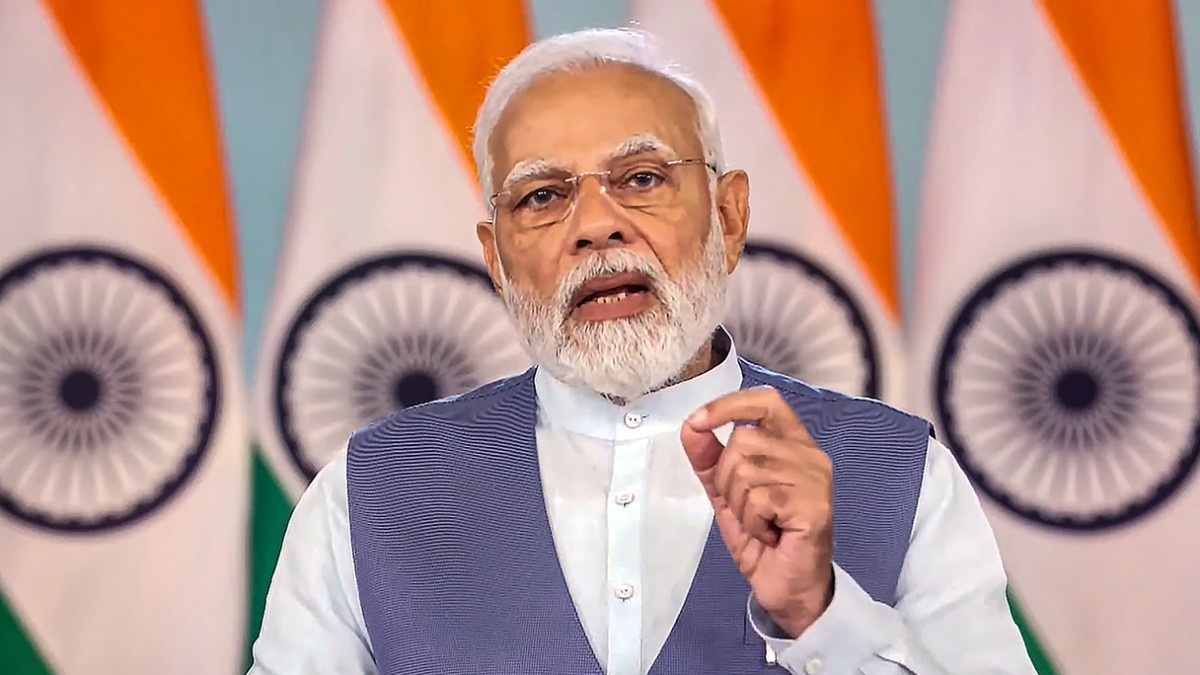
Prime Minister Narendra Modi on Tuesday positioned manufacturing, logistics and micro, small and medium enterprises (MSMEs) as the driving forces of India’s next phase of economic expansion.
He was addressing the second post-Budget webinar organised by the Government of India as part of stakeholder consultations following the presentation of the Union Budget 2026–27. The webinar series is coordinated by key economic ministries to discuss effective implementation of Budget announcements.
Webinar Focus and Government Roadmap
During his address, the Prime Minister said strengthening manufacturing capacity and improving logistics systems are essential objectives outlined in the Union Budget presented by the Government of India. He stated that India aims to become a dependable production hub as global companies seek stable and diversified supply chains.
According to the Prime Minister, enhancing domestic production capabilities and empowering MSMEs are stated priorities under the government’s economic strategy.
MSMEs and Logistics Highlighted as Core Sectors
PM Modi described the MSME sector as the backbone of India’s industrial ecosystem. He emphasised that improving connectivity, reducing logistics costs and modernising infrastructure are key policy goals under the current Budget framework.
He urged industry leaders to adopt advanced technologies and align production standards with international benchmarks. These remarks were framed as part of the government’s stated objective to increase India’s competitiveness in global markets.
Push for Research and Quality Standards
The Prime Minister called on businesses to invest more in research and development, saying innovation will be critical in higher-value manufacturing segments.
“The quality of our products must match global standards,” he said, adding that consistent quality improvements are necessary for Indian goods to expand their presence abroad.
Free Trade Agreements and Market Access
Referring to India’s trade policy, the Prime Minister cited ongoing and concluded free trade agreements. According to official releases from the Ministry of Commerce and Industry, such agreements are intended to provide Indian exporters improved market access and lower tariff barriers.
He encouraged domestic industries to utilise these trade arrangements to expand exports and strengthen supply chain partnerships.
Record Capital Expenditure in Union Budget
Highlighting fiscal measures, PM Modi noted that the Union Budget has allocated a record capital expenditure for infrastructure and logistics. The Government of India has formally presented this allocation as part of its strategy to improve highways, rail networks, ports and digital infrastructure.
The Prime Minister described these investments as intended to strengthen supply chains and improve economic efficiency, framing them as policy objectives rather than guaranteed outcomes.
India-Canada Trade Framework and Uranium Agreement
In a related diplomatic development, PM Modi held discussions with Canadian Prime Minister Mark Carney of Canada. Both leaders agreed to advance a bilateral framework targeting an increase in annual trade to USD 50 billion by 2030. Government sources indicated that this trade target builds upon earlier economic engagement initiatives between the two countries.
A USD 2.6 billion uranium supply agreement was also finalised, according to an official joint statement issued after the talks. Under this arrangement, Canada will supply uranium to support India’s civil nuclear energy programme.
Next Steps and Implementation
Government officials stated that follow-up meetings at ministerial and departmental levels will be scheduled to operationalise Budget announcements and bilateral commitments.
The webinar series is expected to continue with sector-specific consultations aimed at translating policy proposals into implementation plans over the coming months.