The remarks came while the court was hearing a petition seeking to make the NOTA option mandatory in all elections — including in constituencies where only a single candidate is contesting.
Bench Questions Impact of NOTA
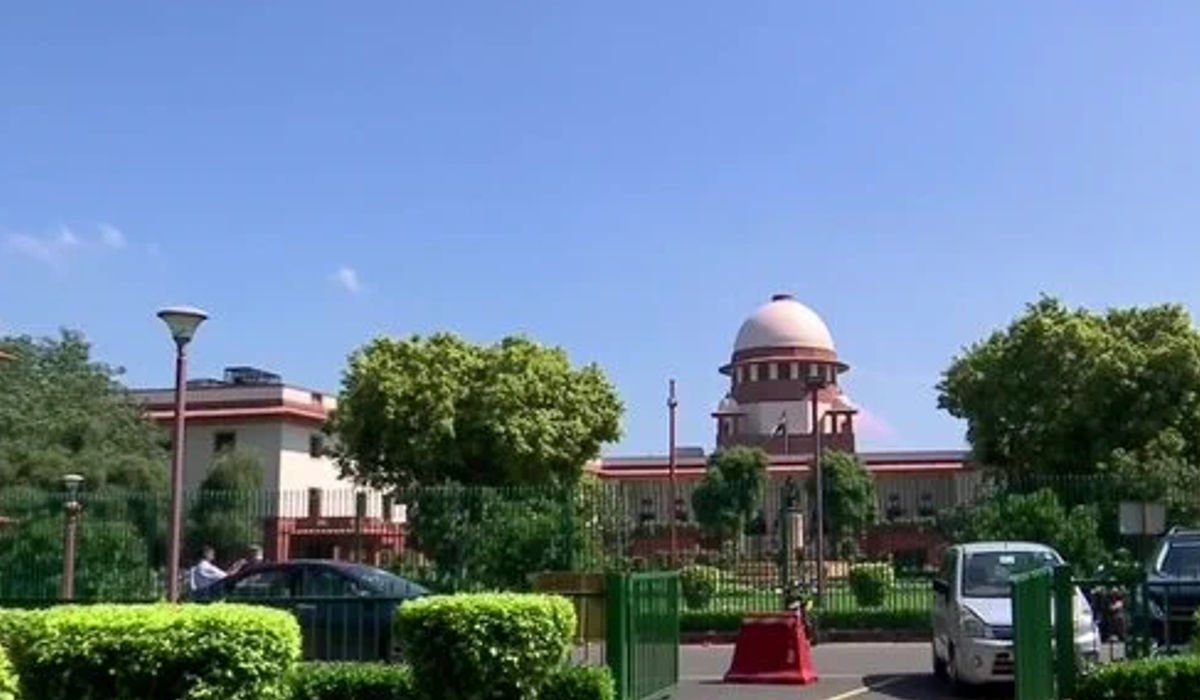
The Supreme Court on Tuesday questioned whether the introduction of the “None of the Above” (NOTA) option has actually improved the quality of elected representatives, while hearing a petition seeking to make NOTA mandatory even in constituencies where only one candidate is contesting.
The matter was heard by a bench of Justice Surya Kant and Justice Joymalya Bagchi. The petition urges the court to expand the scope of NOTA so that voters are not left without a meaningful choice in single-candidate elections.
Court Questions Democratic Impact of NOTA
During the hearing, Justice Joymalya Bagchi raised doubts about whether NOTA has achieved its intended purpose since its introduction in 2013. NOTA was brought into the electoral system following a landmark Supreme Court judgment that upheld voters’ right to reject all candidates.
“Has the quality of elected leaders improved with NOTA?” Justice Bagchi asked, noting that available data suggests educated and economically well-off citizens often vote in lower numbers compared to economically weaker sections.
The bench observed that electoral reform cannot succeed without broader voter participation. It indicated that the mere presence of NOTA may not automatically enhance democratic accountability.
In recent general elections, NOTA has typically secured a small percentage of votes nationally, often ranging between 1% and 2%, though in some constituencies the share has been higher.
Debate on Compulsory Voting
The bench also reflected on voter turnout trends. Justice Surya Kant remarked that there may be a need to explore ways to encourage citizens to vote, though not through punitive measures.
“Sometimes we think we need to issue some kind of compulsory but not harsh mechanism to ensure that people go and vote,” the court observed.
The judges highlighted that in rural areas, voting often takes on a collective and community-driven character, particularly among women. Justice Bagchi noted that women’s participation in elections has consistently increased over the years, describing it as a positive development for Indian democracy.
What the Petition Demands
The petitioner has argued that NOTA should be available even when only one candidate is in the fray. Currently, while NOTA is an option on electronic voting machines, even if it receives the highest number of votes, it does not invalidate the election or trigger a re-poll. The candidate with the highest valid votes is declared elected.
The plea seeks a stronger consequence for NOTA, potentially allowing for re-elections if voters overwhelmingly reject candidates. However, such a move could raise constitutional and administrative questions, including the cost and feasibility of repeated polls.
Election Commission and Expert Views
The Election Commission has previously maintained that NOTA is a symbolic option meant to give voters the right to express disapproval, but it does not carry electoral consequences under current law.
Constitutional experts note that introducing mandatory re-elections based on NOTA outcomes would likely require legislative changes, as election procedures are governed by statutory frameworks. Some legal scholars argue that while expanding NOTA may enhance voter expression, it could also create uncertainty in tightly contested or low-turnout constituencies.
Political analysts remain divided. Supporters believe a stronger NOTA provision could pressure political parties to field better candidates. Critics argue that low turnout among urban and educated voters is a larger issue than the absence of electoral options.
Broader Electoral Reform Implications
The court’s observations have reopened debate on voter participation, civic responsibility, and the real impact of symbolic reforms. The bench indicated that meaningful democratic improvement may depend not only on expanding choices like NOTA, but also on ensuring broader engagement across social groups.
The matter is expected to be heard further, with the court likely to examine both constitutional limits and practical implications before passing any directions.
“Has the quality of elected leaders improved with NOTA?” he asked, adding that data suggests educated and financially well-off citizens tend to vote less compared to economically weaker sections.
Debate on Mandatory Voting Mechanism
The Chief Justice also made an important remark about voter turnout. He indicated that there may be a need to explore mechanisms that encourage citizens to vote — though not through harsh or punitive measures.
“Sometimes we think we need to issue some kind of compulsory but not harsh mechanism to ensure that people go and vote,” the CJI observed.
He pointed out that in rural areas, elections often become community-driven events. Women, in particular, participate enthusiastically, sometimes gathering in groups to cast their votes together.
Justice Bagchi also noted that women’s participation in elections has steadily increased over the years, marking a positive shift in India’s democratic engagement.
What the Petition Seeks
The plea before the court argues that NOTA should be available even in seats where only one candidate is contesting. The petitioner contends that voters must have the option to formally reject a sole candidate instead of being left with no meaningful choice.
Currently, NOTA allows voters to reject all contesting candidates, but even if NOTA receives the highest number of votes, the candidate with the most valid votes still wins. NOTA does not currently trigger re-elections.
Larger Questions on Electoral Reform
The court’s observations have reopened debate on the practical value of NOTA. While it was introduced as a tool to strengthen democratic choice, critics argue it has had limited impact on candidate selection or political accountability.
Legal experts believe the case could lead to a broader discussion on electoral reforms, voter turnout, and civic responsibility in India.
The matter is expected to be heard further, with the court likely to examine constitutional and practical aspects of expanding the scope of NOTA.