Bangladesh’s New Prime Minister Takes Oath: What Tarique Rahman’s BNP Victory Means for India
X: @vivekbhavsar
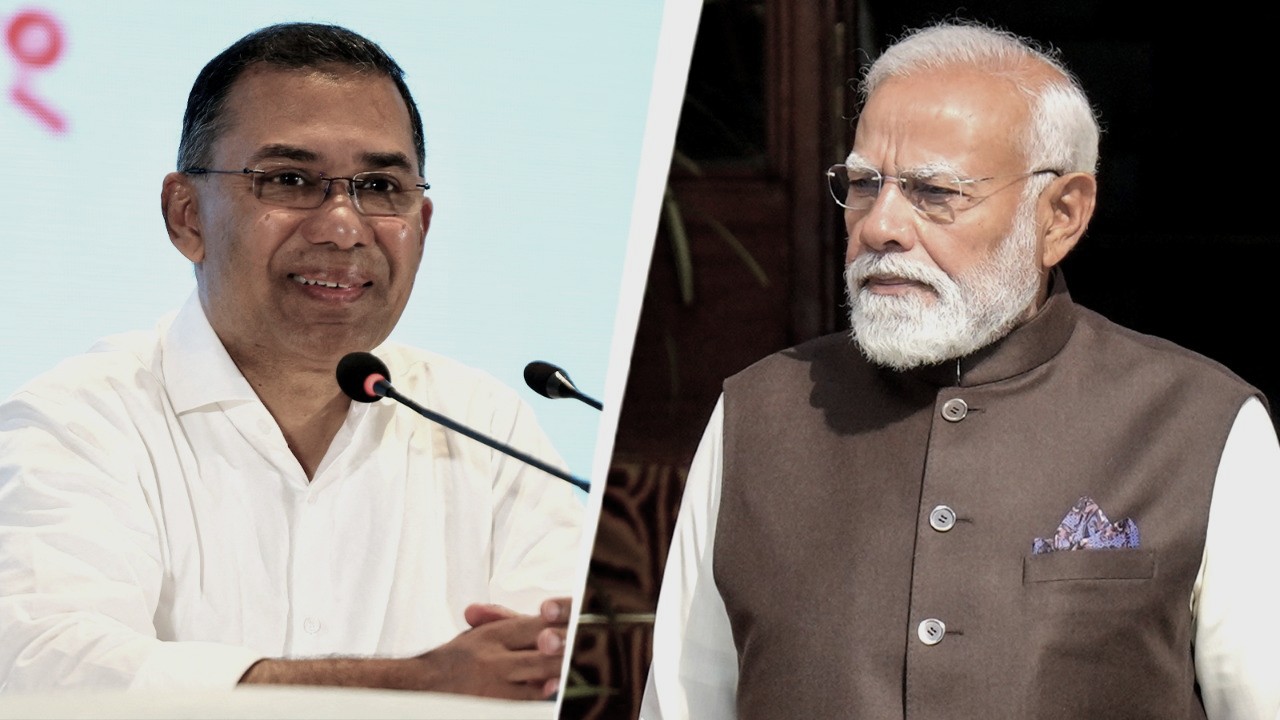
Bangladesh’s political transition enters its decisive phase on February 17, when Tarique Rahman, chairman of the Bangladesh Nationalist Party (BNP), will take oath as Prime Minister of Bangladesh along with his Union Cabinet. The ceremony, to be attended by invited South Asian leaders, formally ends the interim phase that followed the July 2024 upheaval and inaugurates a fully elected government after one of the most consequential elections in the country’s recent history.
The BNP’s sweeping victory in the 13th parliamentary elections was not merely a change of party in power. It was a corrective verdict—shaped by public fatigue with prolonged one-party dominance, anger over political repression, and unease about the rise of religious hard-liners in the post-Hasina vacuum. The electorate rejected both authoritarian continuity and Islamist consolidation, settling instead on a party seen as capable of restoring institutional normalcy without radical rupture.
This mandate is conditional. While the July 2024 student-led movement succeeded in dismantling Sheikh Hasina’s government, it failed to translate street power into a national governing alternative. Youth leadership fragmented, and tactical alliances with Jamaat-e-Islami alienated women, minorities, and urban voters. In that vacuum, the BNP repositioned itself as a centrist, pragmatic option—less as a nostalgic return and more as a stabilising choice.
Also Read: Bangladesh Seeks Interpol Red Notice Against Former PM Sheikh Hasina and 11 Others in Alleged Coup Plot
Tarique Rahman’s assumption of office is therefore both remarkable and constrained. Returning from two decades of exile in December 2025, he now inherits not only power but expectations—particularly around institutional reform, civil liberties, and the implementation of the July Charter that voters endorsed during the election. The oath-taking ceremony symbolises closure; governance will begin under close scrutiny.
For India, the transition in Dhaka introduces recalibration, not rupture.
Prime Minister Narendra Modi’s congratulatory message to the incoming leadership was deliberately restrained. It acknowledged the democratic verdict without personal endorsement, avoided references to Sheikh Hasina’s exile in India, and signalled readiness to engage with the government of the day. This was not diplomatic coldness but strategic discipline. New Delhi is consciously shifting Bangladesh policy from leader-centric warmth to institutional realism.
Also Read: Bangladesh-India Relations in 2025: Shifting Political and Economic Equations
The Hasina–Modi era was defined by deep political trust and swift coordination on security, transit, and connectivity. That phase has ended. What follows will be slower, more transactional, and more cautious—but not adversarial. Geography alone prevents a breakdown. India and Bangladesh share a 4,000-kilometre border, interconnected energy grids, river systems, and transit dependencies that no elected government can ignore.
Externally, the new BNP government will operate within a crowded strategic field. China remains Bangladesh’s largest trading partner and a major investor in infrastructure, energy, and defence manufacturing. The United States has responded with trade concessions aimed at stabilising Bangladesh’s export economy and limiting strategic drift. Dhaka will attempt to balance these relationships without over-reliance on any single partner.
Also Read: TheNews21 Explainer: Trump’s 50% Tariff on India: Trade War Reshapes US–India–Russia–China Relations
The oath-taking on February 17 marks the formal beginning of this balancing act. For India, the challenge is not to reclaim the intimacy of the Hasina years, but to manage continuity without dependency. Governments change in South Asia; geography does not. Bangladesh’s new cabinet will test whether restraint at the ballot box can translate into stability in governance—and whether regional diplomacy can adjust without friction.