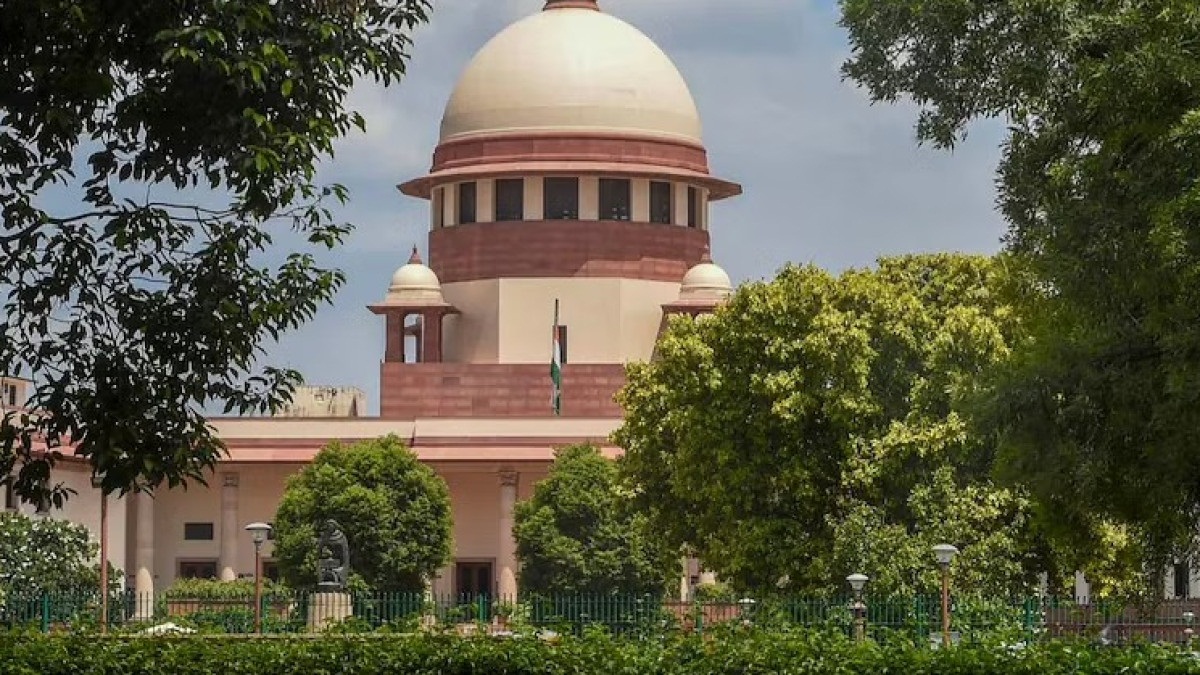
New Delhi: The Supreme Court on Thursday put a temporary halt to the University Grants Commission’s Promotion of Equity in Higher Education Institutions Regulations, 2026, raising serious doubts about their clarity, fairness, and constitutional validity. The top court directed the Central government to revisit and rewrite the guidelines after observing that the current framework could be misused and may unintentionally create divisions within society.
A Bench headed by Chief Justice of India Surya Kant, along with Justice Joymalya Bagchi, said the language of the new regulations appeared unclear at first glance and lacked precise definitions. The court noted that vague provisions often leave room for arbitrary interpretation and warned that such rules could be applied inconsistently across universities.
During the hearing, the Bench remarked that institutions of higher education should serve as spaces that promote harmony, inclusion, and free thought. It cautioned that poorly drafted regulations could instead deepen social fault lines rather than resolve genuine cases of discrimination. The judges also suggested that the Centre consider consulting a panel of experienced constitutional experts and jurists to redesign the policy in a more balanced manner.
The court was examining petitions filed by Mritunjay Tiwari, Vineet Jindal, and Rahul Dewan, who argued that the 2026 regulations unfairly disadvantage students from the general category and introduce overlapping definitions of discrimination. Justice Bagchi questioned the necessity of certain clauses, pointing out that some provisions appeared repetitive and lacked a clear purpose.
Taking note of the concerns, the Supreme Court issued notices to the Union government and the UGC. It ordered that the 2026 regulations will remain suspended until the next hearing on March 19. In the meantime, the earlier UGC regulations framed in 2012 will continue to govern equity-related matters in higher education institutions.