

In Part 3 of Songs of Survival, Parsa Tariq explores Taar Lagun, the invisible spiritual connection that Kashmiri devotees describe while listening to Sufi folk music. Through conversations with singers, listeners and spiritual practitioners, the story examines how music continues to preserve faith, memory and cultural identity across generations.
The evening settles quietly over old Srinagar, carrying the smell of woodsmoke and the coolness of approaching dusk. Follow the sound of a lone harmonium drifting through a half-open window and the bustle of the streets gradually fades away. Inside, a small gathering sits cross-legged on a worn carpet beneath soft yellow light. The singer closes his eyes, inhales deeply, and lets the first note linger in the room. Conversation stops. For the next hour, the worries of everyday life quietly dissolve into the music.
This is not a concert. No tickets are sold, no stage is erected, and no applause follows each verse. Yet for those gathered here, the experience carries a significance that extends far beyond entertainment.
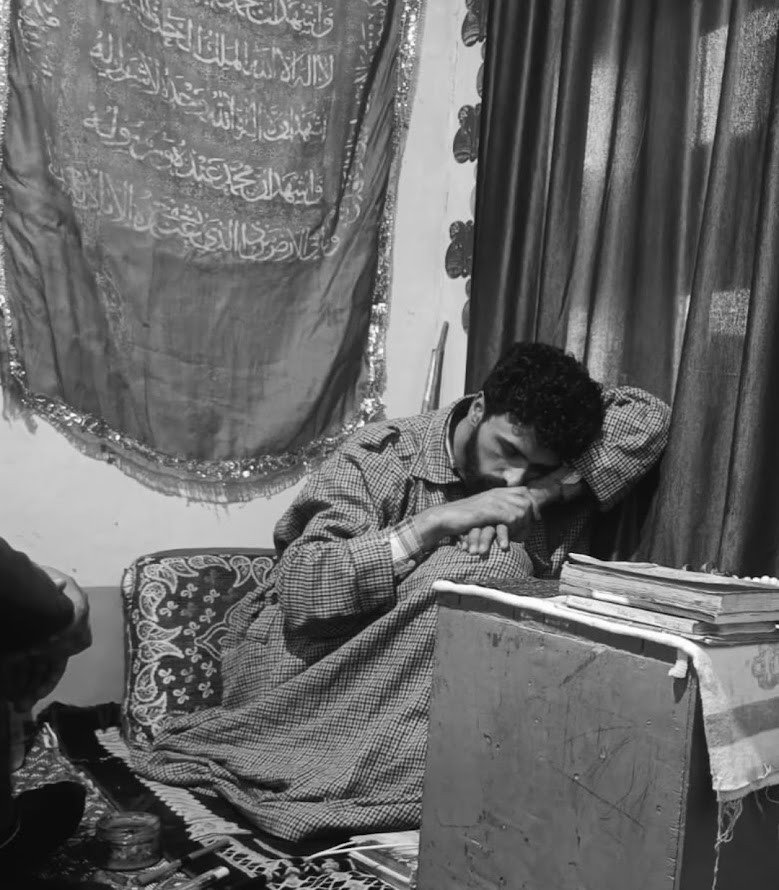
Across Kashmir, devotional music has long occupied a place where spirituality and everyday life meet. Sung in homes, shrines and intimate gatherings, these verses are not merely performed—they are lived. For many Kashmiris, they offer a language through which faith, grief, gratitude and longing can all be expressed together.
During months of reporting across the Valley, one phrase surfaced repeatedly in conversations with singers, listeners and elders: Taar Lagun. Literally meaning “joining a wire”, the expression describes the invisible moment when music creates a direct connection between the human heart and the Divine.
It is not something that can be measured or explained through musical theory. It is something people say they simply feel.
The Anatomy of Taar Lagun
“Taar Lagun is when your heart finally connects,” explains 65-year-old Mohammad Yousuf, a lifelong devotee of Kashmiri Sufi music. “It doesn’t matter whether you are listening or singing. Suddenly you stop hearing the room around you. You forget who is sitting beside you. You are only listening with your soul.”
He pauses before adding quietly,
“It feels as if someone has placed a wire between your heart and Allah.”
The phrase appears repeatedly in conversations across Kashmir, regardless of age or social background. It has no exact equivalent in English because it describes not a musical technique but a spiritual state.
Unlike performances designed to entertain an audience, these devotional gatherings are intended to transform the listener from within. A singer may repeat a single verse several times, allowing its meaning to deepen with each repetition until the words seem almost secondary to the emotion they carry.
The listeners do not judge the singer’s technical perfection. They wait instead for that invisible moment when the music begins to resonate beyond the ears.
A 63-year-old grandmother from Srinagar, who requested anonymity, describes it simply.
“When that feeling comes, you don’t even realise tears are falling. Nobody tells you to cry. Nobody asks you to close your eyes. It just happens.”
For her, that response has little to do with sadness.
“It feels like your heart has finally remembered something it had forgotten.”
The same sentiment is echoed by many younger listeners, even those who admit they do not understand every Persian or Kashmiri word in the verses.
“I don’t always know the meaning,” says 22-year-old university student Insha Bhat, “but somehow I understand the feeling. Sometimes a single line stays with me for days. I find myself repeating it while walking home or sitting alone.”
Many of the songs performed today draw upon the writings of Habba Khatoon, Lal Ded, Nund Rishi, Mahjoor, and generations of anonymous Sufi poets whose verses have travelled orally across centuries.
Their poetry often speaks of longing for a beloved. Yet within the Sufi tradition, that beloved is rarely understood as merely another human being. Separation becomes a metaphor for spiritual distance. Reunion becomes a metaphor for Divine closeness.
That layered meaning explains why the same verse may comfort someone grieving the loss of a loved one while simultaneously speaking to another listener searching for spiritual peace.
For many Kashmiris, the music succeeds because it refuses to separate earthly suffering from spiritual hope. The two exist together, carried within the same melody.
The Currency of Suffering
In Kashmir’s devotional tradition, suffering is rarely treated as something to be hidden or overcome quickly. Instead, it becomes part of the spiritual journey itself. The verses acknowledge pain, but they seldom end in despair. Loss is transformed into patience, waiting into devotion, and longing into remembrance.
Many listeners say this is precisely why the music continues to resonate across generations.
“When someone sings these verses,” says a retired schoolteacher from downtown Srinagar, “they are not asking God to remove every hardship. They are asking for the strength to carry it.”
That understanding has deep roots in Kashmiri spiritual thought, where worldly trials are often viewed as opportunities for self-reflection rather than punishment. In many gatherings, listeners close their eyes not because they are escaping reality, but because the verses invite them to confront it honestly.
One elderly listener explains the experience with quiet simplicity.
“We all arrive carrying different burdens. Some have lost parents, some have lost children, some have lost homes, and some have simply lost peace of mind. But when the singing begins, nobody asks what your sorrow is. The verses somehow find it on their own.”
This shared emotional space has allowed devotional music to survive periods of political uncertainty, social upheaval and personal grief. The circumstances around the listener may change, but the emotional vocabulary of the songs remains remarkably constant.
The poetry speaks of absence, separation, hope, surrender and faith—experiences that continue to transcend time and circumstance.
For younger Kashmiris, this emotional honesty often comes as a surprise.
“I used to think these were just old religious songs,” admits 22-year-old Insha Bhat. “Then I actually started listening to the words. I realised they speak about loneliness, forgiveness, uncertainty and hope in ways that still feel relevant today.”
Many older singers believe that the power of these verses lies precisely in their refusal to offer easy answers.
“They don’t promise that suffering will disappear,” says one performer. “They simply remind you that you don’t have to carry it alone.”
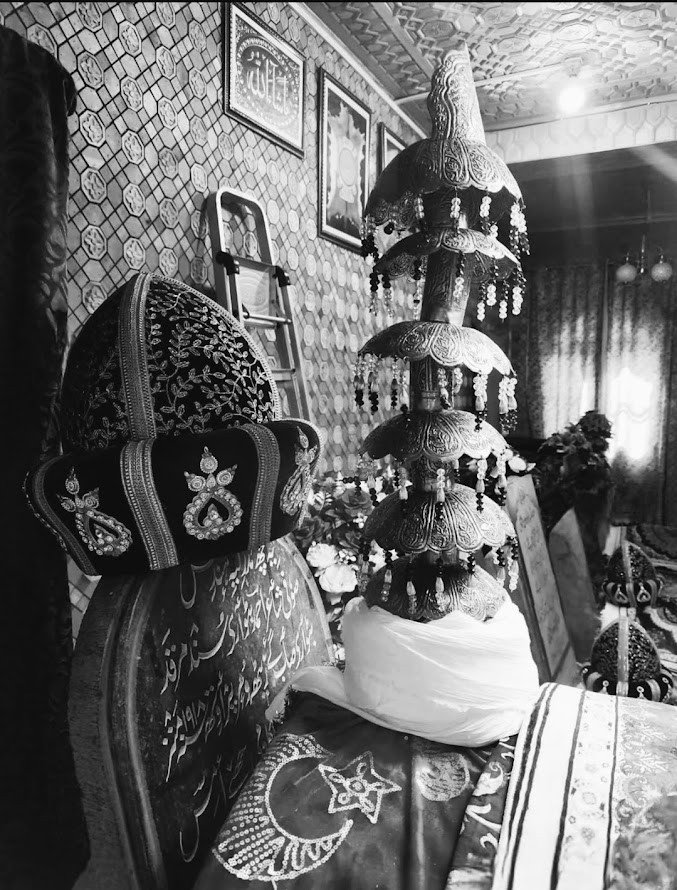
The resting place of Peer Ahmad Soubi Batwari reflects Kashmir’s enduring Sufi traditions, where devotion, poetry and music remain deeply intertwined. Photo: Parsa Tariq/TheNews21
The Blended Verse
Perhaps the most remarkable feature of Kashmir’s devotional music is the way it quietly dissolves boundaries.
The verses move effortlessly between Persian, Kashmiri and Arabic influences. Islamic spirituality sits comfortably alongside local cultural traditions that have shaped the Valley for centuries. The result is not a single religious performance but a uniquely Kashmiri expression of devotion.
This blending is reflected in the poetry itself.
The words of Lal Ded, the 14th-century Kashmiri mystic revered by both Hindus and Muslims, continue to be recited alongside verses inspired by Nund Rishi, the founder of the Rishi order, whose teachings emphasised compassion, humility and coexistence.
For many listeners, these traditions do not compete with one another. They complement each other.
“Cultural identity and spiritual identity have never been completely separate here,” explains cultural researcher Basharat Ali. “The music carries both. That is why people from different backgrounds often recognise the same melodies even if they interpret them differently.”
This shared inheritance has helped devotional music remain one of Kashmir’s most enduring cultural traditions.
Unlike formal institutions, songs travel easily. They pass from grandparents to grandchildren, from neighbourhood gatherings to shrines, from memory to memory. A verse learned in childhood may return decades later during a funeral, a wedding or a quiet evening prayer.
Its meaning often changes with the listener’s own life.
“As children we memorised the words,” recalls one elderly singer. “As adults we finally understood them.”
That gradual unfolding of meaning explains why these songs continue to live, not inside books or archives, but within ordinary homes.
A familiar verse may accompany the preparation of noon chai on a winter morning, drift softly through an evening gathering after prayers, or be sung quietly by someone working alone in the kitchen.
In each setting, the song becomes something more than music.
It becomes memory.
It becomes companionship.
And for many, it becomes prayer itself.
Voices That Still Endure
Among those who have devoted their lives to preserving Kashmir’s devotional music is Mohammad Shafi, a singer who has spent decades performing at shrines, community gatherings and spiritual assemblies across the Valley. For him, the purpose of singing has never been applause.
“When people praise my voice, I thank them,” he says with a gentle smile. “But that is never why I sing. If people remember my voice and forget the meaning of the verses, then I have failed.”
Shafi believes every performance carries a responsibility beyond music.
“Our elders taught us that every word should soften the heart. If a gathering ends exactly the way it began—with the same anger, pride or bitterness—then the music has done nothing.”
He pauses before continuing.
“The real success is when someone leaves quietly, thinking differently about life.”
It is this quiet transformation that many singers describe as the true purpose of Kashmiri devotional music. Unlike commercial performances, where success is measured by applause or popularity, these gatherings are measured by silence—the silence that follows a verse when listeners become absorbed in reflection.
Many performers intentionally avoid dramatic displays or theatrical expression. The music itself is expected to carry the emotion.
“The singer should never become bigger than the poetry,” Shafi says. “Our job is only to deliver the words with sincerity.”
More Than Music
Cultural researcher Basharat Ali believes that this tradition has survived because it speaks to something deeper than religion alone.
“These songs are part of Kashmir’s cultural memory,” he explains. “They preserve values that have shaped generations—compassion, humility, patience and coexistence. They remind people that spirituality is not only found inside places of worship but also in everyday acts of kindness, reflection and forgiveness.”
He believes that preserving this musical heritage is as important as preserving historic buildings or ancient manuscripts.
“You can restore a shrine,” he says. “You can preserve an old manuscript in a museum. But if people stop singing these verses, something far more fragile disappears.”
Unlike monuments built of stone, musical traditions survive only when they continue to be performed, remembered and passed on.
That responsibility, many believe, now rests with a younger generation growing up in an increasingly digital world.
Several young listeners interviewed for this series admitted they had only recently begun paying closer attention to devotional music after hearing older family members explain its meaning.
“I think we almost lost interest because nobody explained the stories behind the songs,” says Insha Bhat. “Once you understand what the words mean, you don’t hear them the same way again.”
Epilogue
As night settles over Srinagar, the final notes of the harmonium fade into the silence.
Outside, traffic continues to move across the old bridges. Shopkeepers lower their shutters. The evening prayers drift across the city before dissolving into the cool Kashmiri air.
Inside the gathering, nobody rushes to leave.
Some remain seated with their eyes closed. Others quietly exchange greetings before stepping into the narrow lanes. There is no applause. No curtain call. Only a shared stillness that lingers long after the music has ended.
Perhaps that is the quiet power of Kashmir’s devotional tradition.
Its purpose has never been performance alone.
It is to remind people that even in a world shaped by uncertainty, conflict and constant change, there remains an invisible thread connecting memory, faith and the human heart.
A thread that cannot be photographed.
Cannot be archived.
Cannot be measured.
Only felt.
And as long as these verses continue to echo through shrines, homes and intimate gatherings across the Valley, that invisible thread will endure—linking one generation to the next, one voice to another, and one soul to something greater than itself.


