X: @JournalistAadil
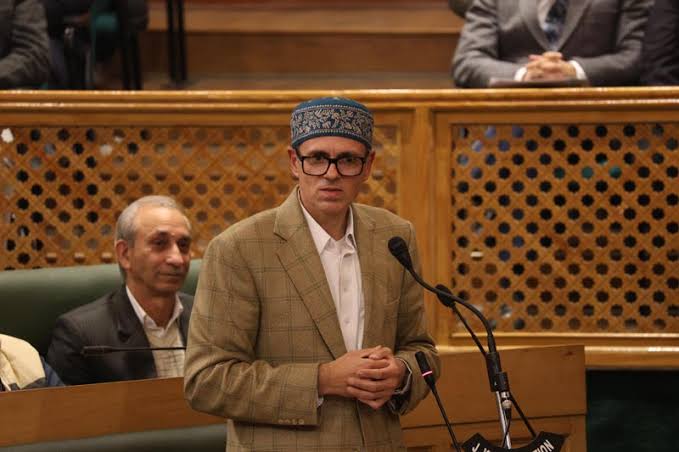
Srinagar: Jammu and Kashmir Chief Minister Omar Abdullah reaffirmed the government’s commitment to empowering youth in border areas such as Karnah, Keran, Machhil, and Gurez by equipping them with vocational skills to foster tourism-driven economic growth.
While responding to a query from Karnah MLA Javid Ahmad Mirchal in the Jammu and Kashmir Legislative Assembly (JKLA) regarding tourism promotion in border areas, the Chief Minister, who also holds the Tourism Department portfolio, emphasized the untapped tourism potential of Karnah and the need for its further exploration.
“We believe there is significant tourism potential in these areas, and it must be explored,” Abdullah stated. He highlighted recent initiatives such as the Border Festival and Yoga Festival in Karnah, which aimed to showcase the region’s tourism potential and cultural heritage to a wider audience. “These efforts have begun yielding results, as we are witnessing a gradual increase in tourism. Our objective is to ensure that local communities benefit directly from tourism development,” he added.
Focus on Homestays over large hotels
The Chief Minister revealed that the tourism department has commenced the registration of paying guest houses and homestays in the region to accommodate visitors. “Currently, six homestays have been registered in Karnah and five in Teetwal. I urge the MLA to assist us in this initiative, as attracting tourists without adequate lodging facilities would be futile,” he said.
Stressing the need for a community-centric approach, Abdullah clarified that the government does not intend to promote large hotel chains in these regions, as they would primarily benefit external investors rather than local residents. “Our focus should be on developing homestays to ensure that local people are directly involved in the tourism economy. Legislators should support us in engaging local communities in this initiative,” he urged.
Vocational training for youth in tourism sector
The Chief Minister also announced a government initiative to identify and train unskilled youth in border areas such as Karnah, Keran, Machhil, and Gurez. These individuals will receive specialized training at Industrial Training Institutes (ITIs) and the Institute of Hotel Management (IHM), Srinagar, to develop skills relevant to the tourism industry.
“As outlined in my budget speech, our focus is on skill development and entrepreneurship, equipping young people with the tools to build a prosperous future in Jammu and Kashmir,” he reiterated.
Tourism development and infrastructure expansion
MLA Saifullah Mir suggested the establishment of a Tourism Development Authority to further boost local tourism in these areas.
Highlighting the scenic beauty and cultural richness of Karnah, Abdullah identified Teetwal, Karanoo in Nawagabra, and Budnambal as key locations for nature tourism, adventure tourism, and cross-border heritage tourism. He noted that the Jammu and Kashmir Tourism Department has initiated efforts to bring these villages onto the tourist map.
Furthermore, the government has proposed the construction of a ‘Yatri Niwas’ at Sharda Temple in Teetwal, Kupwara, along with a cafeteria, to enhance pilgrim tourism in the Karnah constituency. The Detailed Project Report (DPR) is being prepared, with the project estimated to cost Rs 150 lakh.
Promotional tourism events
Abdullah also highlighted the success of recent tourism promotion events, including the Border Tourism Festival held in Teetwal in September 2022. This festival featured cultural and musical performances, an ATV rally from Kupwara to Teetwal, nature photography sessions, trekking, camping, and horse riding.
Additionally, a Yoga Festival was organized in collaboration with various departments in Teetwal on June 21, 2024, as part of efforts to promote wellness tourism in the region.
The Chief Minister concluded by reiterating the government’s long-term vision of leveraging tourism as a catalyst for economic development while ensuring that local communities are the primary beneficiaries of these initiatives.