

Thirty-four broken handpumps had pushed eighteen villages in Bajna block of Madhya Pradesh into a severe drinking water crisis. This is the story of how a grassroots organisation, local communities and the administration worked together to restore water access and create a model of participatory rural governance.
This summer’s relentless heat bore down heavily on rural life in the Bajna block of Ratlam district, Madhya Pradesh, and nowhere was its impact felt more acutely than in villages where handpumps had remained defunct for months. As temperatures soared, so did the desperation of families who depended entirely on these public water sources. Eighteen villages were among the worst affected, with thirty-four handpumps lying out of order. Women were forced to walk long distances each day in search of drinking water, while men who should have been tending their fields found themselves spending precious hours securing water for their families. The daily struggle not only disrupted livelihoods but also took a severe toll on the health and dignity of the villagers.
It was in the midst of this crisis that the Krishi evam Adivasi Swaraj Sangathan, Bajna, an organisation formed under VAAGDHARA, decided to intervene. Rather than waiting for the situation to improve on its own, Sangathan workers undertook a systematic village-to-village survey, inspecting every non-functional handpump and documenting the nature of each fault—whether it was a damaged pipe, missing components or worn-out mechanical parts.
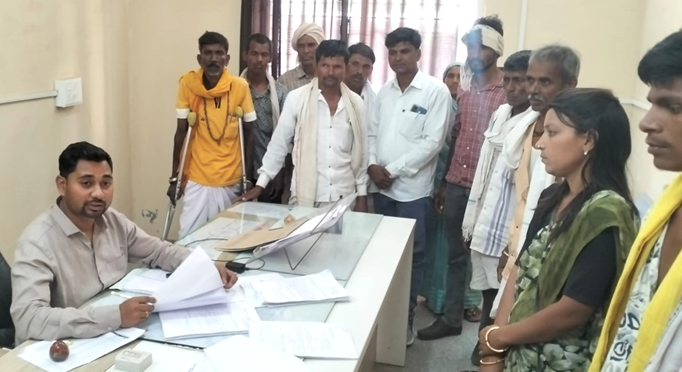
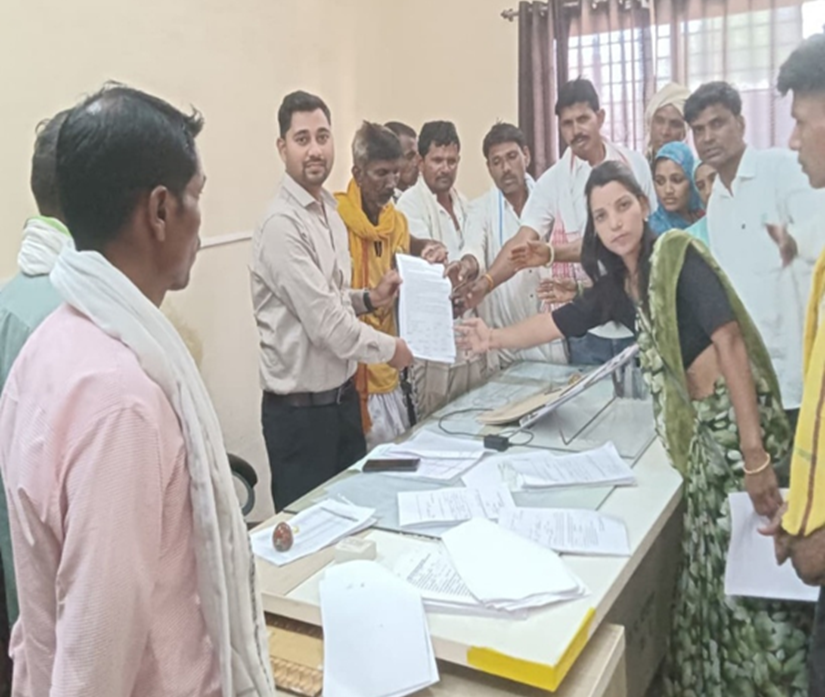
The findings were compiled into a comprehensive village-wise inventory of all the damaged handpumps across the block. Armed with this evidence, representatives of the Sangathan met Manish Bhanwar, Chief Executive Officer of Janpad Panchayat, Bajna, on 24 April 2026 and submitted a detailed memorandum outlining the scale of the drinking water crisis. Their demand was straightforward: repair the non-functional handpumps without delay and ensure a sustainable solution so that villagers would not face the same hardship again.
The delegation comprised Sangathan office-bearers Shankarlal Maida, Lalu Hada, Maniram Damor, Shantilal, Kalibai, Rakhiya, Anjana and Kailash Bhuj Govind Ninama, along with VAAGDHARA block facilitators Renuka Porwal and Mohan Bhuria. They assured the administration of their full cooperation in resolving the crisis and pledged to continue supporting the effort until every affected village received relief.
Their intervention did not end with the submission of the memorandum. The Sangathan maintained regular follow-ups with the administration, continuously monitoring the progress of the issue and keeping the concerns of villagers before the authorities. Their persistence yielded results in June when CEO Manish Bhanwar, recognising the urgency of the situation, directed the Public Health Engineering Department (PHED) and its technical teams to undertake immediate repairs.”The drinking water crisis facing our villagers was our highest priority,” Bhanwar said. “The survey and memorandum submitted by the organisation enabled us to understand the situation quickly and act without delay. We instructed the department to repair every non-functional handpump so that people could obtain relief from the severe summer conditions.”
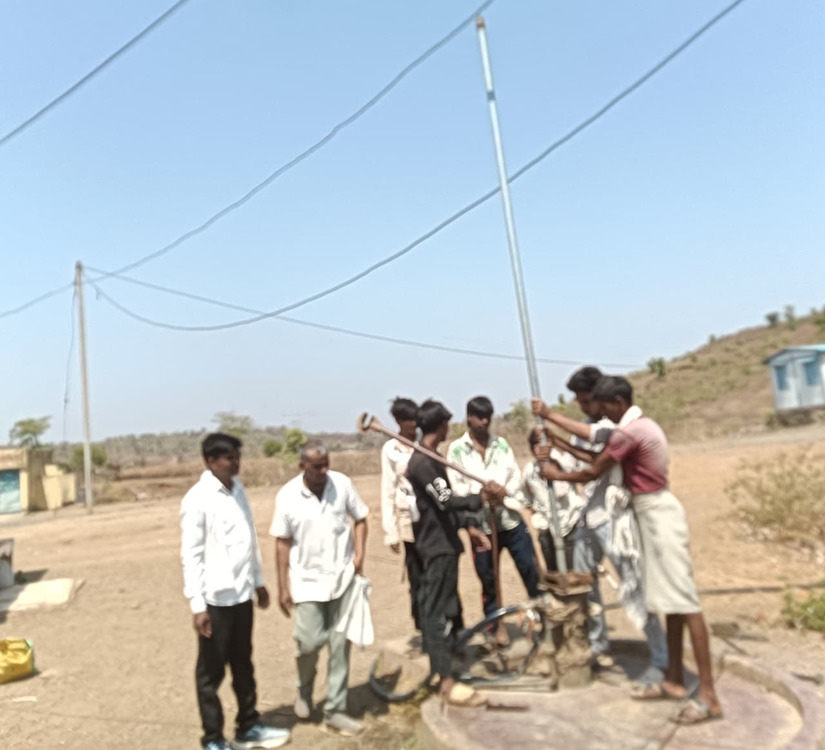
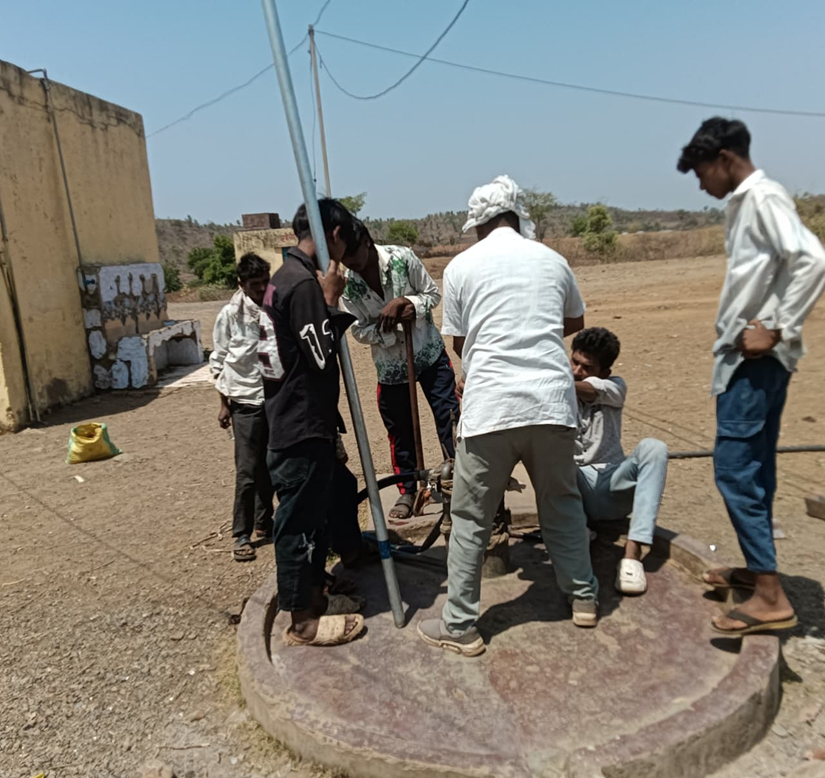
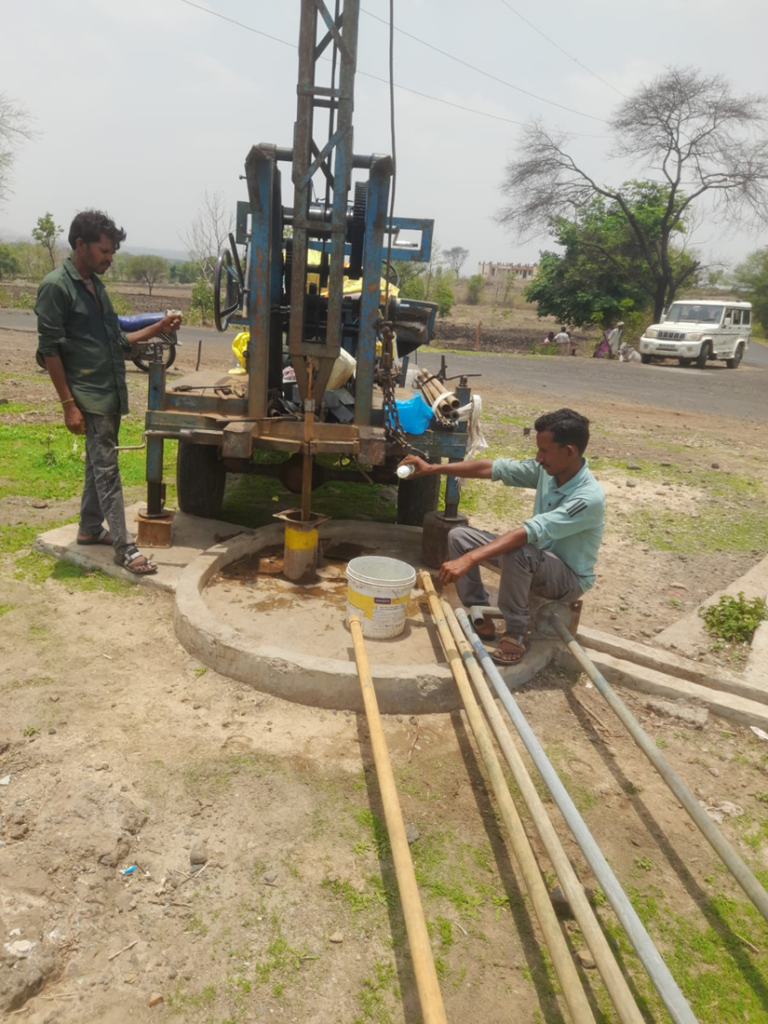
Once the instructions were issued, departmental teams moved swiftly into the affected villages. Handpumps requiring minor repairs were restored on the spot, while those needing replacement pipes or mechanical components were repaired after the necessary materials were supplied.
As a result, twenty-nine of the thirty-four non-functional handpumps were successfully repaired and restored to service, bringing immediate relief to thousands of villagers. The benefits extended beyond households, ensuring that livestock, which had also suffered from the prolonged shortage of drinking water, once again had reliable access to water.
Relief Reaches the Villages
The impact of the repairs was soon visible across the affected villages, where access to drinking water had become a daily struggle.
“We had been living with this problem for years,” recalled Shankarlal Maida, a Sangathan office-bearer from Bhuri Ghati village. “We submitted complaints several times, but nothing changed. This time, the Sangathan carried our concerns directly to the administration, and the administration responded quickly. Our handpump is functioning again, and we no longer have to travel long distances to fetch water.”
A similar sense of relief was echoed in Talinkheda village. “Our women endured immense hardship every day just to collect water,” said Lalu Hada. “Now that the handpump has been repaired, our families have been freed from that burden. We are grateful to both the Sangathan and the administration.”
For Kailash Bhuj of Mewasa village, the initiative demonstrated the power of collective action.”The Sangathan workers visited every village, understood our problems firsthand and presented them systematically before the administration. That gave us confidence that when people organise themselves and speak with one voice, the administration does respond.”
In Halewada, Laxmibai Charpota summed up the change in simple words.
The Sangathan’s delegation, which also included Ramesh Ninama of Jambulia, Prabhu Katara of Sajjangarh, Raju Maheda of Hatli and Onkar Devda of Devda, acknowledged the administration’s prompt response. Active community members including Hawadi Damor, Ishwarlal Khadia and Jeetu also played an important role in mobilising villagers and sustaining the campaign.
A Model of Community Participation
The Bajna experience illustrates how community initiative, backed by systematic documentation and sustained engagement with public authorities, can lead to meaningful administrative action.
Rather than limiting themselves to repeated complaints, Sangathan workers conducted a detailed survey of every non-functional handpump across the affected villages. Their findings, supported by a village-wise inventory and a formal memorandum, enabled the administration to understand both the scale and urgency of the crisis.
The result was not merely faster repairs, but a coordinated response built on evidence, cooperation and continuous dialogue between citizens and public officials.
The benefits were widely acknowledged across the region.
“Our village’s handpump had remained non-functional for months,” said Ramesh Maida of Talinkheda. “The shortage affected not only our families but also our livestock. Today, that problem has finally been resolved.”
In Bhojpura, Keharig Maida said the restored water supply had relieved women of the exhausting daily task of walking long distances in search of water. Similar sentiments were expressed by Champabai Kharadi of Kharadisera, Daulat Singh Katara of Bhojpura and Shantilal Bhuria of Rampuriya, all of whom credited the combined efforts of the Sangathan and the administration.
Many other villagers, including Meerabai Charpota of Bhojpura, Govind Ninama of Kundal, Kavita Ninama of Rehatkua, Sugna Katara of Chhavnijodia, Kalibai Dodiyar of Makanpura, Dariya Munia and Gajendra Charpota of Bagli, and Gautam Bhabhor of Rajapura, expressed hope that similar community-led initiatives would continue to address other basic civic needs in the region.
A Partnership That Delivered Results
The events in Bajna demonstrate how organised community action and a responsive administration can together resolve public problems far more effectively than either could alone.
What began as repeated complaints from villagers evolved into a structured campaign only after the Krishi evam Adivasi Swaraj Sangathan undertook a comprehensive survey of non-functional handpumps across the affected villages. By documenting every broken handpump, identifying the nature of each fault and presenting the findings through a detailed memorandum, the organisation enabled the administration to understand the true scale of the crisis and respond with urgency.
The outcome extended well beyond the repair of twenty-nine handpumps.
It restored confidence among villagers that persistent, organised and evidence-based engagement with public institutions can produce meaningful change.
For many residents, the experience was as much about being heard as it was about restoring access to drinking water.
“Our village’s handpump had remained non-functional for months,” said Ramesh Maida of Talinkheda village. “The shortage affected not only our families but also our livestock. Today, that problem has finally been resolved.”
In Bhojpura, Keharig Maida said the restored water supply had freed women from the exhausting daily task of walking long distances in search of water. Similar appreciation came from Champabai Kharadi of Kharadisera, Daulat Singh Katara of Bhojpura, and Shantilal Bhuria of Rampuriya, all of whom acknowledged the combined efforts of the Sangathan and the administration.
Residents including Meerabai Charpota of Bhojpura, Govind Ninama of Kundal, Kavita Ninama of Rehatkua, Sugna Katara of Chhavnijodia, Kalibai Dodiyar of Makanpura, Dariya Munia and Gajendra Charpota of Bagli, and Gautam Bhabhor of Rajapura expressed hope that the same spirit of cooperation would continue to address other challenges facing rural communities.
More Than Restored Handpumps
For the office-bearers of the Krishi evam Adivasi Swaraj Sangathan, the initiative represented more than an administrative success. They described it as a demonstration of the power of community participation, social awareness and constructive engagement with public institutions.
They expressed confidence that the administration would continue to respond with similar urgency and sensitivity to issues affecting rural development, public welfare and essential services, ensuring that villagers would not again be forced to struggle for something as fundamental as safe drinking water.
The relief that arrived during one of the harshest summers in recent memory was more than the restoration of water infrastructure. It reaffirmed an enduring lesson of rural governance: when communities organise around evidence and administrations respond with commitment, long-standing public problems can be resolved with speed, transparency and trust.
The restoration of drinking water to eighteen villages in Bajna block is therefore more than a local success story. It stands as a compelling example of how collaboration between citizens and public institutions can transform everyday governance into meaningful public service—a model that other rural regions facing similar challenges may well choose to follow.


