By Vaibhav Raje
ISA Certified Arborist (ML-0406A)
Director, Amenity Tree Care Association
Founder, Treecotech LLP
Ahead of the 2nd International Arboriculture Conference 2026
Pre-Conference Workshops: 6 March 2026
Main Conference: 7–8 March 2026
Sahara Star Hotel, Vile Parle (East), Mumbai
Every monsoon in Mumbai, we mourn the same tragedies. A tree collapses on a car. A century-old canopy is felled overnight to make way for a metro pillar. A footpath that once offered shade becomes a strip of bare concrete. We grieve briefly, and then we move on — back to the business of building faster, higher, wider.
In doing so, we keep repeating the same mistake: treating trees as decoration, as obstacles, as afterthoughts — rather than as the essential urban infrastructure they truly are.
India is urbanising at a pace with no historical precedent. By 2047, over half our population will live in cities. Mumbai, Pune, Bengaluru, Hyderabad, Delhi — these cities are not merely expanding; they are transforming at breakneck speed. Roads are widened, flyovers erected, underground metro lines bored through the earth. Each intervention, however necessary, carries a cost that rarely appears in project budgets: the loss of urban tree cover.
This is not a conservation argument. It is an infrastructure argument.
And it is long past time that India’s planners, engineers, municipal authorities, and policymakers heard it clearly: trees are not in competition with development. Managed well, they are development.
What Arboriculture Actually Is — And What It Is Not
When I tell people I am an arborist, I am often met with a polite nod and the assumption that I work with a nursery or perhaps prune hedges on weekends. The reality is far more technical — and far more consequential.
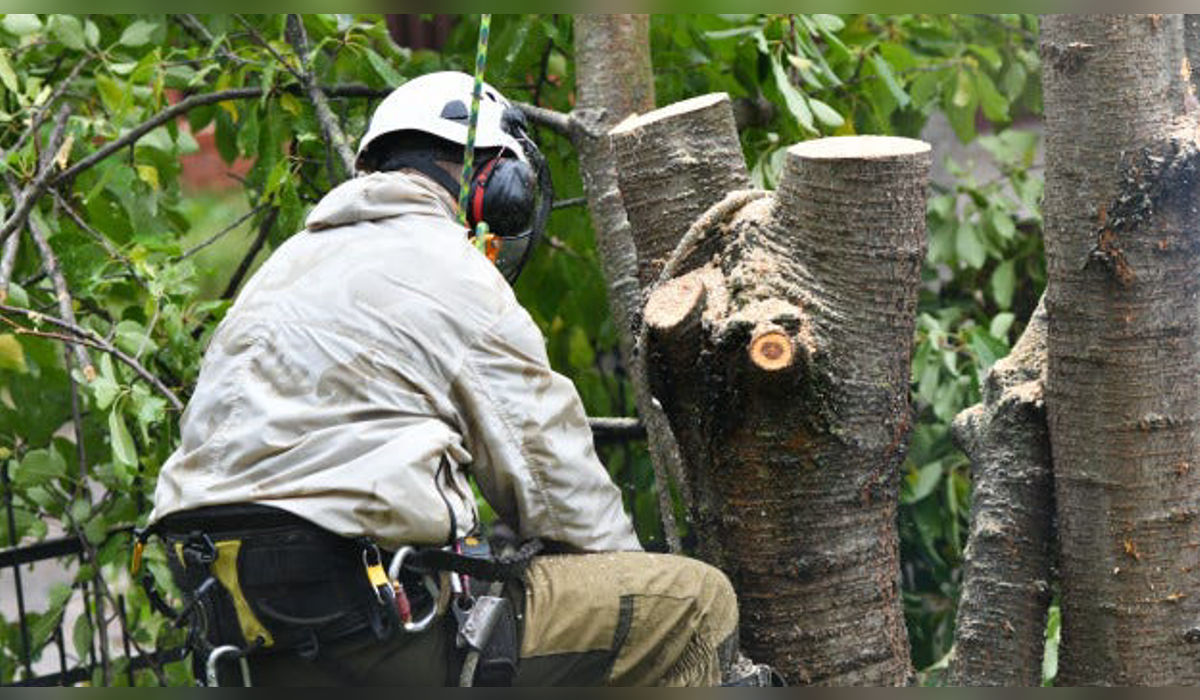
Arboriculture is the science and practice of managing individual trees in the urban environment. It encompasses structural risk assessment, tree impact assessment for infrastructure projects, root-zone management, canopy preservation during construction, tree-health diagnostics, and the legal and ecological frameworks governing tree removal and retention.
It is, in every meaningful sense, a discipline of urban infrastructure management — one that remains largely absent from India’s mainstream planning vocabulary.
Consider what a single mature tree contributes to a city. It sequesters carbon. It reduces ambient temperatures by two to four degrees through transpiration. It manages stormwater runoff. It improves air quality, reduces noise pollution, provides habitat, and has documented benefits for mental health, property values, and community cohesion.
Now multiply that impact across an urban forest of thousands. The economic value is staggering — and so is the cost when it is lost.
“Trees are not in competition with development. Managed well, they are development.”
The Mumbai Crisis — A Mirror for Every Indian City
Mumbai presents the arboricultural challenge in its most acute form. It is a city of extraordinary natural heritage — ancient banyans canopied over intersections, mangrove belts protecting the coastline, trees that have quietly absorbed pollution and urban stress for generations — and simultaneously a city under relentless infrastructural pressure.
Over the past decade alone, thousands of trees have been removed or fatally damaged during metro, coastal road, and highway projects. Some removals were unavoidable. Many were not. The difference often came down to a simple factor: whether a qualified arborist was involved during the planning stage.
Beyond numbers lies a safety dimension. In Mumbai’s congested streetscapes, trees subjected to root compaction, improper pruning, and construction damage become latent hazards. A structurally compromised tree may appear healthy for years before suddenly failing.
Risk assessment by certified arborists is not an optional luxury — it is a matter of public safety.
What the Science Looks Like in Practice
In 2021, my firm, Treecotech LLP, in collaboration with Jeremy Barrell and Barrell Tree Consultancy (UK), was engaged to preserve a 100-year-old banyan tree on a school construction site in Chennai. The tree stood directly within the construction envelope. The developer’s initial instinct was removal.
Instead, we conducted a detailed arboricultural impact assessment: mapping root architecture, evaluating structural condition, modelling construction impacts, redesigning infrastructure placement, specifying protective exclusion zones, and implementing a monitoring protocol throughout construction.
The tree stands today — alive — in the courtyard of a functioning school. The children who study beneath it have no idea how close it came to being lost. That, to me, is successful arboriculture.
At the other end of the scale, Treecotech recently completed an arboricultural impact assessment for a multinational company planning a data centre near Mumbai. The study covered over 900 trees, provided detailed condition surveys, supported legal compliance processes, and offered science-based retention and removal recommendations.
This level of due diligence is no longer optional for responsible developers. It is increasingly recognised as essential risk management.
“Risk assessment by certified arborists is not optional luxury — it is public safety.”
The Long Game: Why Investment in Arboriculture Pays
There is a persistent misconception that professional arboriculture is expensive. It is not — particularly when measured against alternatives.
A single serious tree-failure incident can result in fatalities, property damage, civil litigation, and reputational loss running into crores. Preventive assessments, proper canopy management, and construction-phase protection cost a fraction of that exposure.
International research consistently shows that mature street trees increase commercial property values by 5–15 per cent. Green corridors reduce urban heat-island effects and energy demand. Trees in hospital grounds shorten patient recovery times.
These are not sentimental claims. They are measurable returns on investment — and Indian cities forfeit them every time development proceeds without an arboricultural framework.
A Global Conversation, Rooted in Mumbai
India does not need to invent arboriculture from scratch. Mature practice exists across the UK, Australia, Singapore, the United States, and Europe. We can adapt these frameworks to our climate, species diversity, and urban realities.
This is why the Amenity Tree Care Association, in collaboration with Nanaji Deshmukh Pratishthan, is hosting the 2nd International Arboriculture Conference 2026 in Mumbai.
6 March 2026 — Pre-Conference Workshops
- Retaining Trees in Construction
IES College of Architecture, Bandra West
Led by Jeremy Barrell (UK) - The Trees Around Us
Maharashtra Nature Park, Dharavi
Led by Dr Prachi Gupta (Azim Premji University)
7–8 March 2026 — Main International Conference
Sahara Star Hotel, Vile Parle (East), Mumbai
Theme: “Growing Cities. Greener Canopies.”
Chief Guest (7 March): Devendra Fadnavis, Chief Minister of Maharashtra
The choice of venues is deliberate. Architecture students, dense urban communities, policymakers, and professionals are all part of this conversation — because arboriculture must cut across silos.
The Policy Imperative: What Governments Must Do
Awareness is necessary — but insufficient.
Urban local bodies must mandate arboricultural impact assessments for all major infrastructure and real-estate projects. Tree transplantation protocols must be professionally audited, not left to contractors. Municipal tree departments must be guided by ISA-certified arborists, not untrained labour.
State governments must shift from planting targets to canopy-cover targets. A sapling does not replace an 80-year-old banyan. This distinction must be policy-embedded.
Corporate India must also act. Meaningful ESG commitments include arboricultural due diligence before construction — not cosmetic greenwashing afterward.
Cities That Breathe
When I began my career, arboriculture was an unfamiliar word in India. Today, an international conference on the subject brings experts from five continents and draws governance-level attention. That is progress — but time is short.
Every year without arboriculture in mainstream planning compounds loss: unnecessary removals, degraded canopies, unsafe trees, hotter cities, poorer air.
The theme “Growing Cities. Greener Canopies.” is not a slogan. It is a design brief.
Cities where a banyan is an asset, not an obstacle.
Where infrastructure begins by asking which trees can we save?
Where canopies are planned, protected, and celebrated as climate infrastructure.
That city is possible.
Mumbai can lead.
India is watching.
Conference Details
2nd International Arboriculture Conference 2026
Organised by Amenity Tree Care Association
In collaboration with Nanaji Deshmukh Pratishthan
Registrations: www.arbindia.com
Email: info@arbindia.com