

For years, tribal families travelled up to 25 kilometres to buy and sell everyday goods. A locally organised campaign has now brought the weekly haat closer to home
Banswara, Rajasthan: Anandpuri, a tribal-dominated block in Rajasthan’s Banswara district, is home largely to families dependent on farming and daily wage labour. For years, however, one basic facility was missing from the block: a weekly haat bazaar of its own. The absence of a local market shaped everyday life in ways that were easy to overlook. Villagers had to travel to neighbouring blocks simply to buy household necessities or sell vegetables, fruit and other produce. For many families, the journey meant spending an entire day away from work. For small sellers, the cost of transport often ate into whatever little profit they hoped to make. That situation has now changed.
Behind the new weekly market stands the Krushi Evam Aadivasi Swaraj Sangathan (KASS), an Agriculture and Tribal Self-Governance Organisation formed with the support of VAAGDHARA. VAAGDHARA has worked across 136 villages of Anandpuri block for nearly two decades. These villages are organised into four self-governance groups — Anandpuri I, Anandpuri II, Koba and Chaaja — each covering 34 villages. Within the villages, Gram Swaraj Samooh, Saksham Samooh and Bal Swaraj Samooh have been formed to discuss local development issues and strengthen community participation. The larger organisations include equal representation of women and men, with 15 women and 15 men in each. Every month, members meet to discuss the needs of their villages. Over the past six months, one question kept returning in meeting after meeting: Why does Anandpuri not have a weekly market of its own?
Slowly, what began as an inconvenience voiced by individual families became a common demand. Until then, many residents had to travel nearly 25 kilometres to weekly markets in other blocks. Villagers often went to places such as Arthuna, Fatehpura, Chikli Badgi and Santrampur. The journey cost money, consumed time and placed an especially heavy burden on those carrying small quantities of vegetables or fruit for sale. “Earlier we had to travel to far-off markets. The whole day would go just in coming and going, and whatever little vegetable we carried to sell, the fare alone would sometimes cost more than we earned,” says Subhash Chandra Rot of Kahwara village. Sukhlal Ninama of Chaurdi village describes a similar experience. “Even for small everyday needs, we had to go to another block. Now that a market has started in our own block, that work has become much easier.”
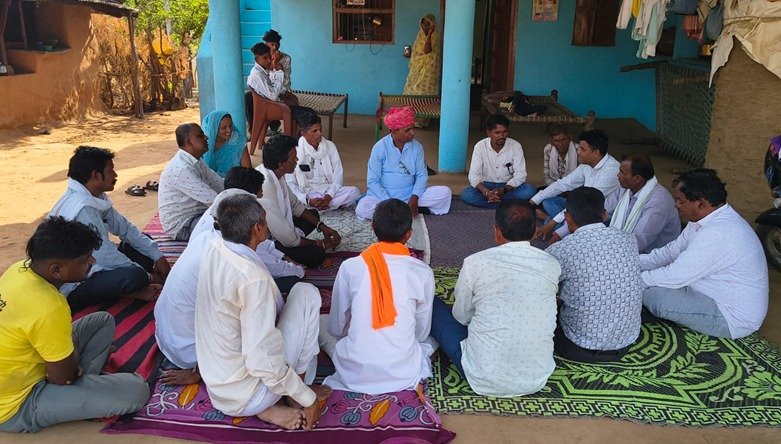
From Discussion to a Formal Demand
Once the issue was taken up collectively, the organisation began approaching the local administration. The first support came from Devlata Ji Damor, Sarpanch of Sera Nagla Gram Panchayat. The organisation then submitted a written request to Anandpuri Sub-Divisional Magistrate Anil Meena, seeking permission to establish a weekly market within the block. “We placed this demand with great hope. When the Sarpanch and the SDM sahab both responded positively, the whole area was overjoyed. This is the result of our own hard work,” says Manilal Damor of Sera Nagla. Administrative approval, however, was only one step. Members of the organisation understood that a market could survive only if traders and customers actually came. They travelled to weekly markets in neighbouring blocks, distributed flyers among traders and invited them to set up stalls in Anandpuri.
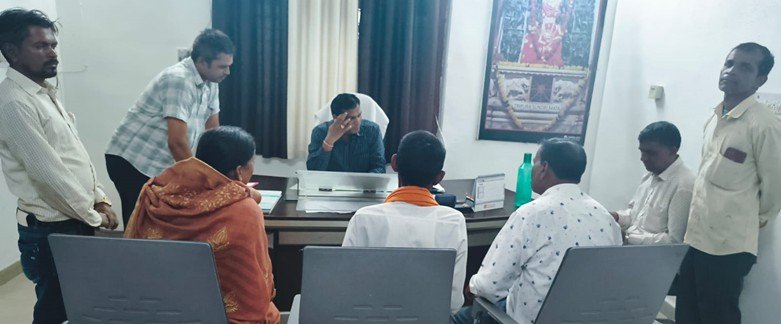
The effort was deliberate. A newly sanctioned market could easily fail if sellers did not know about it or did not consider it commercially viable. After months of preparation, the weekly haat bazaar was inaugurated on June 1, 2026, at Nana Bhukhiya village under Sera Nagla Gram Panchayat. The programme was presided over by Ritesh Jain, Development Officer of Anandpuri Panchayat Samiti, while Popatlal Kharadi attended as chief guest. Representatives from the organisation included Bapulal Ji, Sardar Maharaj and Prakash Damor, while P.L. Patel represented VAAGDHARA. Subhash Chandra Makwana of Khuta village remembers the opening day vividly. “The day the market began felt like a festival for us. So many officials and guests came to our village. It was a matter of real pride.”
A Market That Quickly Grew
What began as a local weekly market soon started attracting traders and visitors from a much wider area. According to information shared by the organisers, people from 92 villages now participate in the haat bazaar. Around 45 shopkeepers come from local villages, while more than 250 traders arrive from outside, taking the total number of stalls to nearly 300 on a market day. The organisers estimate that 1,500 to 2,000 people visit the market each week, with transactions worth around ₹1.5 lakh taking place during a typical market day. For local residents, the change is not only about convenience. It has also created an opportunity to understand trading, pricing and small-scale entrepreneurship. “Earlier, only traders from outside understood how a market worked. We were mostly buyers. Now we have learnt how goods are sold and how prices are decided. Today, people from our own villages also put up stalls,” says Keshav Maharaj of Pithapura village.

Managing the Market Collectively
Starting the market was only half the task. Running it transparently and sustainably was equally important. The organisation therefore formed a management committee to oversee its functioning. The market is being held on privately owned farmland, for which the committee has agreed to pay a monthly rent of ₹27,500, payable on the first of every month. According to the organisers, the arrangement was decided collectively so that responsibilities and accounts remain clear. The new market has reduced both travel costs and time for buyers.
“Earlier we had to buy goods at high prices because there was no other option. Now we have our own market. Prices are fair, and it saves time too,” says Ramanlal Patel of Wanda village. The benefit has been equally important for farmers and small sellers. Previously, vegetables and fruit had to be carried long distances. Transport costs reduced margins, and perishable produce sometimes spoiled before it could be sold. “Earlier we had to travel far even to sell vegetables, and some of the produce would spoil on the way. Now we sell close to our own village, and we get a better price too,” says Shantilal Patel of Kanela village.
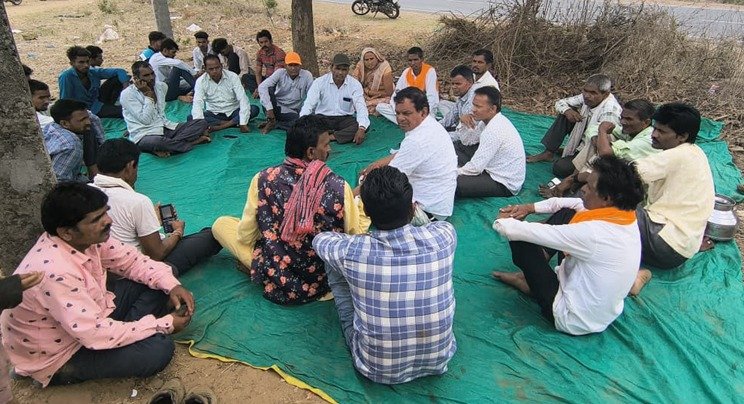
Women at the Centre of the Demand
Women played an important role throughout the campaign. The self-governance organisations were designed with equal representation of women and men, and women repeatedly raised the market issue during monthly meetings. For them, the distance to outside markets created a particular disadvantage. Travelling long distances alone was difficult, household responsibilities limited the time available, and many women had to depend on male family members to sell small quantities of vegetables or handmade goods. “We women also spoke up equally in the meetings. We faced the same difficulty in travelling to distant markets, so we raised this demand with just as much force,” says Kanta Kamol of Khandora village.
Also Read: Soil, Sheep and Sweat: How Kalawati Ninama Wrote Her Own Story of Self-Reliance
For Kalpana Pargi of Chikli Badra village, the nearby market has created new independence. “Earlier, we depended on the men to sell vegetables and small household goods because travelling so far alone was difficult. Now the market is close, so we can go ourselves and sell our own goods.” Kanku Patel of Bada Talab village says the weekly haat has also made it easier to balance household responsibilities. “Now we do not have to worry about travelling far. Our own market is nearby, so the household work stays on track and the shopping gets done too.”

More Than a Place to Trade
Today, the weekly market has grown into something larger than a space for buying and selling. Colourful tents, piles of vegetables and fruit, grain and household goods, handwoven baskets, local produce and traders from surrounding areas give the haat the atmosphere of a village fair. For many residents, market day has also become a social occasion. “On market day, the whole area seems to gather in one place. Shopping happens, and so does meeting people. It is a huge relief for us,” says Ramesh Tabiyar of Ganewa village. This social dimension is important. Rural markets have historically been more than centres of commerce. They are spaces where people exchange information, meet relatives, build contacts and connect villages with one another. The Anandpuri haat has begun to serve the same role.
A Collective Achievement
Many members of the organisation contributed to making the market possible — by attending meetings, mobilising villagers, approaching officials, distributing flyers among traders and helping manage the market after it opened. Among those involved were Subhash Chandra Rot of Kahwara, Hardar Maharaj of Katara Wanda, Manilal Damor of Sera Nagla, Sukhlal Ninama of Chaurdi, Himmat Lal Ninama of Bhaler, Keshav Maharaj of Pithapura, Subhash Chandra Makwana of Khuta, Dinesh Makwana of Chikli Teja, Shankar Lal of Chikli Badra, Harishankar Katara of Patanwaghra, Bapulal Maharaj of Haleda, Champalal Pargi of Waret, Kantilal Ji Tabiyar of Tori, Ramesh Tabiyar of Ganewa, Shantilal Patel of Kanela and several others. Women including Leela Khant, Kalpana Pargi, Kanta Kamol, Kamla Pargi, Kanku Patel, Shanti Garasiya, Sheela Damor, Huki Kalsua, Surta Pargi, Sushila Pargi, Manjula Pargi, Laxmi Pargi, Radha Pargi, Ramila Pargi and Kavita Pargi also played an active role.

The achievement belongs not to one individual, but to a network of villagers who converted a common problem into a collective demand and then followed it through. The experience of Anandpuri offers a simple but important lesson about local democracy. Development does not always begin with a large government programme. Sometimes it begins in a monthly village meeting, when people identify a common problem, organise themselves and carry a clear demand to the administration. The weekly haat is now saving villagers time and money. It is giving local farmers and women a nearby place to sell their produce. It is creating space for small traders. And it is bringing dozens of villages together every week. What was once a journey of 25 kilometres has now become a market within reach. For Anandpuri, the distance has finally narrowed — not because somebody elsewhere decided it should, but because the community organised, persisted and made itself heard.


