

Collector orders field assessment as heat, erratic rainfall and falling water levels raise concern across the district
Sindhudurg: A prolonged dry spell, erratic rainfall and intense heat have badly affected paddy cultivation in parts of Sindhudurg district, prompting farmers to warn of significant crop losses and the administration to begin field-level assessment. Several farmers said the district had not experienced such prolonged dry conditions during a critical crop-growth stage in recent years. Some veteran cultivators believe the situation is linked to El Niño, which has been associated with weaker rainfall conditions over parts of Maharashtra this monsoon season. The Union Agriculture Ministry has also said it is monitoring the possible impact of El Niño on agriculture in Maharashtra. Press Information Bureau Maharashtra as a whole is facing a serious rainfall deficit this season, with the state government activating drought-relief measures across large parts of the state after prolonged dry spells damaged kharif crops.
Paddy Fields Show Signs of Stress
With rainfall absent for extended periods during an important stage of crop development, paddy fields in several parts of Sindhudurg have begun showing signs of moisture stress and deterioration. Farmers said intense sunshine and rising temperatures had worsened the situation, raising fears of lower yields even if rainfall improves in the coming days. The dry spell has also affected local water availability. Farmers and villagers have reported declining water levels in wells and streams traditionally used for agricultural and community purposes. In some villages, water levels were reportedly so low during Ganesh festivities that residents had to create temporary barriers to retain water for idol immersion or travel to larger water bodies.
Also Read: ₹115.43-Crore Zoological Park Planned at Malgund in Ratnagiri
Collector Conducts Field Inspection
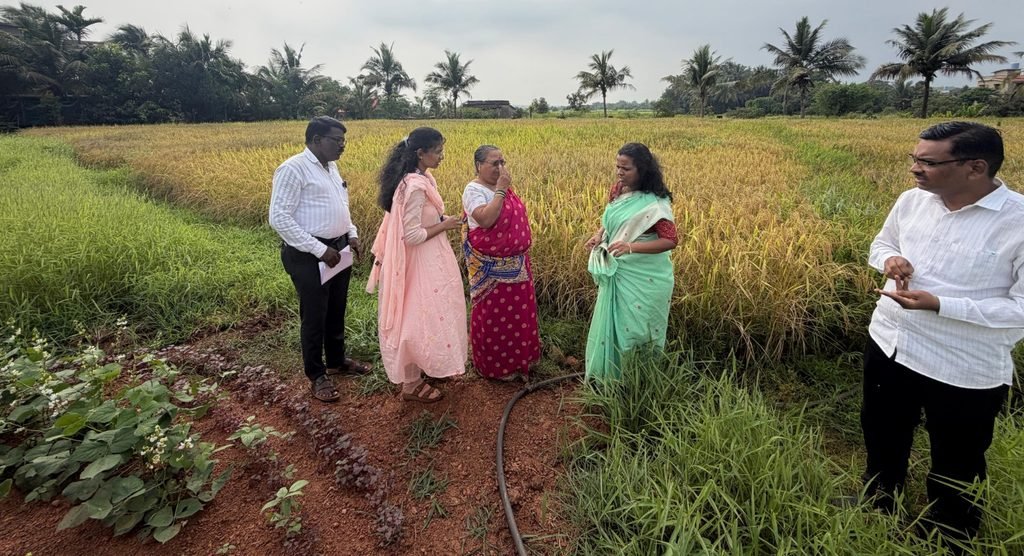
Following reports of crop damage and declining water availability, Guardian Minister Nitesh Rane convened an urgent review and directed the Agriculture and Revenue departments to inspect affected areas and prepare a detailed assessment. Collector Trupti Dhodmise subsequently visited Poip in Malvan taluka and Poyare and Naringre in Devgad taluka, where she inspected paddy fields, interacted with farmers and reviewed local water sources. She examined crop condition, water availability and the extent of stress caused by the prolonged break in rainfall. District Superintendent Agriculture Officer Bhagyashree Naiknavare, Malvan Tehsildar Ganesh Lavhe, in-charge Devgad Tehsildar Santosh Kharat and other officials accompanied the Collector.
Agriculture Department’s Response Questioned
The situation has also prompted criticism over whether the Agriculture Department responded quickly enough to the emerging crisis. Farmers and local observers have questioned why wider field inspections were undertaken only after crop deterioration and falling water levels received public attention. The district administration has now directed officials to compile data on rainfall, crop condition, estimated losses and the status of groundwater and local water sources. Dhodmise said the findings would be submitted to the state government and assistance for affected farmers would be sought on the basis of the field assessment.
Scattered Showers May Be Too Late for Some Crops
Although scattered rainfall has returned to parts of Sindhudurg in recent days, farmers fear that damage already suffered by paddy crops may not be fully reversible. Many fields are approaching the later stages of crop development, and moisture stress during the preceding weeks may affect grain formation and final yields. Farmers have also reported pest and disease concerns in some areas, including fears of discolouration and damage to paddy grain.
Other Crops May Also Be Affected
The impact of erratic rainfall may not be limited to paddy. Farmers are concerned about possible effects on mango, cashew, coconut and arecanut, all important components of Sindhudurg’s agricultural economy. The immediate priorities for farmers are now accurate crop-loss assessment, water availability and timely government assistance. For Sindhudurg, where agriculture remains a major source of livelihood, the final extent of the damage will become clearer only after the district administration completes its survey.


