
Fadnavis says DPR for Mumbai’s proposed third airport expected by year-end; State also plans BEST depot redevelopment, Mumbai–Pune ‘Quantum Corridor’ and expansion around Pune and Nagpur
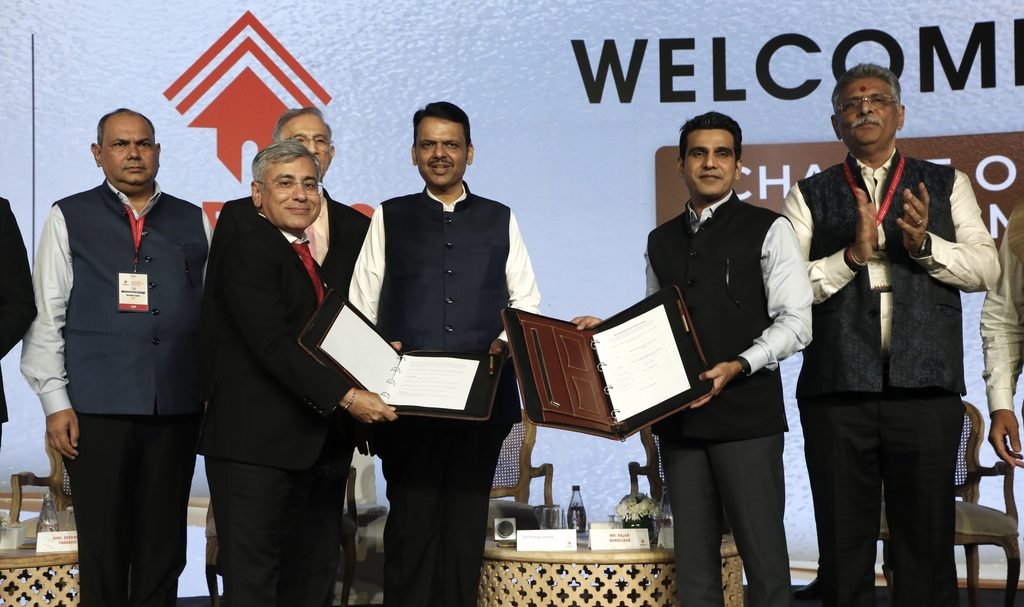
Mumbai: The Maharashtra government is planning a third airport for the Mumbai region near Virar and a 24-km sea link between Uttan and Virar as part of a wider infrastructure push aimed at expanding development towards the northern end of the Mumbai Metropolitan Region (MMR), Chief Minister Devendra Fadnavis has said. Speaking at the Real Estate and Infrastructure Investors’ Summit (REIIS) 2026 in Mumbai, Fadnavis said the Detailed Project Report (DPR) for the proposed Virar airport was expected to be completed by the end of 2026. The proposal is still at the planning stage. Details including the exact site, land requirement, project cost, airport capacity, environmental clearances and a construction timeline were not disclosed at the event.
Fadnavis said the government was also planning a 24-km sea link from Uttan to Virar as part of its effort to extend high-speed road connectivity northwards from Mumbai. According to him, the project, along with the coastal road network, is intended to eventually provide signal-free connectivity between Nariman Point and Virar. The proposed airport and sea link form part of what the Chief Minister described as the next stage of expansion beyond the existing Mumbai metropolitan core. The government has separately set a target of completing the first 10,000 rehabilitation homes under the Dharavi Redevelopment Project by January 2029. Fadnavis said the government intended to hand over the houses to eligible residents after their completion. He also reiterated the State’s target of making Mumbai slum-free within the next 10 years through cluster redevelopment. The 10-year goal, however, remains a government target and will depend on the pace of redevelopment, eligibility determination, availability of rehabilitation housing and execution of several large projects across the city.
Apart from Dharavi, the State is looking at redevelopment of older MHADA layouts and other ageing settlements where redevelopment has remained stalled or fragmented. Fadnavis also said BEST depot lands could be taken up for mixed-use redevelopment. The proposal envisages retaining transport facilities while allowing residential, commercial, recreational and other public uses on the same sites. The government expects such redevelopment to generate additional revenue for BEST while using depot land more intensively. Details of the proposed development model, individual depot sites, tender structure and revenue-sharing arrangement were not disclosed. Fadnavis said the government’s long-term MMR Growth Plan has set a target of building the Mumbai Metropolitan Region into a $1.5-trillion economy by 2047. Mumbai, Pune and Nagpur metropolitan regions are expected to form the core of the State’s planned urbanisation strategy, with the government seeking to attract data centres, manufacturing, Global Capability Centres and technology-led industries. The Chief Minister also proposed developing the Mumbai–Pune belt as a “Quantum Corridor”, with an emphasis on advanced technology and GCC-led development. At present, however, no detailed policy framework, investment commitment or implementation schedule for the proposed Quantum Corridor has been announced.
Fadnavis said work on a new airport for Pune would begin during the current year and that a tender process was expected to be initiated. He also asked investors and developers to look at opportunities around the proposed “New Nagpur” development being undertaken by the Nagpur Metropolitan Region Development Authority. The government is simultaneously seeking to build freight connectivity between Vadhavan Port in Palghar district and the hinterland. Fadnavis said the longer-term plan was to connect the port towards Nashik and further through the Samruddhi Mahamarg towards Jalna, Wardha and dry-port facilities extending up to Gadchiroli. The objective is to take port-linked economic activity beyond the Mumbai metropolitan belt into interior Maharashtra. The Chief Minister also said artificial intelligence would increasingly be introduced into government approval systems and administrative processes. He claimed that the nature of 70 per cent of jobs could change over the next 1,000 days because of AI. No study, methodology or data supporting the 70 per cent estimate was cited in the material released after the event. The Chief Minister also referred to plans for specialised Education Cities, Medi-cities and Innovation Cities as part of the new urban centres proposed across the metropolitan growth corridors.
In a separate announcement at the summit, Transport Minister Pratap Sarnaik said the Maharashtra State Road Transport Corporation (MSRTC) would invite tenders within three months for redevelopment of 140 bus depots as modern “Bus Ports”. The proposed projects are expected to combine passenger transport facilities with commercial and allied development through private-sector participation. Sarnaik said MSRTC’s wider land portfolio covering an estimated 13,000 to 14,000 acres could potentially be considered for development. However, depot-wise land details, the proposed public-private partnership structure, investment requirements and concession terms have not yet been made public. The announcements place redevelopment of publicly controlled land, transport infrastructure and new growth corridors at the centre of the government’s urban strategy. Their eventual impact will, however, depend on project approvals, financing, land acquisition, environmental clearances and actual execution against the timelines now being projected.


