Pune: After years of uncertainty and postponements, local self-governance elections are finally underway in Maharashtra. Polling for Zilla Parishads and Panchayat Samitis is being conducted across multiple districts, marking a crucial moment for rural administration and political equations at the grassroots level. The elections, pending since 2022, are being held amid tight security arrangements and heightened administrative preparedness.
Voting began early in the morning and will continue through the evening, allowing citizens across rural Maharashtra to choose their representatives for key local bodies. The State Election Commission has confirmed that the counting of votes will take place on February 9, a process expected to offer clear signals about shifting political moods in the countryside.
These elections cover 12 districts spread across three major divisions of the state, making them one of the most extensive exercises in local democracy in recent years. In total, thousands of candidates are contesting for seats in Zilla Parishads and Panchayat Samitis, reflecting intense competition and high political stakes for all major parties.
The voter base for these elections runs into crores, with men, women, and voters from other categories all participating. Each voter is casting two separate votes—one for the Zilla Parishad and another for the Panchayat Samiti—underscoring the importance of these institutions in shaping rural development, allocation of funds, and implementation of government schemes.
To ensure smooth and peaceful polling, the administration has put in place elaborate security measures. A large number of polling booths have been set up across the state, supported by a strong deployment of police personnel and election officials. Senior police officers have confirmed that sensitive areas are under constant surveillance, with sector-wise patrolling and strict adherence to election protocols. Voters have been advised to follow rules inside polling stations, including restrictions on carrying mobile phones.
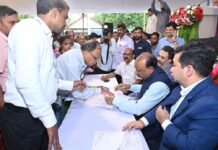
Political leaders from across party lines have also stepped out to vote, urging citizens to participate actively in the democratic process. Several leaders highlighted the emotional and political significance of these elections, especially given the absence of senior figures who earlier played a key role in grassroots campaigning. At the same time, party workers on the ground see these polls as a test of organisational strength and voter connect ahead of future state-level battles.
To make voting easier, the State Election Commission has encouraged citizens to use the ‘Matadhikar’ mobile application to check their names on the voter list and locate polling stations. Reiterating its appeal, the Commission has urged voters to come out in large numbers and strengthen democratic participation at the local level.