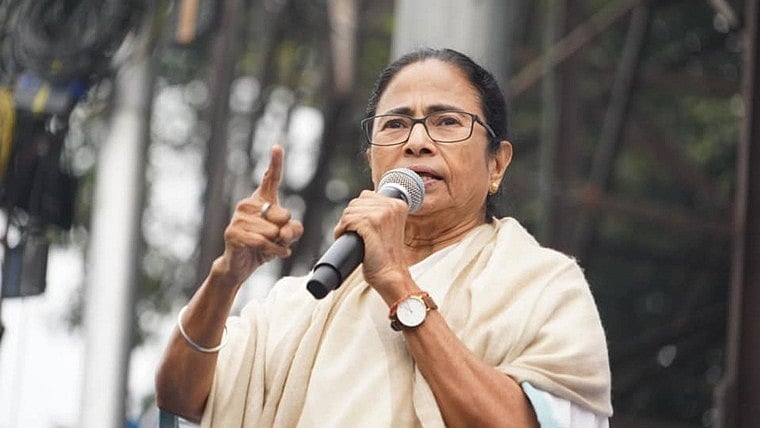
New Delhi: The Supreme Court on Wednesday is set to take up a high-stakes challenge to the Special Intensive Revision (SIR) of electoral rolls in West Bengal, with Chief Minister Mamata Banerjee personally attending the hearing. The case has drawn national attention amid concerns over voter exclusion and the scale of the ongoing verification exercise in the state.
Mamata Banerjee, who has a formal background in law, has approached the apex court questioning the manner and impact of the voter list revision being carried out by the Election Commission. Senior advocate Shyam Divan will argue the matter on her behalf, while the Chief Minister herself is expected to be present in court and may also make submissions.
The matter will be heard by a three-judge bench comprising Chief Justice Surya Kant, Justice Joymalya Bagchi, and Justice Vipul M. Pancholi. Alongside Banerjee’s plea, the bench will also consider related petitions filed by Trinamool Congress MPs Derek O’Brien and Dola Sen, as well as petitioner Mostari Banu, all of which raise objections to the SIR process.
In her petition, filed on January 28, the West Bengal Chief Minister has named the Election Commission of India and the state’s Chief Electoral Officer as respondents. She has alleged that the voter list revision is being conducted in a manner that is arbitrary and lacks sufficient safeguards for genuine voters. Earlier, Banerjee had also written directly to the Chief Election Commissioner, urging a pause on the exercise until concerns were addressed.
The case follows earlier directions issued by the Supreme Court on January 19, when it intervened to lay down guidelines for the revision process. The court stressed that electoral roll verification must be transparent and voter-friendly, cautioning authorities against creating unnecessary hurdles for citizens. It directed that the names of voters flagged for discrepancies be displayed publicly at gram panchayat offices and block-level centres, where affected individuals could submit documents or file objections.
According to the Election Commission, the term “logical discrepancies” refers to inconsistencies detected during the linking of current voter data with the 2002 electoral roll. These include variations in parental names or unusual age gaps between voters and their parents, such as differences below 15 years or above 50 years.
The scale of the exercise has been a major point of contention. During earlier proceedings, the Supreme Court noted that approximately 1.25 crore voters in West Bengal had been marked under the “logical discrepancies” category, raising concerns about potential disenfranchisement if the process is not handled carefully.