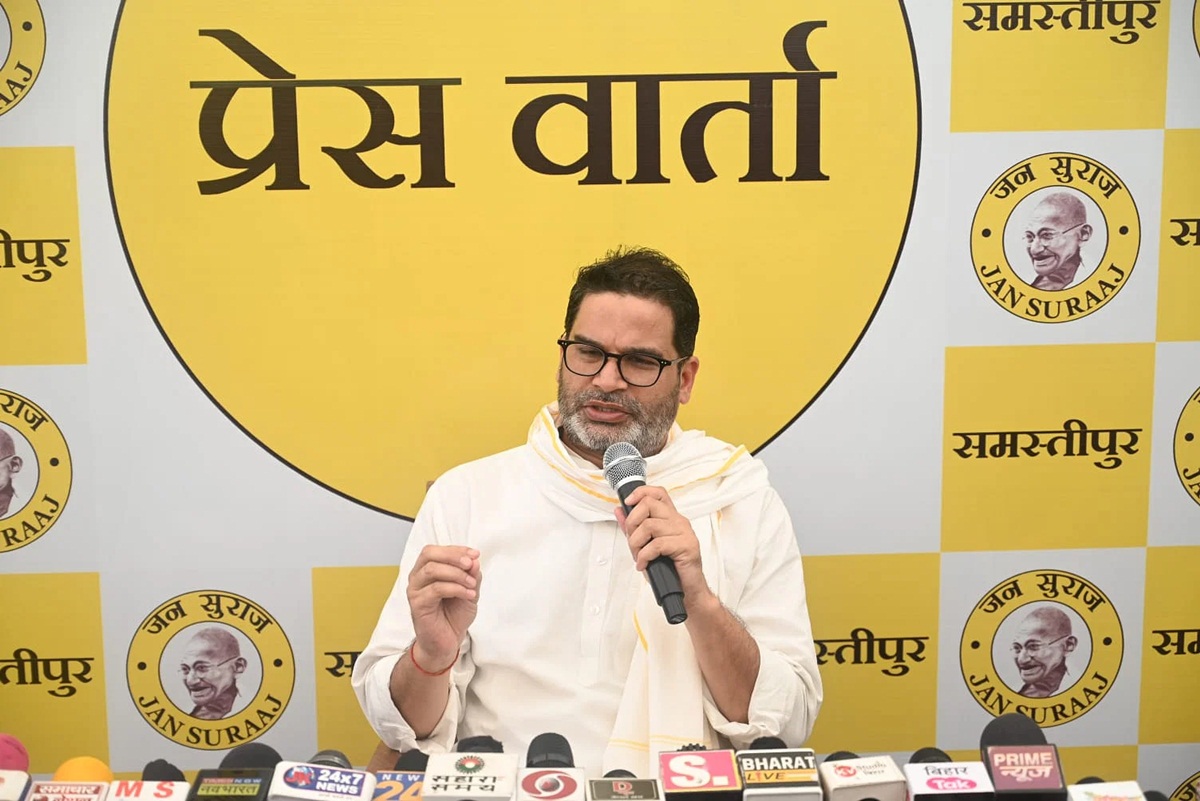
Delhi: The Supreme Court has strongly criticised Jan Suraaj Party founder Prashant Kishor for challenging the Bihar Assembly Election 2025 results after his party failed to perform well. The top court made it clear that political leaders should respect the decision of voters and should not approach courts merely to regain attention or popularity after losing elections.
A bench headed by Chief Justice of India Surya Kant, along with Justice Joymalya Bagchi, made these observations while hearing a petition filed by Prashant Kishor. The plea questioned the timing of payments made under the Women Employment Scheme during the election period.
During the hearing, the Chief Justice remarked that elections are decided by the people, and their verdict must be accepted with maturity. The court said that candidates rejected by voters should not misuse the judicial system as a platform to continue political battles already settled at the ballot box.
Prashant Kishor’s petition alleged that the Bihar government transferred ₹10,000 to women beneficiaries just before polling, which he claimed influenced voters and affected the fairness of the election. He also stated that these transfers took place while the Model Code of Conduct was in force. Earlier, the Election Commission had declined to act on the complaint, following which Kishor approached the Supreme Court.
However, the bench observed that the payments were part of an existing welfare scheme and not a new announcement made solely for elections. The court pointed out that such schemes cannot be stopped automatically during elections unless clear violations are proven.
The Supreme Court also raised serious concerns about the nature of the petition. It noted that election-related cases must focus on specific constituencies or individual candidates. In contrast, Jan Suraaj had sought cancellation of the entire Bihar Assembly Election through a single petition, which the court said did not meet legal requirements.
Senior advocate Chandra Uday Singh, appearing for Jan Suraaj, argued that the timing of the payments gave the ruling government an unfair advantage, especially among women voters. However, the bench was not convinced and said the plea lacked solid legal grounds.
Refusing to issue any notice, the Supreme Court dismissed the petition and advised the party to approach the Patna High Court if it wished to pursue the matter further. The court firmly stated that it would not entertain attempts to turn the judiciary into a political stage.