X: @vivekbhavsar
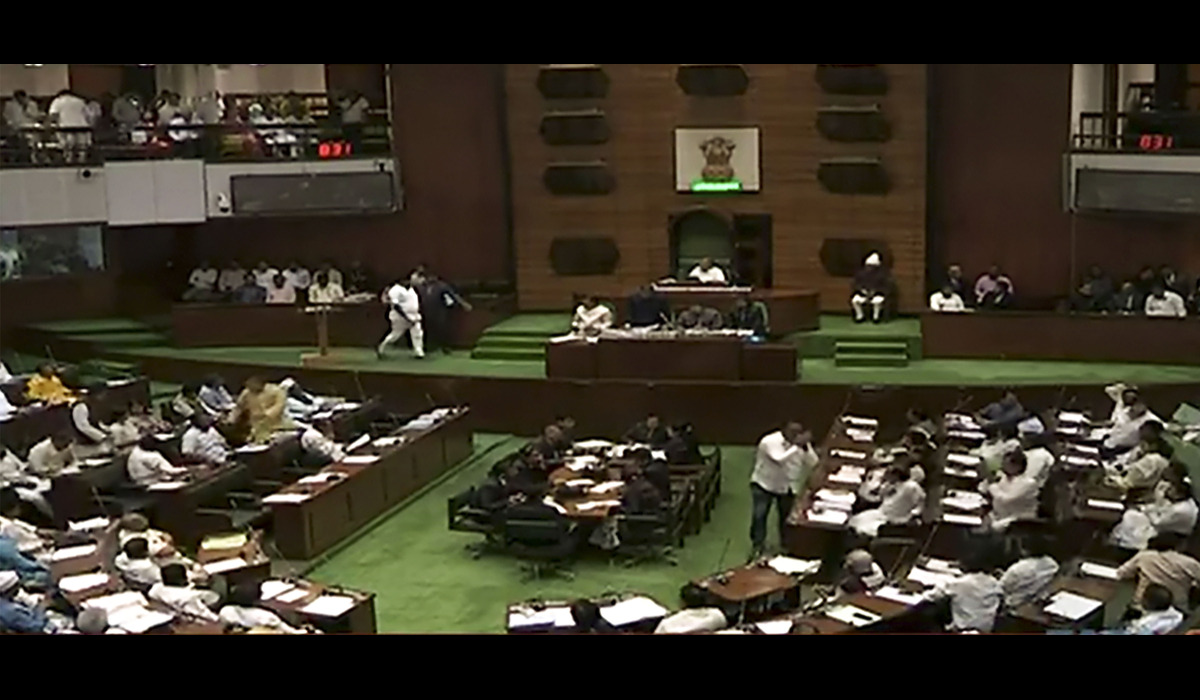
Mumbai: On Wednesday, December 10, the Maharashtra Government will ram through one of the most sweeping land governance overhauls in the state’s history: Assembly Bill No. 97 of 2025 – the Maharashtra Land Revenue Code (Second Amendment) Bill, 2025. With its brute legislative majority, the ruling alliance is set to bulldoze this Bill through before the Winter Session ends on December 14.
Despite calls from several MLAs to send the Bill to a Joint Committee of both Houses, the Government is hell-bent on zero scrutiny and zero delay. This isn’t just another amendment: it’s a hostile takeover of Maharashtra’s land governance structure. Experts are sounding the alarm—warning that the Bill will strip trained Revenue Officers of their authority and hand land control to politically manipulated municipal bodies.
Opposition parties have just four days left. Four days to expose, oppose, and block this Bill before it permanently tips the balance of power in Maharashtra’s land administration.
1. Why This Bill Matters — And Why It Is Being Rushed
This Bill guts the backbone of Maharashtra’s land administration by eliminating the mandatory NA (non-agricultural) permission from the District Collector. Land-use power will be yanked from the hands of trained Revenue Officers and handed over to politically driven Planning Authorities—municipal corporations, councils, and Special Planning Authorities — notorious for their lack of accountability.
The bottom line: land conversion is now ripped away from the Revenue Department, while land approval is dumped into the laps of Municipal and Development Authorities.
This is not a routine administrative tweak—it’s a seismic, structural coup over land power. Retired Revenue officers are sounding the alarm: this is a “red alert” for the department and for the future of land governance in Maharashtra.
2. Voices From the System: “This Bill Will Kill Revenue Oversight”
A highly experienced IAS officer who previously served as Deputy Collector and Additional Collector handling land matters, gave a clear warning, “This Bill is a red alert. No land cases will come before the District Collector or Additional Collector. Developers will no longer need to approach the Revenue Department. All power shifts to municipal officers — and that is where the big land scams happen.”
His statement is crucial. This is not an activist speaking. This is a senior officer who spent decades inside Maharashtra’s land management system.
For the first time since the British era, the Collector will not have decisive authority over land use.
3. The Most Dangerous Clause: Section 42 Rewritten Completely
The new Section 42 states: “No Collector permission is required for NA conversion if the use is allowed under the MRTP Act.” This sounds harmless but has devastating implications: Any agricultural land shown as “developable” in DP can instantly become NA, Municipal officers with limited training in land records become the final authority, No scrutiny of occupancy class, encroachment, tenancy restrictions, No legal hearings by Additional Collectors, Zero check on fraudulent land deals.
This opens the floodgates for uncontrolled conversions — especially in fringe areas like Thane rural, Navi Mumbai periphery, Pune fringe villages, Nagpur outskirts, Nashik talukas and Raigad urban belts.
4. The Bill Deletes Three Crucial Regulatory Sections
Sections 44, 44-A, and 45, which historically allowed Revenue Officers to check illegal conversions and misuse, are deleted entirely. These sections protected Government land, Tenancy-restricted land, Inam lands, Encroached lands and Ceiling-affected lands.
Deleting them means no officer can question misuse, no officer can object, and no officer can block illegal change of use.
5. Section 41(7) – The Government’s New “Exemption Weapon”
The Bill inserts a sweeping exemption clause: the Government may exempt ANY land or class of land from restrictions in the “public interest.” This is extremely dangerous because “Public interest” is undefined; the government can override the Revenue Department completely, it can be used to favour private developers, and it can be used to bypass legal restrictions on sensitive lands.
This clause alone can enable massive land manipulation.
6. Ultra-Low NA Premiums: A Jackpot for Developers
The new premium rates:
0.1% for up to 1,000 sq m
0.25% for 1,000–4,000 sq m
0.5% for over 4,000 sq m
These rates are unbelievably low. For a 100-acre township worth ₹800 crore, the premium could be as little as ₹4 crore.
Experts warn, “Developers will rush to convert thousands of acres, Municipal officers will be pressured, and massive land scams are inevitable.”
7. Why Revenue Officers Are the Backbone — And What Happens When They Are Removed
Collectors, Additional Collectors, and Tahsildars understand 7/12 history, occupancy rights, restrictions under various Acts, land ceilings, government land boundaries, mutation patterns, tenancy violations, forged heirship and illegal title transfers.
Municipal officers do not.
Once the Bill passes, no trained officer will examine land records, no hearings, no cross-verification, no legal challenges and no independent oversight.
This is why retired officers are calling it a tsunami-level structural collapse.
8. The Builder Lobby Will Gain the Most – And the Govt Knows It
Developers will no longer need to visit the Collector’s Office, undergo scrutiny of land status, obtain detailed title verification from Revenue, or comply with land-related conditions.
Instead, they only need influence with local corporators, with Town-Planning departments, and with municipal commissioners.
This dramatically shifts the balance of power.
9. Why the Government Refuses Joint Committee Review
Opposition MLAs have proposed sending the Bill to the 53-member, 50-member, and 43-member Joint Committees.
But the Government will use its majority to reject all proposals.
Why?
They do not want scrutiny; they do not want expert review; they want the Bill passed BEFORE people understand it; they want developers to start conversions immediately; and they do not want public debate on land scams.
This is precisely why the Bill is being rushed before December 14.
10. What the Opposition MUST Raise in the House
The Opposition must urgently question: Why is the Collector’s role removed? Why is the municipal officer made supreme? Why delete Sections 44, 44-A, 45?, Why insert an unlimited exemption clause?, Why give builders ultra-cheap NA premiums? Why avoid Joint Committee scrutiny? And why such a hurry before December 14?
If these questions are not raised, the Bill will pass quietly—and Maharashtra’s land regulations will be permanently altered.
This Bill Must Be Debated, Not Bulldozed
The MLRC Amendment Bill 2025 is not a small reform. It is a complete redistribution of land power — from trained, neutral Revenue officers to politically influenced municipal bodies.
If passed without scrutiny, Maharashtra will witness unregulated urbanisation, enormous land scams, farmland conversion at an unprecedented scale, collapse of revenue oversight, erosion of collector authority, and a political-builder nexus at its peak.
Opposition leaders must act now — because after December 14, it may be too late.