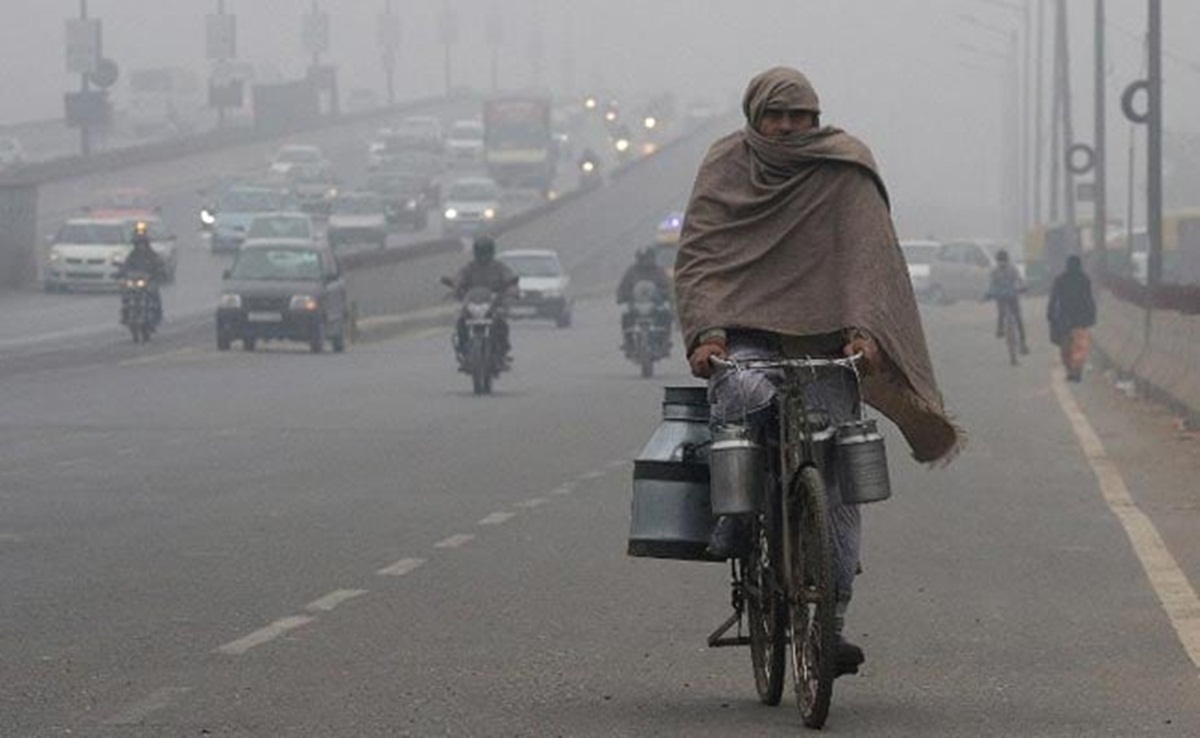
Mumbai: Mumbai residents began their Saturday morning under a thick grey haze as smog spread across large parts of the city, sharply reducing visibility and giving the day an unusually cold and heavy feel. Several neighbourhoods woke up to blurred skylines, with early commuters struggling to navigate roads under low-visibility conditions.
Weather conditions are expected to remain dull and hazy through the day. Temperatures are likely to stay within a narrow band, offering no major relief from the stagnant air that has trapped pollutants close to the ground. While the temperature pattern has remained fairly steady over recent days, air quality levels have shown sudden and worrying fluctuations.
Current air quality readings indicate that Mumbai has slipped deep into the danger zone. The city’s overall Air Quality Index has crossed the 300 mark, placing it in the “severe” category. This means the air is unsafe not just for vulnerable groups but also for healthy individuals. Officials tracking pollution levels observed that air quality briefly improved on Friday evening before deteriorating rapidly overnight.
Data from across the city paints a grim picture. A vast majority of monitoring stations are reporting extremely high pollution levels, with several locations recording AQI readings well above 350. Eastern suburbs and industrial belts appear to be among the worst affected, with truck terminals and dense residential clusters emerging as pollution hotspots.
Only a few pockets have managed to escape the worst conditions. A limited number of areas reported relatively cleaner air, falling in the “moderate” or “poor” categories. However, even these locations remain far from ideal and offer little comfort amid the citywide pollution surge.
Health experts warn that continued exposure to such toxic air can lead to breathing difficulties, eye irritation, fatigue, and aggravation of existing heart and lung conditions. Children, elderly citizens, and people with asthma or cardiac issues are at particularly high risk. Residents have been advised to limit outdoor activity, keep windows closed where possible, and use masks or air purifiers if available.
The latest spike in pollution has once again raised questions about long-term air quality management in India’s financial capital. With construction activity, vehicular emissions, and unfavourable weather conditions combining to worsen the situation, citizens fear that severe air episodes may become more frequent unless stronger corrective measures are implemented.