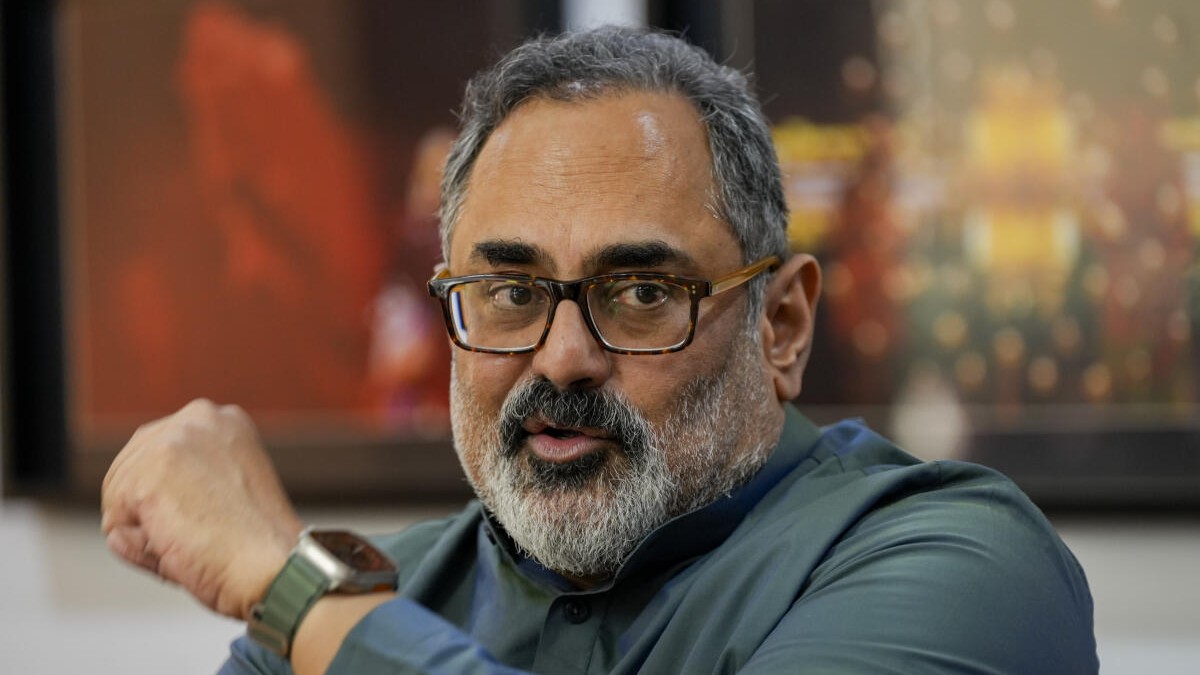
Thiruvananthapuram: Amid the feverish campaign for the local body polls in Kerala, state BJP chief Rajeev Chandrasekhar has sprung a surprise by announcing that he will contest the upcoming 2026 assembly elections from a constituency in the state capital.
The messaging from this early declaration is loud and clear: the BJP wants to position itself as a serious contender in the assembly polls scheduled for March–April 2026. It also sends a signal to detractors within the party that Chandrasekhar continues to hold firm control over the state unit and enjoys the confidence of the central leadership.
This, however, does not mean he is under any illusion that the BJP is anywhere close to capturing power in Kerala. Rather, it indicates that the party will make an all-out push to convert its growing support base into at least a few assembly seats—a house where it currently has no representation.
During a recent ‘Meet the Press’ event, Chandrasekhar even stated that he plans to contest from the Nemom assembly constituency in Thiruvananthapuram.
Also Read: Bihar verdict erodes Congress’s credibility as opposition vanguard
Nemom holds special significance for the BJP: it was here that the party broke its electoral jinx when senior leader O. Rajagopal won in the 2016 assembly elections. But in 2021, the party lost the seat, with former Mizoram Governor Kummanam Rajasekharan defeated by CPI(M)’s V. Sivankutty, who went on to become the education minister in the second Pinarayi Vijayan government.
Chandrasekhar’s announcement has surprised even senior leaders of the faction-ridden state unit. Yet, it has boosted the morale of party cadres working hard to capture power in the Thiruvananthapuram Municipal Corporation. In the last civic polls, the BJP emerged as the principal opposition in the Left-ruled corporation, pushing the Congress-led UDF to third place.
Unlike most parts of Kerala, where the contest is between the LDF and UDF, the capital city witnesses a direct fight between the LDF and the BJP.
This time, the BJP has also mounted a targeted campaign, focusing resources on select constituencies where it believes it has a realistic chance, rather than spreading itself thin. The party has even struck local-level tie-ups in certain pockets to overcome demographic barriers—its biggest structural hurdle in the state.
Campaign managers claim the atmosphere is visibly different this time, with ground-level workers no longer weighed down by the usual feeling that the party would ultimately finish as an also-ran.
The party is treating the local body elections as a strategic warm-up for the assembly polls. The civic poll results will offer critical insights into constituencies where it can deploy manpower and resources more effectively in 2026.
When Chandrasekhar was appointed state BJP president earlier this year, many eyebrows were raised among home-grown leaders. But the choice conveyed a clear message against the perennial factionalism that has dogged the Kerala unit.
Despite the cold shoulder from several senior leaders, Chandrasekhar has continued to build his own team and proceed with his organisational restructuring.