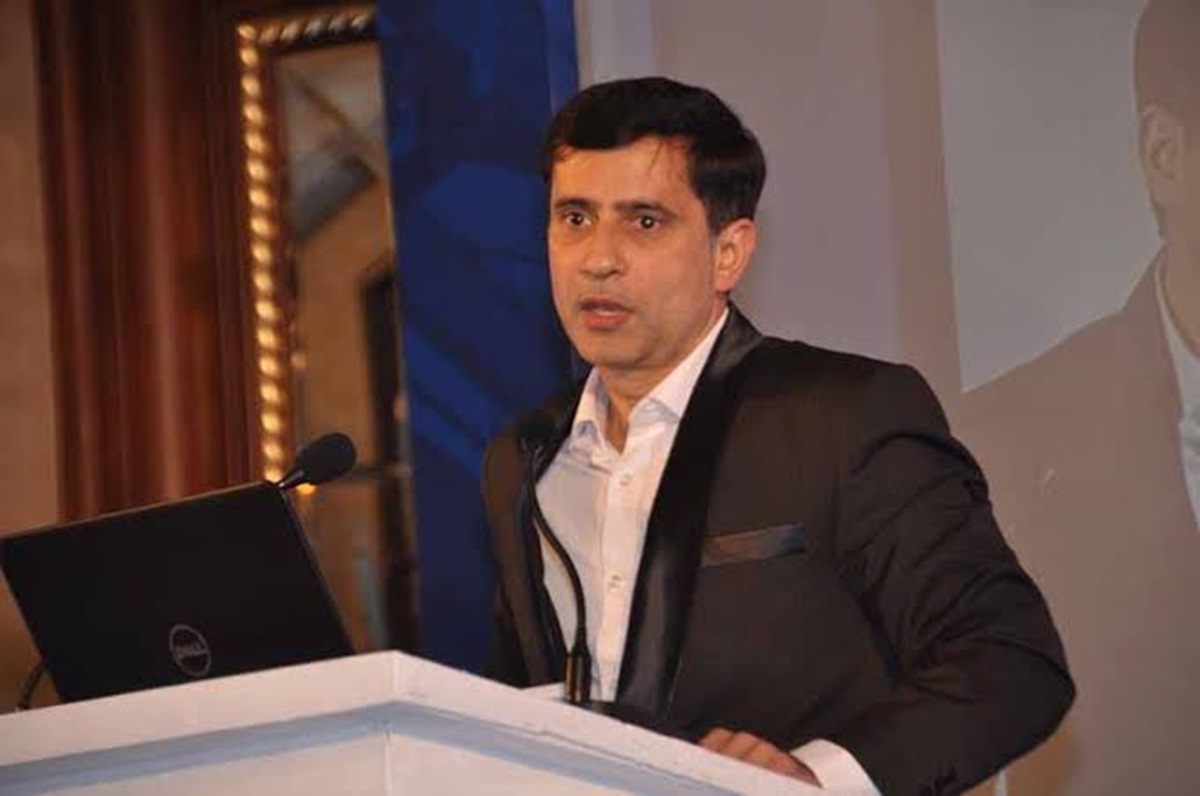
Mumbai: In a landmark move to streamline Mumbai’s real estate regulatory framework, Bhushan Gagrani, Commissioner of the Brihanmumbai Municipal Corporation (BMC), has agreed to constitute a ‘Real Estate Steering Committee’ aimed at introducing Ease of Doing Business 2 (EODB 2).
The proposed committee will include representatives from CREDAI-MCHI, NAREDCO Maharashtra, Practising Engineers, Architects and Town Planners Association (PEATA), and the Brihanmumbai Developers Association (BDA), alongside key officials from multiple BMC departments — including the Fire Brigade.
The committee’s primary objective will be to institutionalise a transparent dialogue between the municipal administration and real estate bodies, ensuring faster policy implementation, AI-enabled plan approvals, and real-time resolution of bottlenecks impacting Mumbai’s construction and housing sector.
According to Mr Gagrani, the Real Estate Steering Committee will convene fortnightly, chaired by Deputy Chief Engineer (Commissioner’s Office) Chandrashekhar Undge, while the Commissioner himself will participate in a monthly review.
This mechanism is designed to ensure continuous tracking, execution, and evaluation of all key policy decisions and recommendations.
The decision follows an extensive meeting held at the BMC Headquarters where top representatives from developers’ associations met with Mr Gagrani. The delegation included Sukhraj Nahar, President, CREDAI-MCHI; Sandeep Runwal, Vice Chairman, NAREDCO Maharashtra; members of BDA and PEATA.
The leaders collectively emphasised the need for structured engagement, policy rationalisation, and automation in municipal processes to accelerate development without compromising compliance.
10:10:80 Premium Payment Proposal
Among the major recommendations discussed was the introduction of a 10:10:80 premium payment structure for developers:
• 10 % of premiums at the approval stage,
• 10 % at the Commencement Certificate (CC) stage, and
• 80 % at the Occupation Certificate (OC) stage.
This model aims to align payment timelines with project cash flows while maintaining revenue neutrality for the civic body. At present, developers are required to pay multiple premiums — including fungible FSI, open-space deficiency, fire-service charges, scrutiny fees, and development cess — upfront or under deferment schemes with 12 % interest, placing heavy financial strain before revenue generation.
Sukhraj Nahar, President – CREDAI-MCHI, said, “It is heartening to see all real-estate associations unite with a common purpose. The 10:10:80 model is a fair, practical approach aligning cash-flow realities with civic revenues. EODB 2 will set a new benchmark for transparency and efficiency.”
Sandeep Runwal, Vice Chairman – NAREDCO Maharashtra, added, “The real-estate industry is a key growth driver for Mumbai. Regular engagement with civic authorities is vital to unlock its full potential. We look forward to translating today’s discussions into tangible reforms.”
The meeting builds on the momentum of the Real Estate Leaders’ Convergence organised by CREDAI-MCHI earlier this month, where the city’s major industry associations pledged to represent the sector jointly. With the BMC’s proactive participation, the collaborative effort marks a new era of industry-government partnership to create a more efficient, technology-driven, and growth-oriented real-estate ecosystem for Mumbai.
The meeting was attended by senior representatives including Rajan Bandlkar, Vice Chairman NAREDCO; Ms. Manju Yagnik, Senior Vice President NAREDCO Maharashtra; Kamlesh Thakur, Vice President NAREDCO Maharashtra; Dominic Romell, Immediate Past President CREDAI-MCHI; Bandish Ajmera, President-Elect CREDAI-MCHI; Rushi Mehta, Secretary CREDAI-MCHI; Jitubhai Mehta, Senior Vice President CREDAI-MCHI; Aditya Mirchandani and Keval Valambhia (COO) CREDAI-MCHI; Vikram Mehta (President BDA); Ritesh Shah, Bhushan Nemlekar, Sudhir Lohiya, Bhavik Mehta (BDA); Sandip Isore (President PEATA); Milind Changani (Secretary PEATA); Suyog Seth, Architect Shashi Jadhav, and Manoj Dubal (PEATA).