New Delhi: In a move that has reignited discussions on the BJP’s ongoing renaming spree, Rajya Sabha MP and former Uttar Pradesh Deputy Chief Minister Dinesh Sharma has unofficially renamed Tughlaq Lane to Swami Vivekananda Marg. The move aligns with the BJP’s broader campaign to rechristen landmarks associated with Mughal and Tughlaq-era rulers.
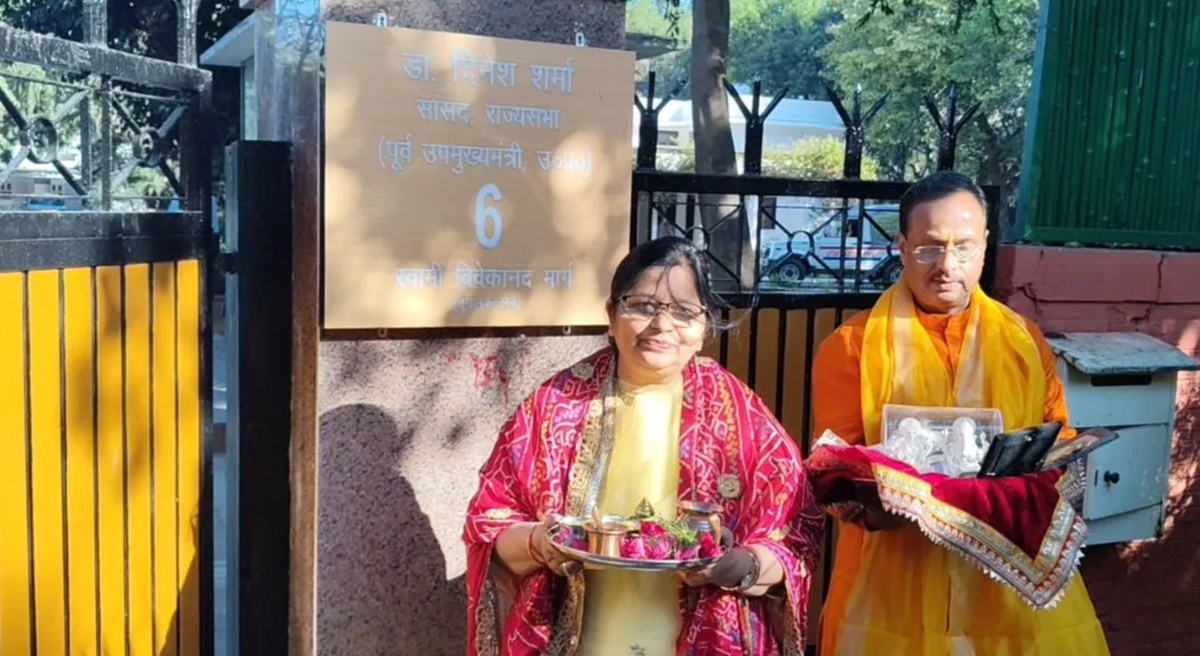
On Thursday, March 6, Sharma conducted a Griha Pravesh (housewarming) ceremony at his newly allotted residence on Tughlaq Lane, unveiling a nameplate with Swami Vivekananda Marg prominently displayed while keeping “Tughlaq Lane” in brackets below. Sharing the update on social media, Sharma did not explicitly mention the renaming but stated, “Today, along with my family, I performed the housewarming ceremony of my new residence at Swami Vivekanand Marg (Tughlaq Lane) in New Delhi.”
आज नई दिल्ली स्थित नए आवास स्वामी विवेकानंद मार्ग (तुगलक लेन) में सपरिवार विधि विधानपूर्वक, पूजन-अर्चन कर गृह प्रवेश किया।@narendramodi @JPNadda @AmitShah @blsanthosh @myogiadityanath @idharampalsingh @pmoindia @BJP4India @BJP4UP pic.twitter.com/BayBC9JK9W
— Dr Dinesh Sharma BJP (@drdineshbjp) March 6, 2025
Sharma is not alone in this endeavor. BJP MP from Faridabad and Minister of State for Cooperation, Krishan Pal Gurjar, has also altered the nameplate outside his bungalow to reflect the new name. Additionally, a signboard outside Bungalow No. 10 has been changed, fueling speculation about a coordinated effort within BJP ranks to rename historic locations.
Tughlaq Lane, named after 14th-century Delhi Sultanate ruler Ghiyasuddin Tughlaq, remains a significant part of the city’s heritage. In 2015, a similar renaming saw Tughlaq Road changed to APJ Abdul Kalam Road, yet Tughlaq Lane remained unchanged. With BJP’s return to power in Delhi after 26 years, the push for renaming continues.
Several BJP leaders have called for renaming Muslim-era localities. BJP MLA Mohan Singh Bisht has proposed renaming Mustafabad to Shivpuri or Shiv Vihar, while Neelam Pahalwan has suggested changing Najafgarh to Nahargarh, citing its historical connection to Raja Nahar Singh, a leader in the 1857 revolt.