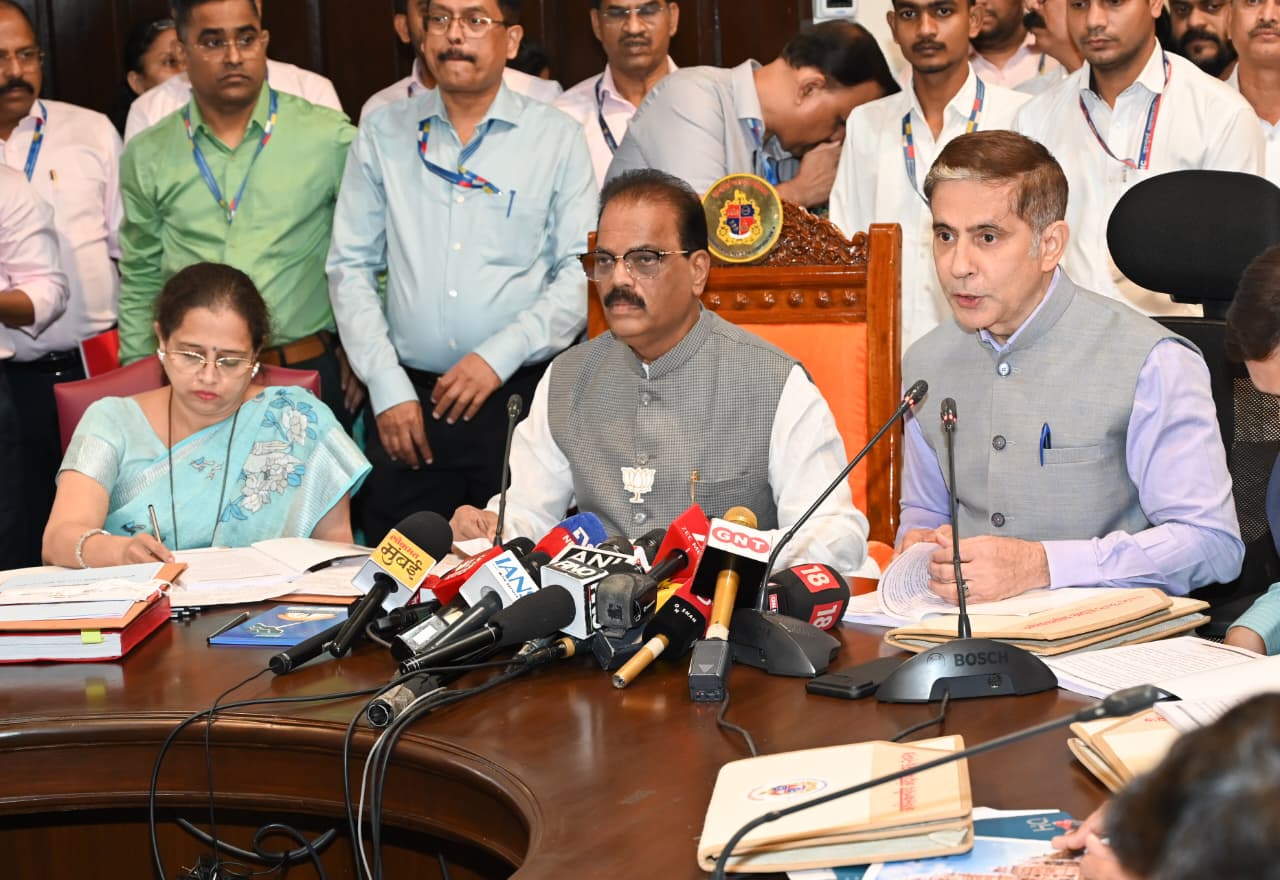
In a major announcement that sets the tone for Mumbai’s development roadmap, Municipal Commissioner Bhushan Gagrani presented the highest-ever budget of the Brihanmumbai Municipal Corporation (BMC) at Rs 80,952.56 crore for the financial year 2026–27. The civic body has projected a surplus of Rs 89.84 crore and confirmed that no new direct taxes will be imposed.
The new outlay marks an 8.77% increase over last year’s Rs 74,427.41 crore budget, reinforcing BMC’s position as India’s richest civic corporation.
Infrastructure Gets Lion’s Share
Out of the total budget, Rs 48,164.28 crore has been earmarked for capital expenditure, reflecting a strong focus on infrastructure expansion and completion of ongoing mega projects rather than announcing new schemes.
Major allocations include:
- Rs 9,650 crore for bridges (over 70% jump from last year’s revised estimate)
- Rs 6,875 crore for roads and traffic management
- Rs 5,690 crore for sewage treatment plants
- Rs 5,520 crore for road concretisation
- Rs 4,700 crore for the Mumbai Coastal Road’s Versova–Bhayander stretch
- Rs 2,650 crore for Goregaon–Mulund Link Road
The total size of infrastructure projects currently underway by BMC stands at a massive Rs 2.44 lakh crore.
Big Push for Water Security
Water supply remains a central theme in this year’s budget. The civic body has allocated Rs 6,475 crore for the desalination plant at Manori and the Gargai Dam project to ensure long-term water availability for Mumbai.
While Mayor Ritu Tawde assured that the proposed annual 8% water tax hike would be stalled, Gagrani clarified that no water tax increase has been proposed in this budget.
Green Bonds & Asset Monetisation Plan
In a first-of-its-kind move, BMC announced plans to raise municipal green bonds to finance climate-friendly infrastructure such as wastewater treatment and desalination facilities. This aligns with the Union Budget 2026’s Rs 100 crore incentive for large municipal bond issuances.
Additionally, the civic body plans to monetise revenue-generating assets through an Infrastructure Investment Trust (InvIT) model to mobilise funds for capital projects.
To support its spending, BMC will use:
- Rs 13,765.74 crore from fixed deposits
- Rs 14,295.86 crore from special funds
Revenue Strategy & Pending Dues
The estimated revenue income for 2026–27 stands at Rs 51,510.94 crore, a sharp 19.35% rise compared to last year’s estimates.
Key revenue sources include:
- Octroi compensation: Rs 15,550.02 crore
- Development Plan fees & premiums: Rs 12,050 crore
- Property tax: Rs 7,000 crore
Premium charges for additional FSI/TDR usage have been increased from 5% to 7.5% for residential and from 10% to 12.5% for non-residential users.
BMC has also entered the affordable housing segment, selling 426 units and generating Rs 300 crore this year, with Rs 150 crore expected next year.
However, pending dues from state departments total Rs 10,948.58 crore, including Rs 7,241.44 crore in education grants.
Financial Position & Reserves
The civic body holds Rs 81,449.32 crore in fixed deposits as of January 2026, slightly down from last year. Of this, Rs 44,826.23 crore is reserved for liabilities like pensions and provident funds, leaving Rs 36,623.09 crore available for infrastructure.
Continued Support for BEST
Since 2012–13, BMC has extended Rs 12,028.81 crore in financial aid to Brihanmumbai Electric Supply and Transport (BEST). For 2026–27, a grant of Rs 1,000 crore has been proposed.
Entertainment Tax & Policy Changes
Following amendments to the Maharashtra Entertainment Duty Act, the responsibility for collecting entertainment tax will shift to local authorities once state approval is granted. Gagrani estimated annual revenue generation of Rs 400–500 crore from this source.
Budget Growth Over the Years
BMC’s budget has steadily grown over the past five years:
- 2021–22: Rs 35,962 crore
- 2022–23: Rs 43,491 crore
- 2023–24: Rs 52,553 crore
- 2024–25: Rs 65,180 crore
- 2025–26: Rs 74,427 crore
- 2026–27: Rs 80,952 crore
Commissioner’s Vision
In his concluding remarks, Gagrani stated that the budget reflects a vision of a modern, inclusive and financially disciplined Mumbai, focusing on sustainable growth and citizen-centric governance.
The proposal will now be examined by the Standing Committee before final approval in the general body meeting, expected by mid-March.
With no new taxes but aggressive infrastructure funding, the 2026–27 BMC budget signals a high-investment phase aimed at reshaping Mumbai’s civic future.