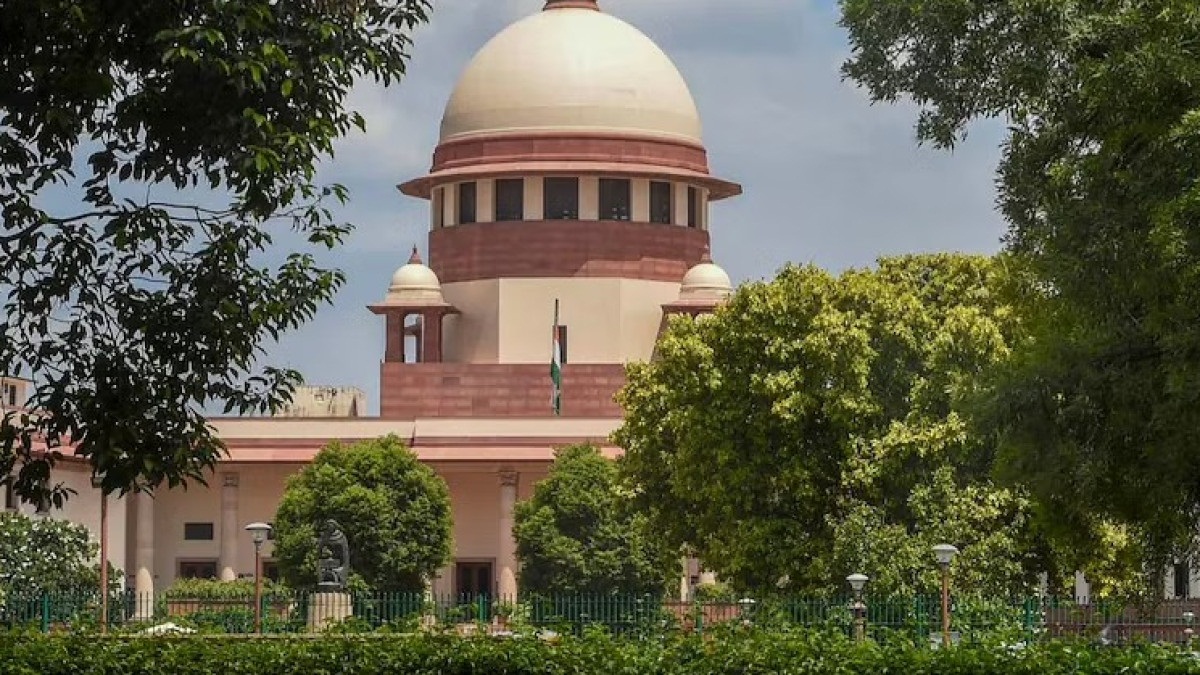
In a dramatic development, the Supreme Court of India has ordered a complete ban on public access to a Class 8 Social Science textbook published for the 2026–27 academic session by the National Council of Educational Research and Training (NCERT). The book contained a chapter discussing “judiciary corruption,” which triggered strong objections from the court.
The matter is being heard as a suo motu case, meaning the Supreme Court took cognisance of the issue on its own without a formal petition being filed.
NCERT is India’s national curriculum body responsible for developing school textbooks and academic guidelines followed by CBSE and several state boards.
The court has issued show-cause notices to the Secretary of the Department of School Education and to NCERT Director Dinesh Prasad Saklani, seeking an explanation on how the controversial content was cleared for publication.
Centre Tenders Apology in Court
During the hearing, Solicitor General Tushar Mehta, appearing on behalf of the Centre, informed the bench that the government was tendering an unconditional apology in the suo motu proceedings. He further stated that individuals involved in drafting the disputed chapter would not be associated in the future with the University Grants Commission (UGC) or any ministry.
However, Chief Justice Surya Kant expressed dissatisfaction, observing that the written communication received by the court did not contain a clear apology. He questioned how such content reached publication stage and whether proper review mechanisms had been followed.
Strong Observations from the Bench
The Chief Justice remarked that presenting the judiciary in a negative manner to school students could have serious institutional consequences. He observed that repeatedly telling young learners that courts are corrupt or inefficient may weaken public faith in constitutional bodies.
The bench indicated that the matter appeared serious and suggested the possibility that the inclusion of such content could not be dismissed lightly.
According to submissions made in court, approximately 32 copies of the textbook had been sold before distribution was halted. The Centre informed the court that circulation has been stopped. However, it remains to be clarified whether the withdrawal applies nationwide permanently or whether the restriction is temporary pending revision.
What the Chapter Stated
The disputed chapter reportedly discussed challenges faced by the judiciary, including corruption at various levels, delays in case disposal, and shortage of judges. It also mentioned that judges are governed by a strict code of conduct both inside and outside the courtroom.
The textbook cited data — as presented within the chapter itself — stating that approximately 81,000 cases were pending in the Supreme Court, over 62 lakh in High Courts, and nearly 4.7 crore in district and subordinate courts. It further noted that governments at both Union and state levels were working to improve transparency and reduce pendency through technological reforms.
The court has not endorsed these figures; they were referenced as part of the textbook’s narrative.
Broader Debate: Institutional Trust vs Academic Freedom
The controversy has sparked wider debate over how sensitive constitutional subjects should be addressed in school curricula. While the Supreme Court emphasised safeguarding institutional credibility, some education experts argue that curriculum reform must balance institutional respect with open academic discussion of systemic challenges.
As the case proceeds, the Supreme Court’s intervention signals a firm stance on protecting the dignity of constitutional institutions. At the same time, it has opened discussion on the limits of critique within school education.