The administration of Donald Trump has announced a temporary shift in tariff policy following a ruling by the Supreme Court of the United States, which restricted the President’s ability to impose trade duties under the International Economic Emergency Powers Act (IEEPA).
According to the White House, the Court ruled that IEEPA cannot be used as a legal basis for imposing broad tariffs, forcing the administration to rely on alternative statutory powers for now.
Uniform Tariff to Apply to Key Trade Partners
In response to the decision, the White House confirmed that countries which had reached trade arrangements with the Trump administration — including India, the European Union, the United Kingdom, and Japan — will now be subject to a flat 10 per cent import tariff.
A senior administration official explained that these nations were previously covered under IEEPA-based tariff measures. With that authority invalidated by the Court, the government has invoked Section 122 of US trade law to impose a uniform global duty.
White House Says Move Is Temporary
Officials stressed that the 10 per cent surcharge is not permanent. The administration plans to explore other legal avenues to re-establish differentiated or negotiated tariff rates.
Until a new framework is finalised, the White House expects all partner countries to continue honouring existing trade commitments, including agreed reductions in trade barriers and market-access concessions.
Trump Criticises Court, Signals Broader Tariff Powers
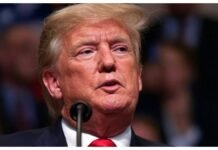
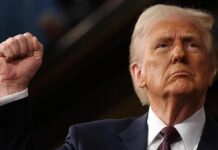
President Trump responded strongly to the ruling, expressing disappointment with the majority decision while praising the dissenting justices. He argued that the judgment does not invalidate tariffs as a policy tool but only restricts their use under one specific statute.
Trump maintained that other provisions of US trade law — including Sections 232 and 301 — remain intact and, in his view, offer even stronger authority to levy duties.
National Security and China Tariffs Remain Unchanged
The administration confirmed that all existing national security-linked tariffs under Section 232, as well as Section 301 duties — particularly those targeting China — will continue unaffected.
Current Section 301 tariffs on Chinese goods range widely depending on product category, while Section 232 tariffs apply to a significant share of US imports tied to strategic industries.
Administration Lays Out Next Steps
US Trade Representative Jamieson Greer said the ruling impacts only one element of the administration’s broader trade strategy. He defended the earlier use of emergency powers, arguing they were necessary to address trade imbalances, border concerns, and illicit drug flows.
The administration outlined immediate measures, including the temporary 10 per cent surcharge under Section 122, new investigations under Section 301 into unfair trade practices, and the continuation of ongoing probes involving China and Brazil.
Temporary Tariff Timeline and Exemptions
A White House fact sheet said the global tariff will remain in force for 150 days, beginning February 24 at 12:01 a.m. Certain categories — such as pharmaceuticals, critical minerals, aerospace products, select electronics, and informational materials — will be excluded from the measure.