Thiruvananthapuram: When an ardent left-wing poet strikes a cautionary note that a long stay in power does not augur well for democracy, it obviously annoys Kerala’s ruling Left Democratic Front (LDF), which is bracing for a hat-trick win.
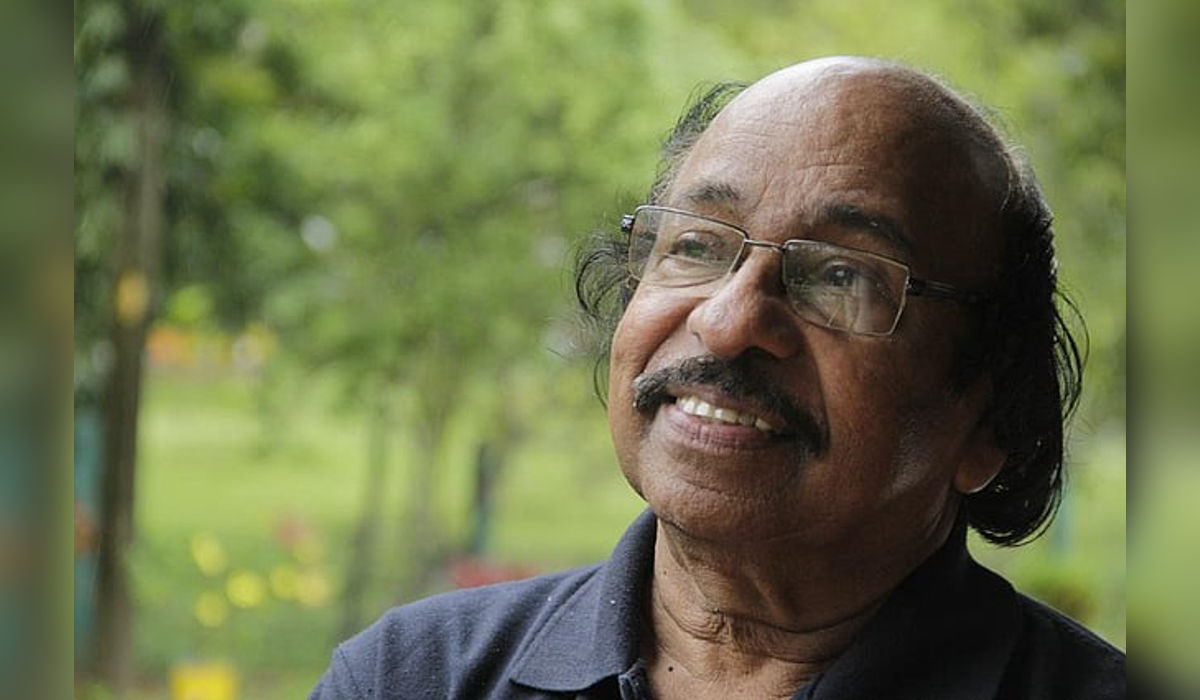
K. Satchidanandan, poet, literary critic, commentator and Kerala Sahitya Akademi president, recently ruffled the Left cultural ecosystem by stating that a monopoly on power could lead to misuse of authority.
It was widely believed that he was aiming at the LDF in Kerala, as he cited the case of West Bengal, where the CPI(M)-led Left Front vanished after wielding power for over three decades.
Significantly, Satchidanandan was made Kerala Sahitya Akademi president by the LDF government.
Expectedly, the views expressed by him in an interview to a Malayalam newspaper did not go down well with the Left political and cultural ecosystem.
The LDF leadership, however, has tactically steered clear of the issue to avoid triggering a heated political debate, which could be leveraged by the Congress-led UDF and the BJP.
But quite a few left-leaning writers and cultural personalities have slammed Satchidanandan. He was also barraged with stinging social media comments and trolls.
The 79-year-old poet, who enjoys a reputation for staying away from power centres and upholding his creative freedom, has stood by what he said. According to him, his detractors either failed to understand the true intention of his views or seized on them to run him down personally.
The Communist movement in India has a long history of leveraging culture for the spread of its ideology and organisational reach, especially in Kerala.
The movement’s cultural engagement dates back to the pre-Independence decades.
Initially, left-leaning writers, playwrights and artists used to be closely associated with the party, and many of them were card-bearing comrades. They were motivated by the Marxism-inspired global trend known as ‘social realism’, which held that writers and artists should leverage their respective genres to germinate ideas of change through a realistic portrayal of the oppressive and exploitative order.
The Indian communist leadership made great strides in floating and sustaining the pro-Left cultural front since the inception of the party, organising the ‘progressive writers’ movement and theatre groups like the Indian People’s Theatre Association (IPTA).
This cultural movement was active in many parts of the subcontinent, including Mumbai, Punjab, Andhra, the Hindi heartland, Bengal and the Madras Province. Many popular writers and playwrights in different Indian languages were associated with this cultural front.
Writers, theatre personalities and artists associated with the movement also drew inspiration from the Soviet experience and took it upon themselves to tell the masses how a socialist society was being built after the Russian Revolution, which was projected as a global model to usher in a world free of oppression and exploitation.
In due course, especially after Independence, many leading writers disengaged themselves from party-led cultural activism on the ground that it often curtailed their creative freedom.
The slide of the Soviet Union into dictatorship under Joseph Stalin, the refusal of the Indian communist leadership to recognise the Congress government under Jawaharlal Nehru and act as a constructive opposition, and the party’s steady alienation from the masses due to excessive focus on the Marxian paradigm with little attention to Indian realities prompted many writers and artists to delink themselves from party-led cultural fronts, even as they maintained a broad leftist outlook.
Also Read: Stakes high for regional, national parties in upcoming state polls
After the 1964 split, both the CPI(M) and the CPI reconfigured their cultural fronts, broadening them into autonomous, domain-centric verticals such as science literary movements, theatre groups, writers’ associations and folk arts promotion groups. Still, the CPI(M) and the CPI continued to leverage these fronts for organisational and electoral campaigns.
Also, people associated with these outfits were often rewarded with fellowships and academic or sinecure positions whenever the Left came to power.
Cultural leftism underwent a transformation worldwide after the 1960s. Its practitioners, including those in Europe, started keeping away from organised movements. They emphasised dismantling socio-cultural inequalities by strengthening democracy and civil rights, engaging with the underprivileged and the underclass, and asserting creative freedom to voice broader socio-economic concerns.
They sharply critiqued the Soviet model and communist parties in the developing world for blindly toeing Soviet-inspired internationalism in shaping their political and cultural directions.
This trend has resonated in Kerala among both left-leaning and Ambedkarite cultural practitioners, though the organised Left tends to dub it as apolitical.