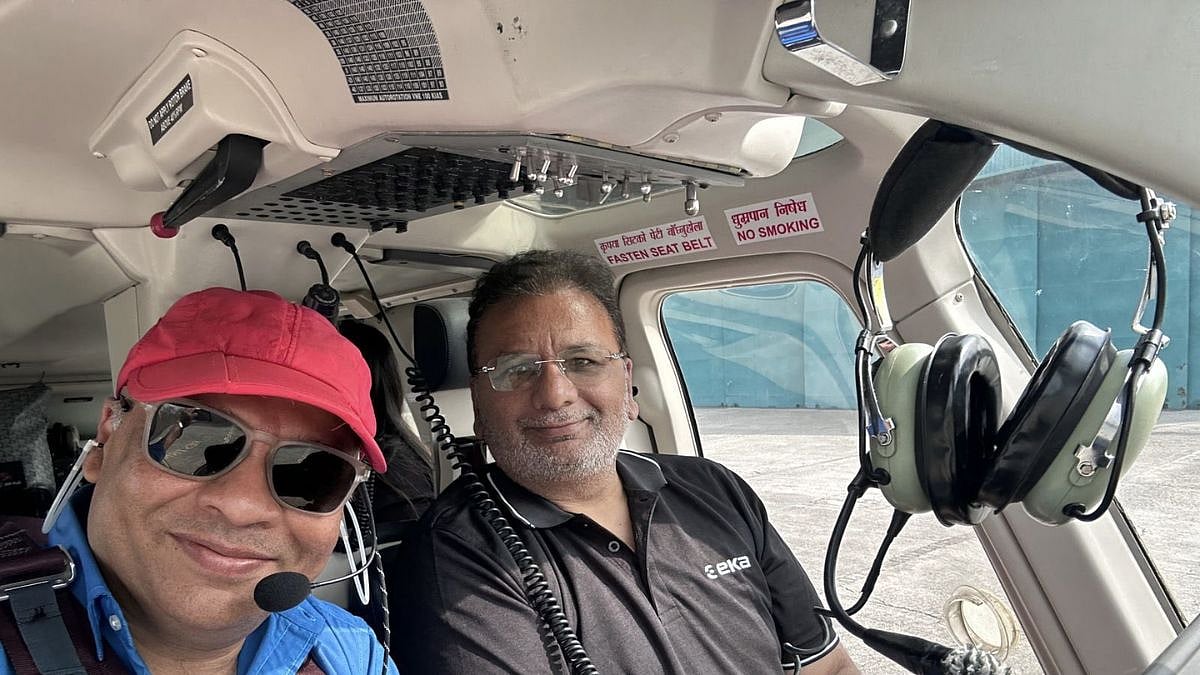
Pune: A dramatic helicopter evacuation of senior industrialist Sudhir Mehta has thrown a harsh spotlight on the scale of chaos that unfolded on the Mumbai–Pune Expressway after a hazardous tanker accident brought traffic to a grinding halt for more than a day.
Mehta, Chairman of Pinnacle Industries Limited, found himself trapped inside unmoving traffic for close to eight hours as thousands of vehicles remained stranded following the overturning of a gas tanker near the Adoshi tunnel. The incident forced authorities to completely block movement on the expressway, citing safety risks due to the flammable nature of the cargo.
What initially appeared to be a temporary shutdown soon spiralled into a massive breakdown of mobility on one of the country’s busiest highways. With no exit routes, minimal communication, and growing panic among commuters, vehicles remained locked in place for kilometres.
As conditions worsened, arrangements were made to evacuate Mehta by helicopter, making his rescue one of the most striking images to emerge from the crisis. After reaching Pune safely, the industrialist publicly described the situation as unacceptable for an economic lifeline connecting Mumbai and Pune.
Taking to social media, Mehta warned that lakhs of people were effectively imprisoned on the highway for hours due to a single accident, raising serious questions about emergency preparedness. He urged authorities to rethink expressway design, recommending the creation of emergency exit points that could be activated during disasters to allow vehicles to turn back.
He also proposed the installation of small helipads along major highways, arguing that they require minimal land and investment but could prove crucial during medical emergencies, disasters, or evacuations. Mehta thanked Union Road Transport Minister Nitin Gadkari for assistance during the rescue and suggested that such infrastructure should be mandatory on high-density corridors.
While the industrialist was airlifted out, thousands of ordinary commuters remained stuck overnight inside cars and buses, many without access to food, water, or toilets. Reports of wrong-side driving and exhausted motorists underscored the risks of prolonged gridlock.
The situation worsened further when a cement vehicle later broke down on the Mumbai-bound stretch, delaying restoration of normal traffic. Though movement was gradually restored, the episode has triggered renewed criticism of disaster response systems on national highways.