By Krishna Kant Jain
I was still in school around 2009-10 when the gas cylinder shortage was a permanent topic of discussion in most middle-class homes. Every household had its own survival strategy. You booked a cylinder at the local agency and then waited. If it didn’t arrive within 15 days (which generally didn’t used to happen), you were not even allowed to complain. That was the rule. On the 16th day, you are supposed to finally register a complaint, after which you wait another week or ten days. Sometimes, even that didn’t work, and people had to go back again.
In effect, a single cylinder would take 25 days or more to arrive. The irony was that the moment a cylinder finally came home, families would immediately book the next one, hoping it would arrive by the time the first got over. Black marketing thrived in this ecosystem. Everyone knew it existed. Everyone complained about it. And yet, it was accepted as how the system works.
Today, that memory feels oddly distant. A gas cylinder is booked over a call, message, or app, and it arrives on time within a day or two. There is no mental arithmetic regarding complaint windows, no dependence on an agency’s goodwill, and no fear of running out. What changed is not just delivery speed. What changed is how the state chose to govern access.
This shift, from scarcity to reliability, is one of the least discussed but most consequential markers of good governance in the last decade.
Earlier, governance in India often functioned like a gatekeeper. Access to essentials depends on layers of discretion, paperwork, and patience. Scarcity was not always accidental; it was structural. When supply was limited and systems were opaque, power accumulated at the last mile. Citizens adjusted their lives around delays, shortages, and “jugaad”. Over time, inconvenience became normalised.
The last 10–11 years have seen a quiet but decisive break from that model.
Instead of acting as a dispenser of favours, the Indian state increasingly became a platform building systems that enable services to flow automatically, predictably, and at scale. This is a less dramatic form of reform. It does not announce itself daily. But it fundamentally changes how citizens experience governance.
Consider the scale of transformation into something as basic as cooking gas. In 2014, India had roughly 14-15 crore LPG connections. Today, that number is well over 33 crores. This is not just numerical growth; it reflects a deliberate effort to ensure that availability itself is no longer a constraint. Alongside this, the distribution network expanded rapidly, logistics improved, and booking and tracking were digitised. When availability becomes the default, scarcity loses its political and economic value.
The same philosophy runs through several everyday interactions with the state today. Payments move instantly. Identity verification happens in seconds. Certificates that once required multiple visits can now be downloaded. Getting loans for business is easier even for a street vendor. Toll plazas no longer demand long queues. None of this is spectacular on its own. Together, they signal a deeper transformation, governance built on infrastructure, not discretion.
This is where the idea of the “platform state” becomes important. Platforms are neutral. They don’t negotiate. They don’t favour one user over another. They work the same way for everyone who plugs in. When governance is built as a platform, corruption becomes harder, not because morality improves overnight, but because systems leave less room for manipulation.
There is also a subtle but important relationship here with scarcity. When governance platforms expand access universally, scarcity ceases to be a tool of control. Citizens no longer feel dependent on intermediaries to secure their rightful entitlements. The politics of access gives way to the politics of quality. People stop asking whether they will receive a service and start asking how well it is delivered. That shift alone elevates democratic accountability.
This is why irreversibility is perhaps the strongest test of good governance.
No future government, irrespective of ideology, can afford or would even dare to dismantle digital payment, specifically the UPI, with more than 20,000 million UPI transactions monthly worth more than 27 lakh crore. No government can, by all its effort, bring back the system of cash only from such a high number of digital transactions.
No administration can undo the DBT and reintroduce opaque subsidy delivery or slow manual verification, or maybe the digital public infrastructure overall, without facing immediate public resistance. No one can argue for deliberate delays as a policy choice anymore. The reforms of the last decade have crossed a critical threshold where they are no longer seen as government initiatives, but as normal civic infrastructure.
This irreversibility is also visible in smaller, everyday interactions that people no longer consciously associate with governance. Certificates that once required multiple visits to government offices, follow-ups, and discretionary delays are today issued or accessed digitally, quietly returning time and dignity to citizens. Toll booths that earlier meant long queues and predictable delays are now crossed without stopping, turning hours once lost on highways into routine travel time. These changes rarely attract political attention, yet they have altered expectations so deeply that no administration can justify a return to friction, delay, or discretion. When governance becomes seamless and largely invisible, it ceases to be a reform and becomes a lived standard.
That permanence matters more than announcements.
This philosophy echoes with what the mantra of the Modi government, started its journey: “minimum government, maximum governance”. With this, they did not mean the absence of the state; they meant a state that intervenes smartly, builds systems, and then steps back. What we are witnessing today is that idea operationalised on a scale. Not through slogans, but through institutional design.
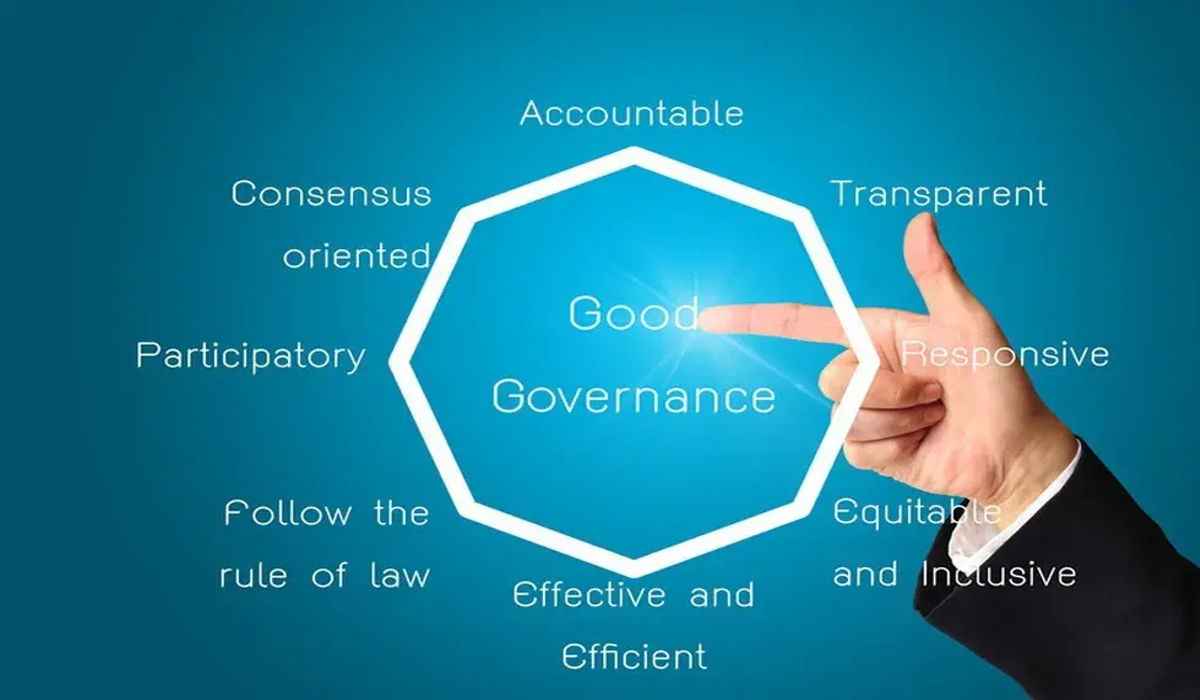
Good governance, in this sense, is not loud. It does not rely on constant validation. It works quietly in the background, reducing friction, eliminating artificial shortages, and making itself indispensable. When a reform succeeds so completely that people forget how difficult life once was, that is when governance has truly done its job.
On this Good Governance Day, perhaps the most honest measure of progress is not in speeches or statistics, but in forgotten frustrations, like the gas cylinder anxiety that once shaped household routines and now barely registers as a concern. When governance frees citizens from such everyday burdens, it does more than deliver services. It restores dignity, time, and trust.
And that, ultimately, is what good governance should feel like.
Author: Krishnakant Jain (tweets at – @kkjain01) is a lawyer and keen observer of India’s political landscape and a passionate student of history, exploring how the past continues to shape the nation’s present.