X: @vivekbhavsar
Among the many infrastructure initiatives that Maharashtra has witnessed in recent years, the proposed Shakti Peeth Expressway stands out for a reason that goes beyond engineering, funding or road alignment. It lies at the intersection of heritage and development, faith and connectivity, culture and economy. While several projects in the state have faced scrutiny, opposition or allegations of poor implementation, it is equally true that not every government initiative is flawed or politically driven. A balanced perspective demands that we recognise both: the lapses that must be exposed, and the thoughtful decisions that deserve acknowledgment. The Shakti Peeth Expressway belongs to the latter category.
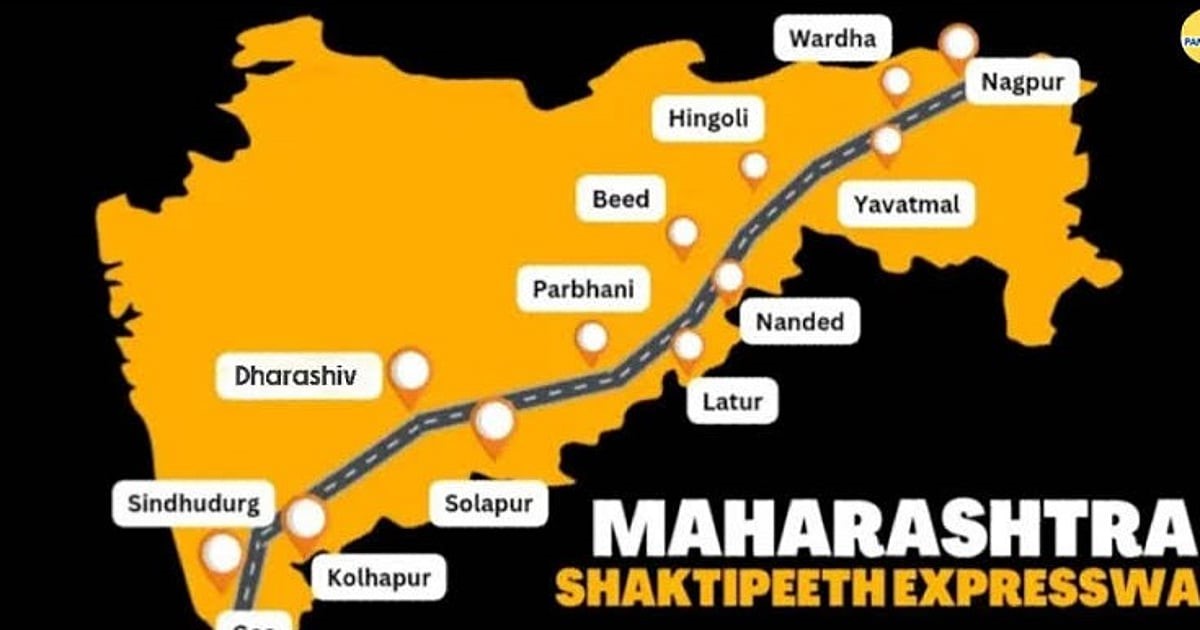
Stretching from Wardha to Sindhudurg, this expressway aims to weave together Maharashtra’s spiritual tapestry like never before. The state’s cultural identity is shaped not only by its grand temples but by the rhythms of its villages — the Wari tradition, the dindis, the kirtans, the countless local festivals and the everyday spirituality that animates life across regions.
Through this proposed corridor, over fifty major pilgrimage centres — from Mahurgad to Tuljapur, from Pandharpur to Alandi, from Akkalkot to Narasoba Wadi, and from the temple clusters of Hingoli and Nanded to the shrines of coastal Konkan — would be brought into one integrated network. For millions of devotees, the journey across these sacred spaces would become not only faster but safer and more accessible.
The economic ripple effects of such a corridor are equally significant. Many districts that seldom appear on tourism maps — Solapur, Beed, Hingoli, Osmanabad, Sangli, Wardha — could benefit from a new wave of economic activity. Local women’s self-help groups could sell food, handicrafts and prasad; homestay owners could welcome pilgrims; rural youth could find opportunities in transport, hospitality, guiding services and small-scale commerce. The post-pandemic resurgence of local tourism in Maharashtra has already shown how quickly small towns can adapt when given the right infrastructure. With the potential to reduce Nagpur–Goa travel time from 12 hours to around 9, the corridor may even become a major logistics and economic route in addition to being a spiritual one.
One of the most remarkable aspects of this project has been the government’s decision to drop the controversial Kolhapur segment. The Mahalaxmi temple is not only a spiritual landmark but a deeply emotional space for the people of Kolhapur. Combined with concerns about farmland acquisition and environmental impact, locals voiced strong objections. Instead of pushing the project unilaterally, the government accepted the demand and modified the route. This is a rare but important example of democratic responsiveness — where the voice of the people influenced the blueprint of a mega project.
On the administrative front, the project has been moving through structured channels. Surveys by Stedler Engineering Consultants, district-wise land acquisition details, environmental impact assessments, forest and wildlife clearances — all indicate a process-driven framework. Roughly 6,600 hectares of land are estimated to be involved, including private, government and forest land. The financial outlay is substantial, but the long-term economic and cultural returns could justify the investment, especially if the project is executed with transparency and environmental sensitivity.
It is important to clarify that this analysis is not an endorsement of everything the government undertakes. Good journalism is not anti-government; it is anti-misgovernance. It raises questions where necessary and records progress when deserved. Maharashtra needs both — fearless watchdog reporting and measured recognition of steps taken in the right direction.
The Shakti Peeth Expressway represents an opportunity where development aligns with cultural preservation and where infrastructure serves not only markets but emotions and memories.