The reservation puzzle in Maharashtra’s local body polls and what may follow afterwards
By Vikrant Patil
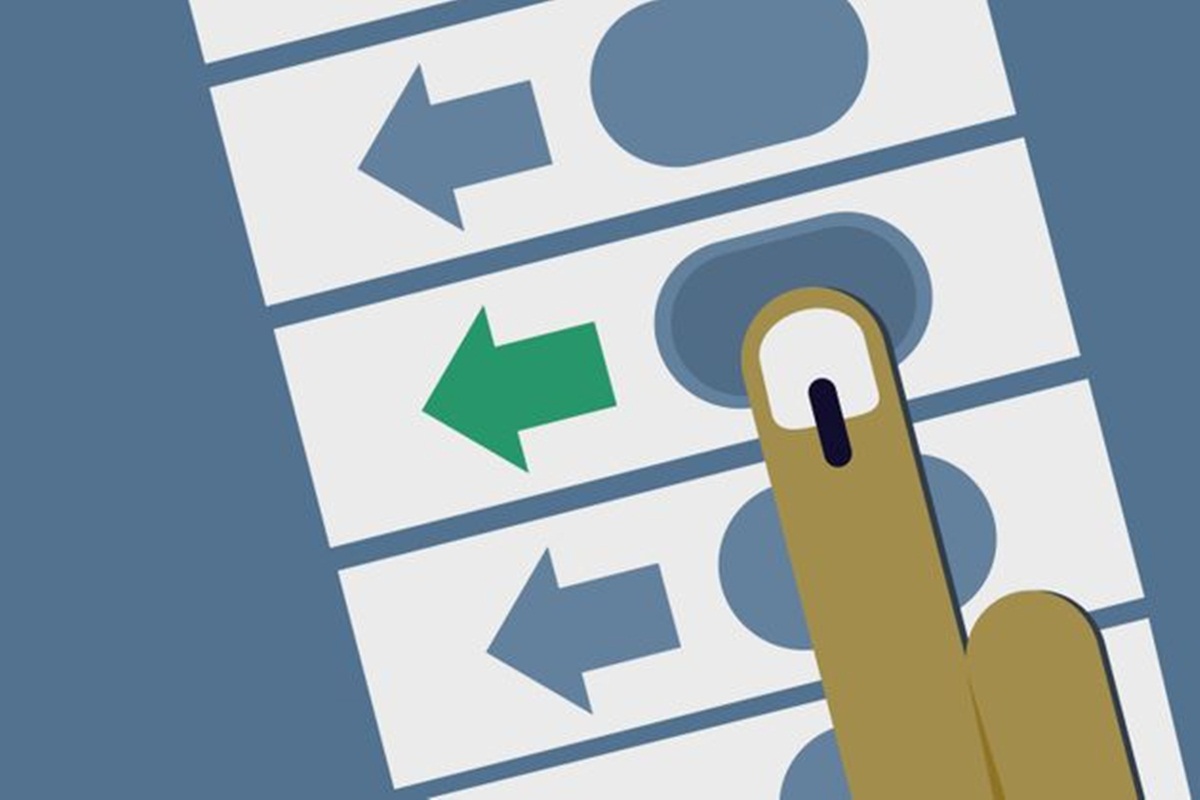
After years of delays caused by the COVID-19 pandemic and prolonged litigation over the OBC reservation, the democratic process in Maharashtra has finally begun to move again. The long-pending local body elections are now being conducted across the state. But beneath the renewed political excitement lies a large cloud of legal uncertainty. A crucial case pending before the Supreme Court has placed a question mark on the future of these elections.
This explainer addresses the central question:
“Voting and counting will take place — but what happens next? If the Supreme Court rules against the current reservation structure, what will happen to the results?”
Background: How did this reservation tangle begin?
Local body elections in Maharashtra have been stuck for several years. First due to the pandemic, and later because of litigation over OBC reservation. At the heart of this entire dispute lies an important constitutional principle laid down by the Supreme Court.
In the landmark K. Krishnamurthy vs Union of India judgment, the apex court made it clear that the total reservation for Scheduled Castes (SC), Scheduled Tribes (ST) and Other Backwards Classes (OBC) cannot exceed 50% under any circumstances. To enforce this, the court mandated a Triple Test — including a dedicated commission that must conduct a detailed empirical study of political backwardness before determining OBC reservation.
Following this directive, Maharashtra set up the Banthia Commission, which recommended 27% OBC reservation — but explicitly within the 50% overall limit. However, despite following these guidelines, the final reservation matrix in many local bodies still exceeded the 50% ceiling, creating the present legal crisis.
Current Situation: Elections under the shadow of the Court
In the first phase, the State Election Commission (SEC) has announced voting for 246 municipal councils and 42 nagar panchayats on December 2.
But the real problem is this:
Out of these 288 local bodies, 57 have breached the 50% reservation cap.
In some places — such as Chikhaldara — total reservation has gone as high as 75%.
Taking note of this alarming situation, the Supreme Court has not stayed the elections outright. Instead, it has passed an important interim direction:
The results of these 57 local bodies will be “subject to the outcome” of the case.
For voters and candidates, this means:
• Elections will be held
• Votes will be counted
• Winners will be declared
But the legal validity of their victory will depend entirely on the Supreme Court’s final verdict.
Simply put — you may vote, you may even win, but without the Supreme Court’s final stamp, your position may not be legally secure.
Scenario 1: Elections held in violation may be cancelled
A crucial question arises — can the Supreme Court intervene after the voting process is completed?
The Chief Justice-led bench has made its position clear in strong terms. During the hearing, the CJI remarked:
“If elections are held in violation of the law and the Constitution, they can be cancelled.”
This remark, combined with the court’s interim order, is not a mere procedural note. It is a warning — a clear indication that the court may intervene post-election if necessary.
A state-wide cancellation is unlikely. But in the 57 local bodies where the 50% cap has been violated, the results of only those reserved seats may be struck down. This could force re-elections in those specific seats.
Scenario 2: A strict ‘Lakshman Rekha’ for future elections
While the court has allowed the current elections to proceed with certain imperfections, it has taken a very strict position on all future polls.
The SEC has been orally directed that:
• District council,
• Panchayat Samiti,
• Municipal corporation and council elections
Must strictly adhere to the 50% reservation cap from here onwards.
This aligns with the Supreme Court’s strategy of creating a “workable arrangement” — allowing overdue elections to proceed now, while drawing a firm constitutional boundary for future polls. During the hearing, senior advocate Narendra Hooda aptly described the 50% limit as a “Lakshman Rekha”.
Scenario 3: The tribal-area dilemma — and the possibility of a larger bench
The most complex legal issue relates to Scheduled Areas. Here, two constitutional principles collide:
1. The 50% cap on reservation
2. The right to proportional representation based on population
In several tribal-dominated districts of Maharashtra, the SC/ST population is so high that their proportional reservation itself reaches close to 50%. This leaves no space for OBC reservation.
Highlighting this contradiction, Chief Justice Surya Kant asked:
“How can democracy exist by entirely excluding OBCs?”
Justice Bagchi further noted that the K. Krishnamurthy judgment had already carved out exceptions for such extraordinary cases.
If the court finds no clear resolution within the existing framework, the matter may be referred to a larger constitutional bench — a signal the Chief Justice has already hinted at.
This means the legal uncertainty may continue for some time, but it also opens the door to a long-term constitutional solution.
The Supreme Court’s Tightrope Walk
In essence, the Supreme Court is walking a delicate tightrope.
• On one side is the urgent need to revive grassroots democracy
• On the other is the constitutional boundary of the 50% reservation limit
Elections may proceed, but for many elected representatives, the results will hang in a legal shadow until the final verdict arrives.
In the coming months, it will be crucial to see whether the Supreme Court evolves a ‘workable’ long-term solution that balances reservation rights with constitutional limits — or whether many regions in Maharashtra will once again be pushed into fresh elections.