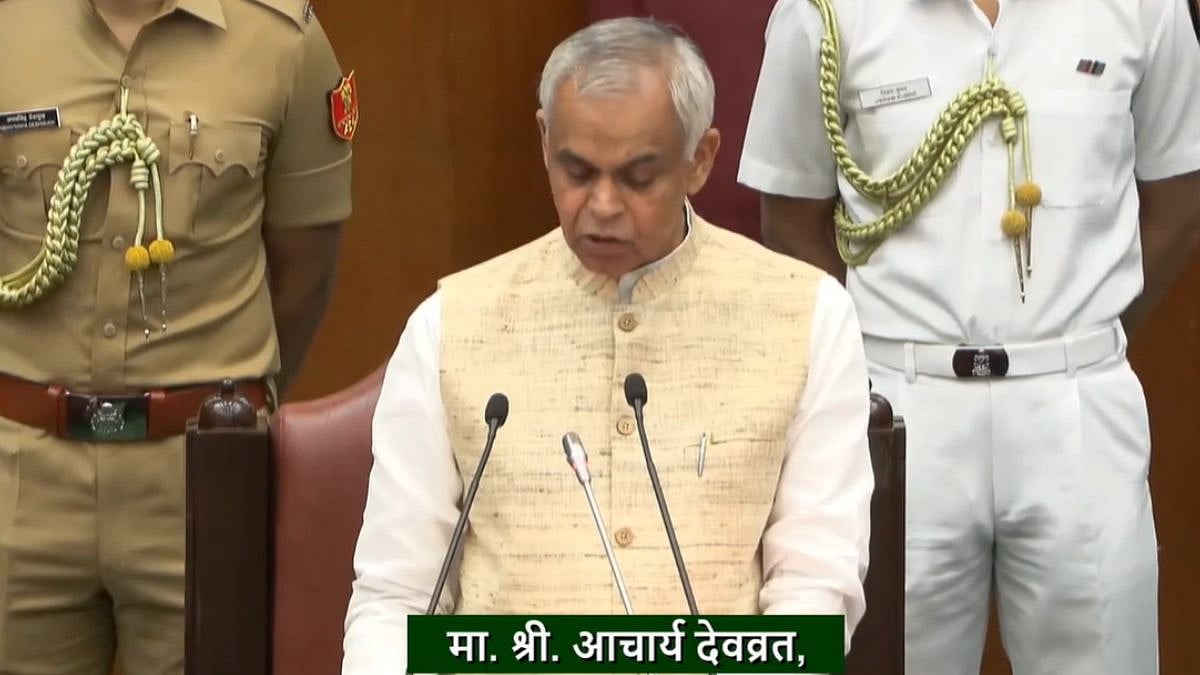
Mumbai: The Budget Session of the Maharashtra Legislature commenced on Monday with a customary joint sitting of the Legislative Assembly and the Legislative Council. Governor Acharya Devvrat addressed members after proceedings began with Vande Mataram, followed by the National Anthem and the state anthem Jai Jai Maharashtra Maza. He opened his speech in Marathi before switching to Hindi later.
Tribute to Icons and Governance Vision
At the outset, the Governor said the state government would draw inspiration from figures such as Rajmata Jijau, Chhatrapati Shivaji Maharaj, Dr B.R. Ambedkar and Birsa Munda, describing their ideals as guiding principles for governance. He then reviewed the performance of the BJP-led Mahayuti government over the past year and outlined its policy priorities for the coming period.
Border Dispute and Welfare Focus
Devvrat reiterated the government’s intent to pursue a resolution to the long-standing Maharashtra–Karnataka border dispute. He stressed that residents of border regions would continue to receive focused support in healthcare, education and employment, signalling that welfare measures in sensitive areas remain a key concern.
Investment, Growth and Global Outreach
Highlighting Maharashtra’s economic standing, the Governor said the state remains a leading destination for global investors and contributes around 13.5 per cent to India’s GDP. He noted that Maharashtra attracted foreign direct investment worth ₹1.64 lakh crore in 2024–25, nearly 39 per cent of total national inflows. Referring to the World Economic Forum meeting in Davos in January 2026, he said investment proposals worth about ₹30 lakh crore were secured, with the potential to create over 40,000 jobs.
Viksit Maharashtra 2047 Roadmap
Outlining long-term ambitions, the Governor said the government aims to build a USD 5 trillion state economy by 2047 under the Viksit Maharashtra 2047 vision. As part of this plan, the state is targeting investments exceeding ₹17 lakh crore by 2030 and the creation of nearly 50 lakh jobs.
Opposition Leader Posts Remain Vacant
The session has begun amid an unusual political backdrop. For the first time since the state’s formation, neither the Assembly nor the 78-member Legislative Council has a recognised Leader of the Opposition. The situation has arisen because opposition parties have failed to meet the minimum numerical requirement prescribed under legislative rules.
Opposition Raises Democratic Concerns
Reacting to the development, the Maha Vikas Aghadi described the absence of opposition leaders in both Houses as damaging to democratic functioning. The alliance argued that a formal Leader of the Opposition is essential for effective scrutiny and institutional balance, particularly when the ruling coalition enjoys a commanding majority.