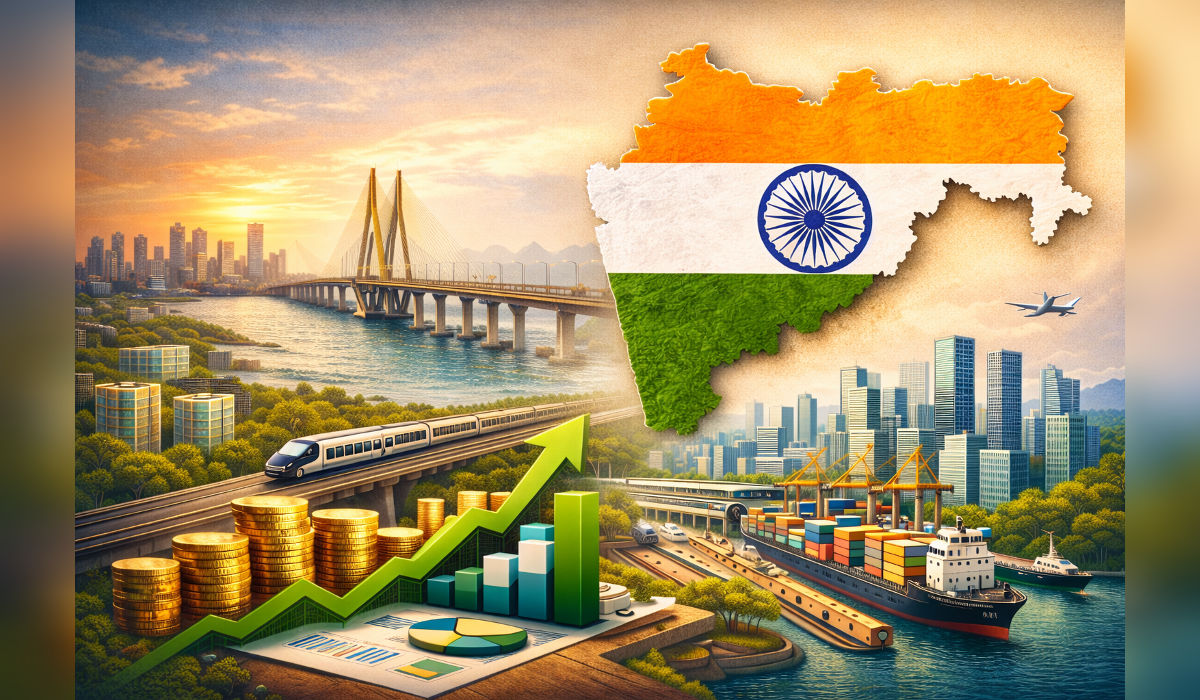
Mumbai: A day before the presentation of the Maharashtra Budget 2026–27, the state government tabled the Economic Survey of Maharashtra 2025–26 in the Legislature, outlining the performance and structure of the state economy.
While the survey does not announce new policies, it provides important signals about the government’s fiscal position, revenue prospects and spending priorities ahead of the budget.
A closer reading of the document reveals ten important clues about the direction the upcoming budget may take.
1. Economic growth projected at 7.9%
The survey estimates that Maharashtra’s economy will grow at 7.9% in 2025-26, continuing the state’s position as India’s largest state economy.
This growth estimate suggests that the government may project optimistic revenue collections in the budget, particularly from GST, stamp duty and other state taxes.
2. Economy crosses ₹51 lakh crore
The Economic Survey estimates nominal Gross State Domestic Product (GSDP) for 2025-26 at ₹51,00,597 crore.
Crossing the ₹50-lakh-crore economic mark strengthens the state’s fiscal capacity and may influence the size of the overall budget.
3. Services sector remains the main growth engine
The survey indicates that the services sector is expected to grow by 9.0%, making it the fastest growing segment of the economy.
This suggests that urban economic activity — especially in Mumbai and Pune — will remain the primary driver of tax revenue.
4. Industrial growth moderate at 5.7%
Industry is projected to grow at 5.7%, which is slower than services.
The government may therefore focus on industrial incentives, manufacturing investment and infrastructure projects to accelerate industrial expansion.
Also Read: Explained | Maharashtra Economy Set to Grow 7.9% as State Size Crosses ₹51 Lakh Crore: Economic Survey
5. Agriculture growth only 3.4%
Agriculture and allied sectors are expected to grow by 3.4%, the slowest among the three major sectors.
This may lead to continued emphasis on farm support schemes, irrigation projects and rural welfare programmes in the budget.
6. Infrastructure spending remains central
The survey highlights large investments in roads, metro systems, ports, airports, industrial corridors and logistics infrastructure.
This indicates that the upcoming budget is likely to continue prioritising capital expenditure on infrastructure.
7. Urban economy remains the revenue backbone
With services dominating growth and cities generating the bulk of economic activity, urban centres will continue to be the state’s main revenue generators.
Budget policies may therefore include urban infrastructure expansion and metropolitan development projects.
8. Rising economic scale may support higher borrowing
With the state economy expanding to ₹51 lakh crore, the government has greater fiscal space under the FRBM borrowing limits linked to GSDP.
This could allow the government to raise additional funds for infrastructure and development projects.
9. Continued focus on ease of doing business
The survey highlights reforms related to digital governance and ease of doing business.
This signals that the government may introduce policy measures to attract investment and strengthen industrial competitiveness.
10. Budget will balance growth and welfare spending
The Economic Survey indicates that while infrastructure and urban growth remain key priorities, agriculture and social sector spending will continue to demand significant fiscal resources.
The upcoming budget is therefore expected to balance economic expansion with welfare commitments and rural development needs.
What to Watch in the Budget
The Maharashtra Budget 2026-27, to be presented on 6 March, will translate these economic trends into fiscal policy decisions.
Key areas to watch include:
• tax revenue projections
• infrastructure spending
• agricultural support programmes
• industrial incentives
• social welfare schemes
The Economic Survey provides the economic background to these decisions, offering a snapshot of the state economy before the government outlines its fiscal strategy for the coming year.