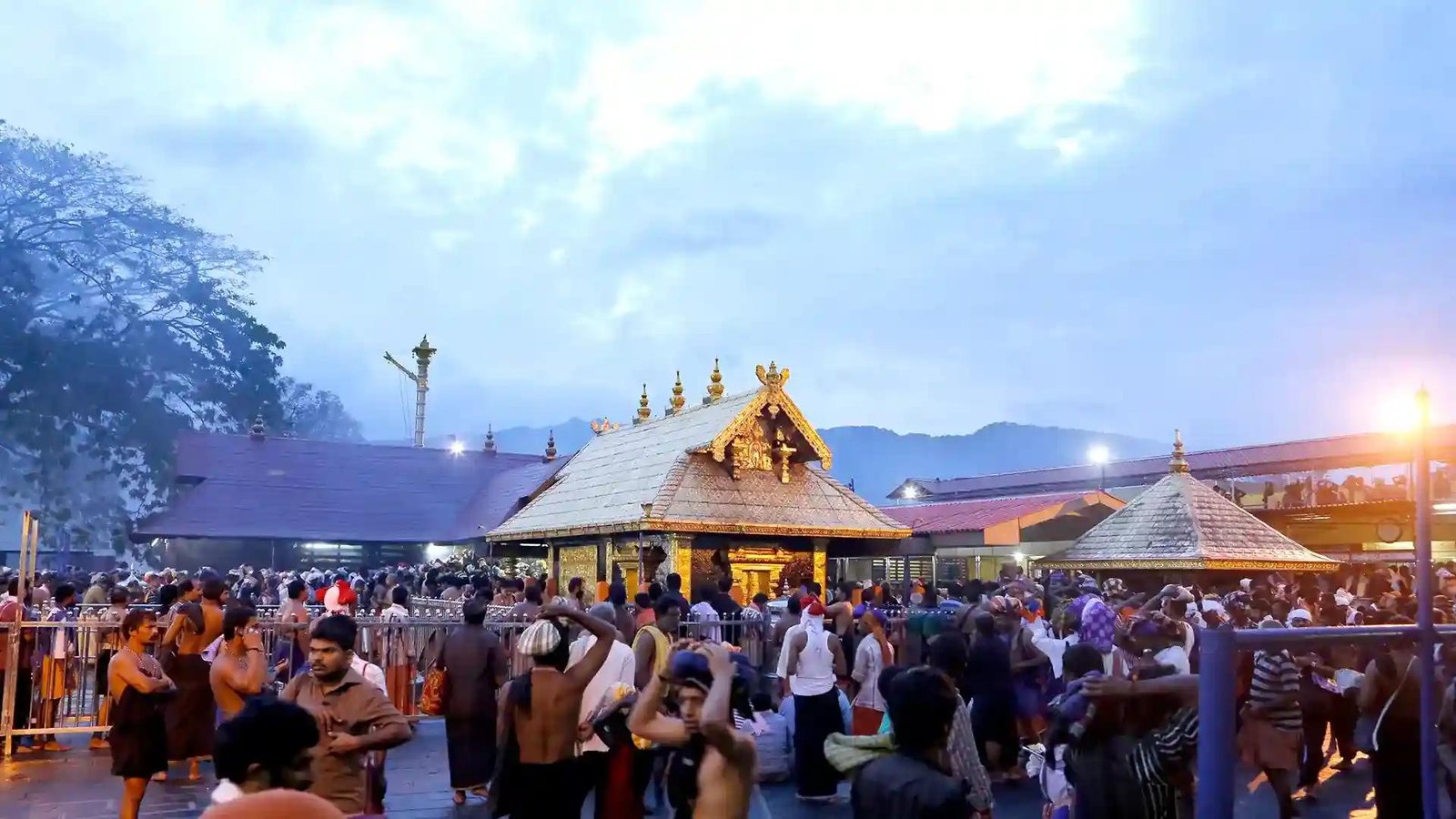
In a major policy shift, the government of Kerala has decided to inform the Supreme Court of India that women below the age of 50 should not be allowed to enter the Sabarimala Temple in order to preserve long-standing religious traditions.
The decision marks a significant reversal from the state’s earlier stand in 2018, when the government supported unrestricted entry of women of all ages to the temple dedicated to Lord Ayyappa.
Cabinet Approves Affidavit Supporting Temple Tradition
The decision was taken during a special cabinet meeting chaired by Chief Minister Pinarayi Vijayan on March 13.
During the meeting, the government approved a resolution passed by the Travancore Devaswom Board (TDB), which manages the temple. The board had urged the state to defend the temple’s traditional practice of restricting entry of women of menstruating age, generally those under 50 years.
The Kerala government is expected to file an affidavit before the Supreme Court by the March 14 deadline responding to seven constitutional and legal questions raised by the court.
These questions are linked to review petitions against the landmark 2018 judgment that allowed women of all ages to enter the shrine.
Supreme Court Review Hearing From April
The Supreme Court is scheduled to begin hearing review petitions related to the Sabarimala verdict from April 7.
The case will be heard by a three-judge bench headed by Chief Justice Surya Kant.
The court is examining broader constitutional questions involving religious freedom and equality, rather than simply deciding whether women should be allowed entry into the temple.
BJP Attacks Kerala Government Over Policy Change
Reacting to the development, senior BJP leader Kummanam Rajasekharan accused the ruling alliance of changing its position for electoral advantage.
He said the government’s U-turn shows it wants to benefit politically ahead of the upcoming state assembly elections.
Rajasekharan also demanded that all criminal cases filed against protesters who demonstrated against women’s entry to the temple after the 2018 judgment should be withdrawn.
CPI(M) Says Party Position Remains Unchanged
Responding to criticism, M. V. Govindan, the state secretary of the Communist Party of India (Marxist), said the party had not altered its ideological stance.
He said the government had been instructed to submit an “appropriate response” to the Supreme Court after consulting legal experts and religious scholars while keeping the sentiments of devotees in mind.
Govindan also clarified that the court’s questions relate to constitutional issues affecting all religions and not simply a yes-or-no decision on temple entry.
Temple Board Reiterates Stand on Customs
Earlier this month, the Travancore Devaswom Board reiterated that it had never officially supported the entry of young women into the temple.
The board clarified that a legal opinion expressed by a lawyer in 2020 supporting women’s entry was a personal view and not the official position of the temple administration.
The board maintained that it has a responsibility to protect the customs and traditions that devotees say have been followed at the shrine for centuries.
Background of the 2018 Verdict
The controversy began after the Supreme Court’s 2018 verdict allowing women of all ages to enter Sabarimala.
The ruling came after a petition filed in 2006 by the Indian Young Lawyers Association challenging a 1991 Kerala High Court judgment that had prohibited women between the ages of 10 and 50 from entering the temple.
The decision triggered widespread protests across Kerala, with supporters calling it a victory for constitutional equality while opponents argued that it violated religious traditions associated with Lord Ayyappa worship.
With review hearings now approaching, the Kerala government’s new stance is likely to intensify the political and legal debate surrounding one of India’s most sensitive religious issues.