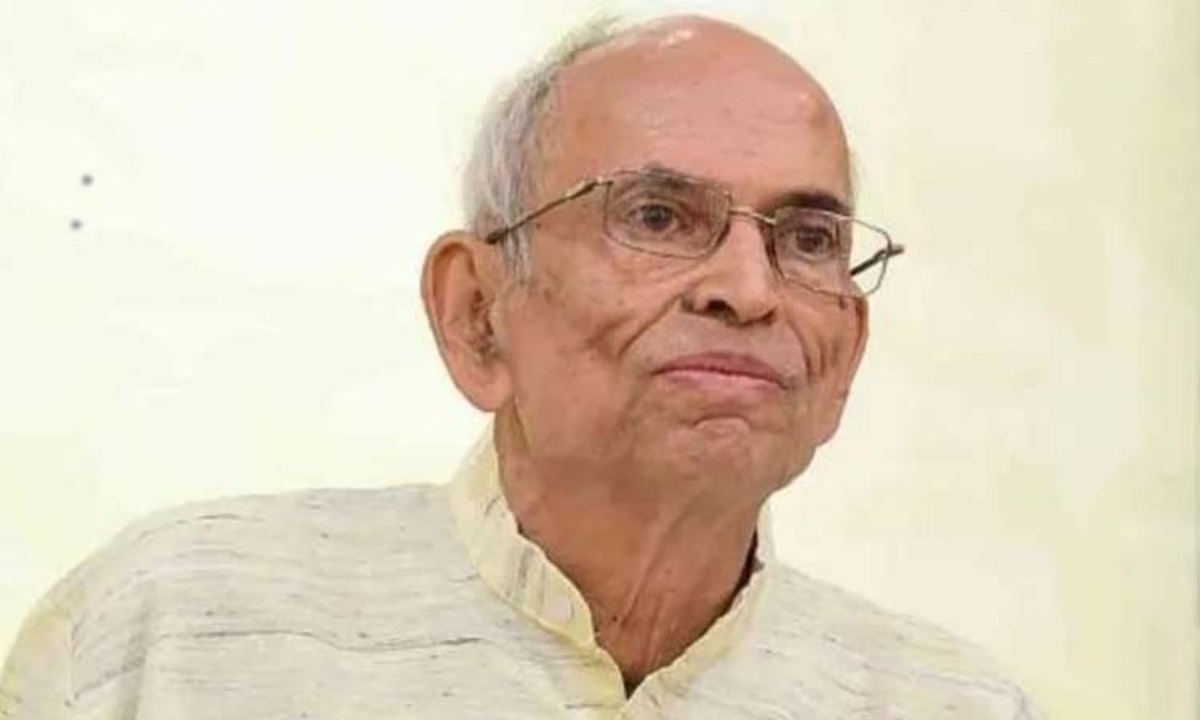
Thiruvananthapuram: Prof. Madhav Dhananjaya Gadgil was a soft-spoken scholar, ecologist, activist and influencer. But he had been a fearless and loud voice that shaped the contemporary environmental dialogue in India.
The deep concerns he flagged about the grave consequences of the steady and unchecked devastation of the Western Ghats as a unique biosphere have proved prophetic.
The result of ignoring Gadgil’s forewarnings is now being faced by six Indian states over which the vast hill tract straddles, defining the lives and livelihoods of peninsular India.
Rich tributes poured in from all quarters when he passed away earlier this week. It, however, remains a stark fact that when he was alive, his earnest submissions and advocacy, based on painstaking studies and field surveys, were overlooked by governments and policymakers.
Also Read: Centenary of Indian Communist Party Goes an Unsung Event
A hardworking academic, writer and organiser, Gadgil’s most prominent contribution was as head of the Western Ghats Ecology Experts Panel (WGEEP), set up by the Government of India in 2010. The panel was mandated to study the scale of ecological devastation suffered by the biosphere cutting through six states from Maharashtra to Tamil Nadu.
This vast and unique ecosystem used to be home to an immense variety of flora and fauna, ethnic cultures, invaluable traditional knowledge, and the source of most southern rivers.
Over decades, starting from British rule, this entire ecosystem has been degraded and rendered extremely fragile by encroachments, deforestation, commercial plantations, and small and marginal settlements.
As part of the study, Gadgil and his colleagues undertook several arduous treks up the high peaks and deep valleys of the Western Ghats. WGEEP submitted its report on August 31, 2011. Hailed as a foundational text on Western Ghats conservation, it still remains the most comprehensive ecological conservation report ever prepared in India.
The Gadgil report, as the study came to be known because of the pivotal role he played in drawing it up, warned of an ecological Armageddon in waiting unless drastic decisions were taken by governments to save whatever little had been left untouched.
A democrat to the core, Gadgil knew that taking people on the ground along was crucial for acting upon the report because it was their lives that were most vulnerable to the consequences of ecological degradation.
However, no state that shares the Western Ghats arc has taken any meaningful initiative in that direction. Instead, they chose the painless route of referring the matter to sub-committees packed with entrenched academics, bureaucrats and state-appointed planners to come out with cosmetic recommendations, without causing pain to big players who continued to fatten themselves on the resources of the Western Ghats, adding scale and pace to its degradation.
The opposition to the Gadgil report mainly sprang from sheer ignorance of its actual content. Many were carried away by the misinformation campaign unleashed by vested interests that its implementation would lead to massive displacement of people settled on the slopes of the Western Ghats, most of them small and medium farmers.
This is totally unfounded, as the report did not call for massive shifting of settlers. It only suggested an immediate halt to environmentally damaging activities like big constructions, quarrying, building of dams and power projects, besides stopping the denudation of whatever little green canopy had survived persistent plunder.
The report pointed out that vast tracts of the Western Ghats had become Ecologically Sensitive Areas (ESA). Panels set up by state governments scaled down this assessment drastically. This they did to avoid immediate political and economic costs, bothering little about the grave long-term consequences, including their bearing on climate change.
A highly accomplished academic himself, Gadgil’s scholarly pursuit and activism transcended academic limitations. He was always a man on the ground who kept live contact with local people, including ethnic communities, small and micro farmers, and preservers of traditional knowledge.
He was more at home with small groups of environmental activists than elite academic gatherings and bureaucrats who stay far away from local communities.
Gadgil had been the most keenly listened-to voice among non-state environmental groups and civil society organisations. Back-to-back landslides in upland Wayanad in the state demonstrated the truth of his warnings. As he always feared, communities on the ground have been the real sufferers of natural disasters caused by the degradation of nature.