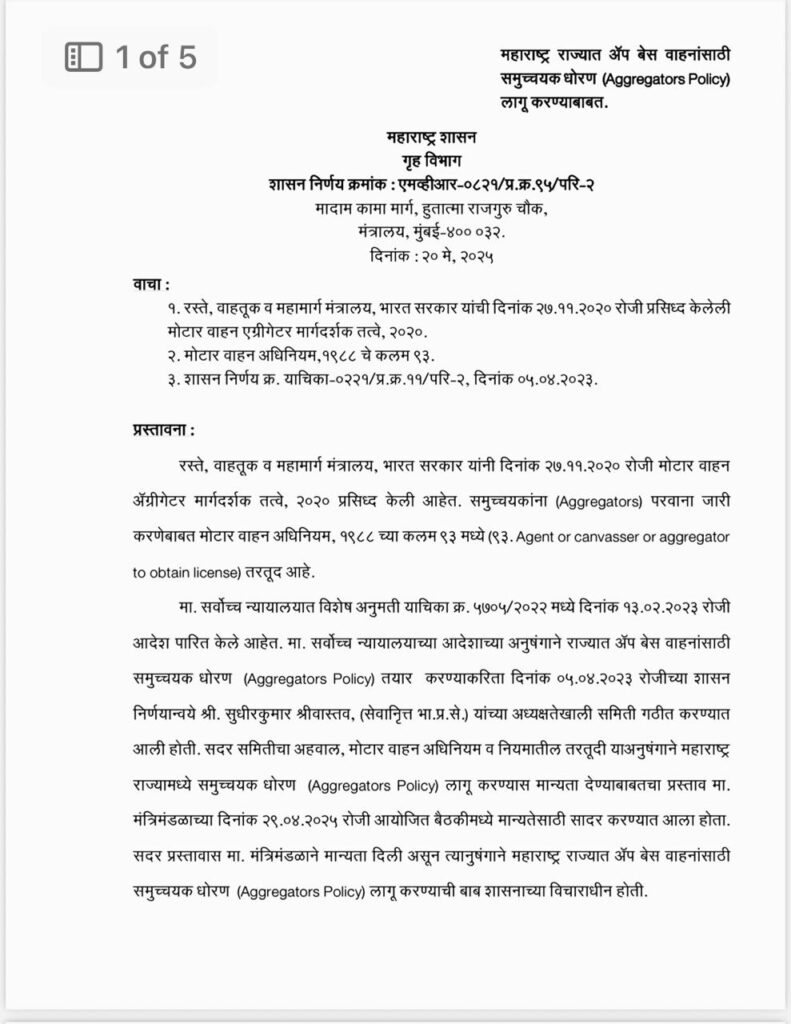
Mumbai: The Indian Federation of App-based Transport Workers (IFAT) has welcomed the Maharashtra Cabinet’s recent move to regulate app-based transport services like Ola and Uber, calling it a much-needed step toward formalising a sector that has long remained unregulated. However, the federation strongly cautions that the current draft of the policy leaves several critical gaps that directly affect the dignity, income security, and rights of thousands of drivers across the state.
Bilal Khan, Press Secretary of IFAT and a key voice in raising this issue, stated that while the initiative marks progress, the government must not ignore the foundational concerns of the workforce that powers this gig economy.
“The policy must be built on fairness, equality, and protection of livelihoods. Right now, it risks legitimising exploitation if key corrections aren’t made,” Khan emphasised.
IFAT, along with its Maharashtra affiliate MAT, has been advocating for regulatory reforms since 2018. The Central Government had issued aggregator guidelines back in October 2020, and with revised national guidelines expected in 2024, IFAT urged the Maharashtra government to align its policy accordingly before finalisation.
Key Concerns and Recommendations:
1. Minimum Fare Floor Must Be 50%
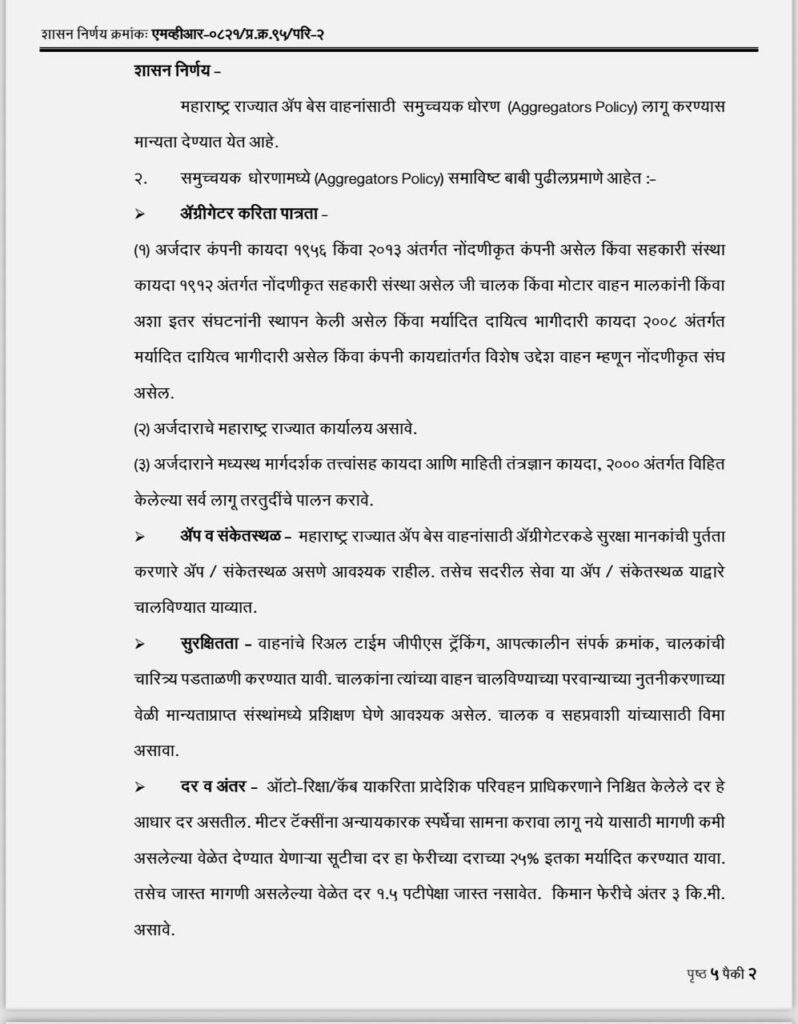
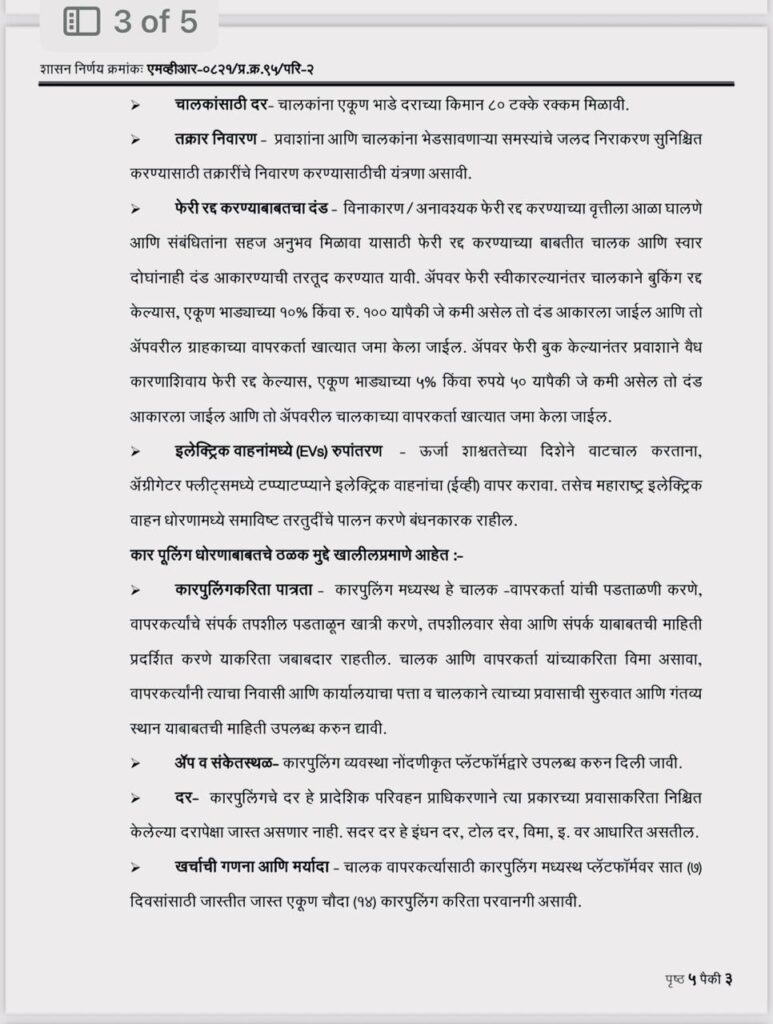
The proposed fare structure allows base fares to fall to just 25% during low demand—resulting in unreasonably low payouts of ₹7–₹8 for drivers. IFAT highlighted that under Clause 13.3 of the Centre’s 2020 Guidelines, a 50% floor was suggested, ensuring a more sustainable fare of ₹15–₹16. “The current rate is exploitative,” said IFAT President Prashant Sawardekar.
2. Equal Rules for CancellationsDrivers are penalised 10% of fare (or ₹100), while passengers are fined just ₹50. Furthermore, passengers can provide a reason for cancellation; drivers cannot. IFAT calls this an unjust double standard and demands parity in cancellation rights and penalties.
3. Lack of Clarity on Key IssuesIFAT noted that essential clauses around working hours, mandatory rest, driver insurance, and data privacy are either vague or missing from the Maharashtra version.
“Drivers deserve protection under clear, enforceable rules,” said General Secretary Adv. Uday Ambonkar.
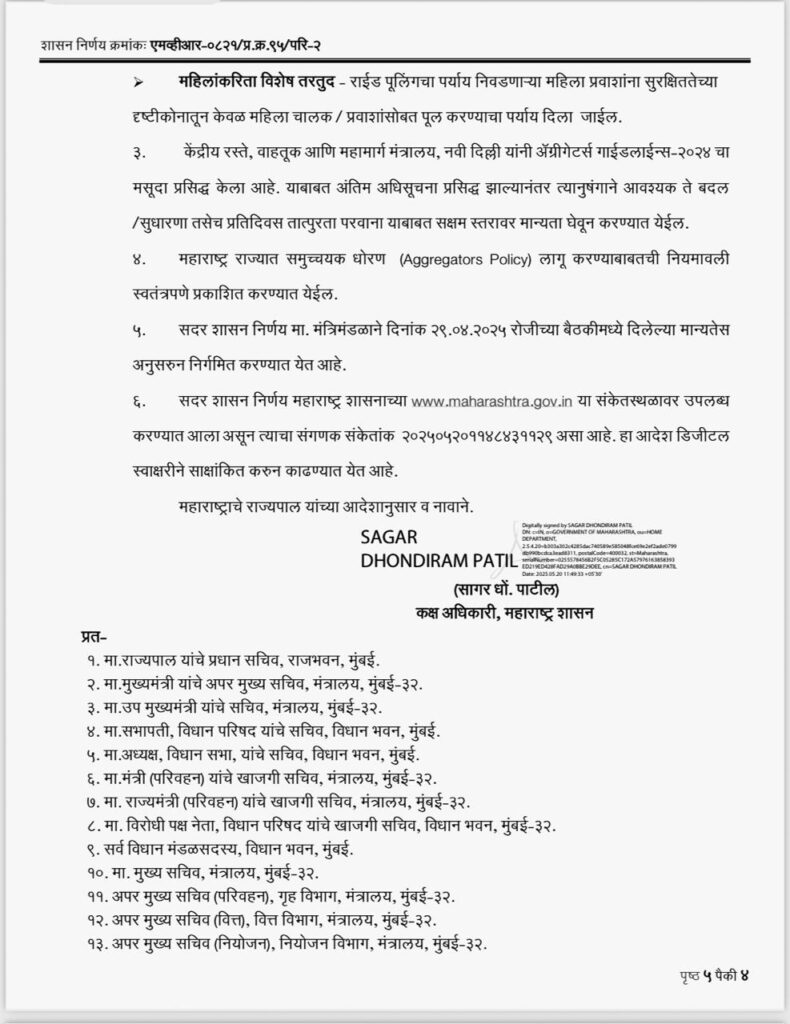
4. EV Policy Needs TransparencyThe roadmap for transitioning to electric vehicles remains unclear. IFAT warned that small operators and driver-owners may suffer if proper financial and infrastructural support isn’t guaranteed.
5. Specify Enforcement TimelineThe policy lacks a clear date for enforcement and aggregator compliance. IFAT urged the state to announce a fixed implementation schedule.
- Driver Welfare Board Still in Shadows
The government has proposed a welfare board, but details remain undisclosed. IFAT demanded that its structure, funding, and scope be made public immediately.- Inclusive, Time-Bound Grievance Redressal
While the draft policy calls for a redressal system, IFAT wants it to be structured with equal representation from drivers, passengers, aggregators, and government officials. Complaints should be addressed within 15 working days, they added.
- Inclusive, Time-Bound Grievance Redressal
IFAT has submitted a detailed representation to the Government of Maharashtra and requested an official meeting to deliberate further. “We hope the state listens before finalising the policy,” Khan said, reiterating the need to center the voices of gig workers in any regulation that governs their livelihoods.