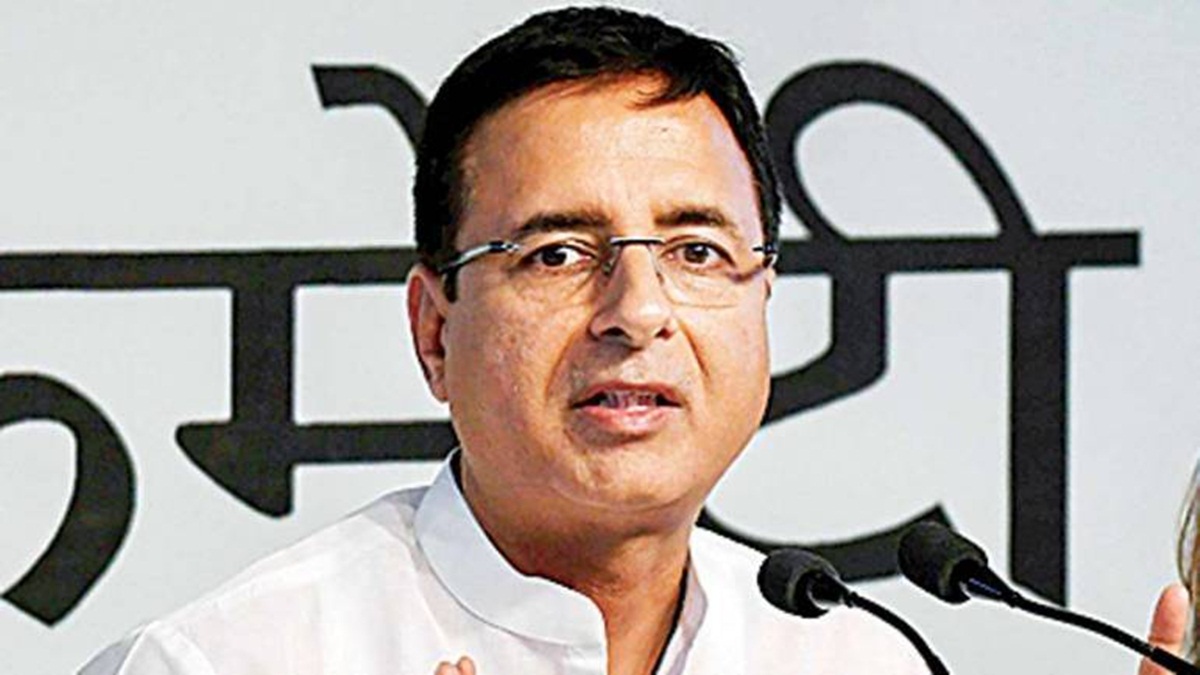
Delhi: Senior Congress leader Randeep Singh Surjewala has raised sharp questions over the feasibility and legality of newly announced US tariffs, asking whether such measures can realistically be applied to India.
In a detailed post on social media, Surjewala reacted to fresh trade steps announced by Donald Trump after the Supreme Court of the United States struck down the President’s earlier authority to impose tariffs under the International Emergency Economic Powers Act (IEEPA).
Concerns Over Section 122 Tariff Plan
Surjewala pointed out that the proposed 10 per cent tariff under Section 122 of the US Trade Act, 1974 is, by law, a temporary measure. He noted that such tariffs can remain in force for only 150 days unless approved by the US Congress.
According to him, this raises questions not only about the duration of the tariff but also about whether the US legislature would endorse such a move at all.
National Security Tariffs Questioned
Commenting on possible duties under Section 232 of the Trade Expansion Act, 1962, Surjewala argued that Indian exports to the US cannot reasonably be linked to national security concerns.
He maintained that goods exported from India do not pose any strategic or security risk to American interests, making the application of Section 232 questionable in India’s case.
No Basis for Section 301 Action, Says Surjewala
Surjewala also examined the scope of Section 301 of the Trade Act, 1974, which allows tariffs after investigations into unfair trade practices. He stated that no such investigation has been initiated against India, nor has India been found in violation of existing trade agreements.
On that basis, he argued that Section 301 tariffs do not appear to legally apply to India.
Impact on Proposed India-US Trade Deal
The Congress leader further warned that the new US tariff framework could put the proposed India-US trade agreement at risk. He said the framework agreement has already drawn criticism from farmers, small and medium businesses, as well as experts from the energy and data sectors.
Surjewala questioned whether the new tariff regime would undermine the foundations of the proposed deal.
Political Challenge to Modi Government
Taking the debate further, Surjewala asked whether the Narendra Modi government would reassess its position in light of the evolving US trade policy.