

New Delhi: Ahead of the Union Budget 2026–27, Jan Swasthya Abhiyan (JSA) has urged the Centre to double allocations to the health sector, warning that commitments made under the National Health Policy (NHP) 2017 remain unfulfilled even after the COVID-19 pandemic.
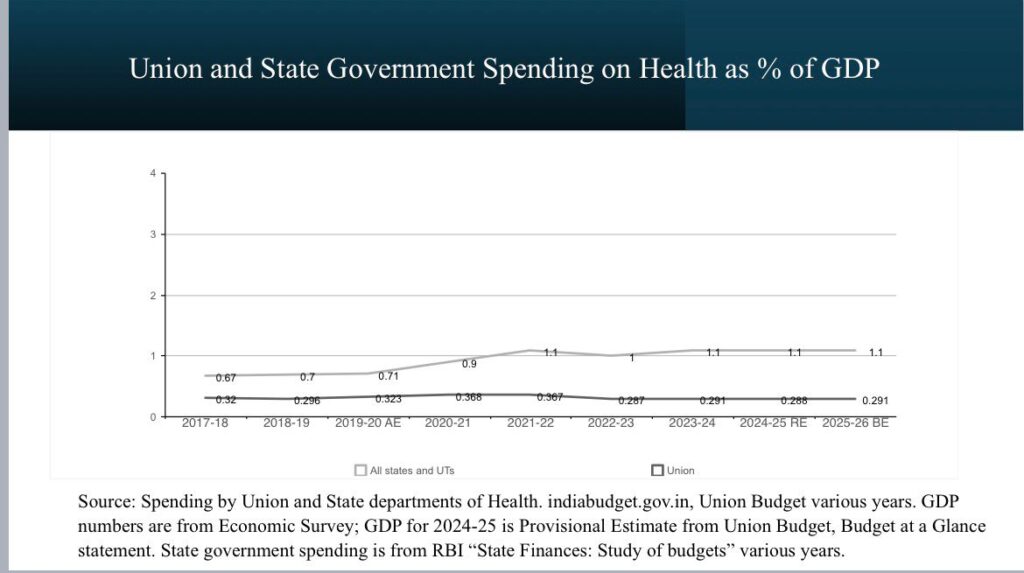
The NHP had promised public health spending of 2.5% of GDP by 2025, but current spending stands at around 1.15%, JSA said. In this context, the health rights network has released a demand letter endorsed by 350 organisations and individuals, outlining key budgetary priorities.
Key Demands
- Double Union health allocations in Budget 2026–27 from the current 0.3% of GDP to 1% of GDP within two years, in line with NHP targets.
- Increase overall public health spending to 3.5% of GDP by 2030.
- Double allocations to the National Health Mission (NHM) to strengthen public health services, Health & Wellness Centres, and ensure fair remuneration for ASHAs and contractual health workers.
- Transfer at least two-thirds of the Union Health Budget to States, which bear the majority of public health expenditure, with greater untied and flexible funding.
- Ensure that Health Cess collections supplement, not replace, core health allocations.
- Phase out PMJAY, prioritise publicly provided healthcare, and reduce reliance on insurance-based models.
- Revive central pharmaceutical and vaccine PSUs such as IDPL and Hindustan Antibiotics.
- Increase funding for research & development, strengthen public medical institutions, and regulate prices of drugs and medical devices.
Concerns Over Declining Allocations
JSA pointed out that Union government health spending has declined in real terms since COVID-19, with critical programmes such as NHM, PMSSY, nutrition and research facing cuts, even as healthcare needs have risen.
Indranil, Co-convener, JSA National Secretariat, said, “The same government that promised 2.5% of GDP for health has allowed spending to stagnate at just 1.15%. To honour the National Health Policy, Union health allocations in Budget 2026–27 must be doubled.”
Richa Chintan, Co-convener, JSA, noted that NHM allocations have declined by an average 5.5% in real terms, while policy emphasis continues to shift towards private partnerships and insurance-led models, despite evidence of their limitations.
Highlighting federal concerns, health researcher Ravi Duggal said Union transfers to States for health have fallen sharply from 75.9% in 2014–15 to 43% in 2024–25, calling it “hyper-centralisation” in a sector constitutionally led by States.
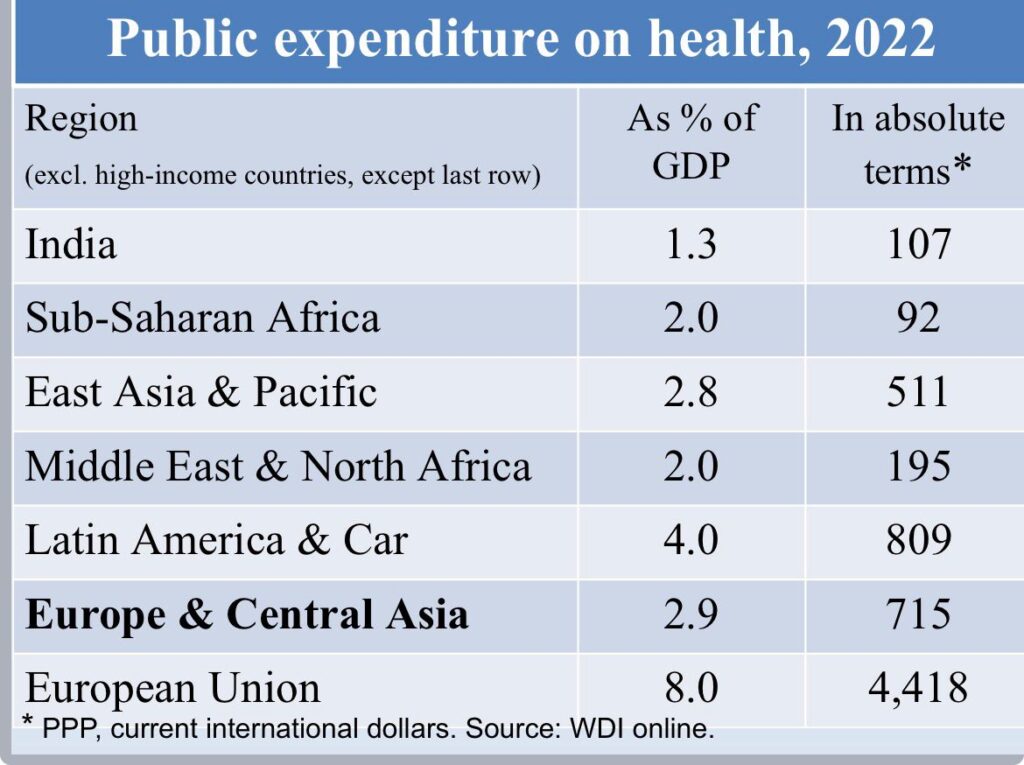
Economist Jean Drèze added that India remains among countries with the lowest public spending on healthcare, resulting in a severe deficit in public health infrastructure.
“Universal healthcare cannot be achieved without sustained public investment and a serious effort to strengthen the public health system,” he said.
JSA concluded that the Union Budget must reflect a clear policy shift towards strengthening public healthcare, protecting vulnerable communities, and preventing medical impoverishment caused by underfunded public systems.







as a professional seo expert in hamburg, i can tell your article is professionally written, i enjoy reading it, keep up the good work, do you post more often ? i am now a follower, you can take a look at my site as the best seo expert in hamburg https://seoexpertehamburg.de/ Thank you
as a professional seo expert in hamburg, i can tell your article is professionally written, i enjoy reading it, keep up the good work, do you post more often ? i am now a follower, you can take a look at my site as the best seo expert in hamburg https://seoexpertehamburg.de/ Thank you
QQ88 là nhà cái uytin 2026 , mang đến casino, thể thao, bắn cá, nổ hũ,…. Tham gia nhận 88K trải nghiệm
this is an interesting article, i enjoy reading it, keep up the good work, do you post often, i want to start following you. my site is https://webdesignfreelancermunchen.de/ it is the top webdesign freelancer platform in Germany.
this is an interesting article, i enjoy reading it, keep up the good work, do you post often, i want to start following you. my site is https://webdesignfreelancermunchen.de/ it is the top webdesign freelancer platform in Germany.
QQ88 là nhà cái cá cược trực tuyến uy tín casino top 1 Mộc bài, mang lại đến nhiều tựa game cá cược hấp dẫn như casino , bắn cá , lô đề…
asklong.ru
https://asklong.ru
Thanks for sharing excellent informations. Your web-site is very cool. I’m impressed by the details that you have on this website. It reveals how nicely you understand this subject. Bookmarked this web page, will come back for more articles. You, my friend, ROCK! I found just the information I already searched everywhere and simply couldn’t come across. What an ideal web site.
Greetings! This is my first visit to your blog! We are a collection of volunteers and starting a new initiative in a community in the same niche. Your blog provided us beneficial information to work on. You have done a outstanding job!