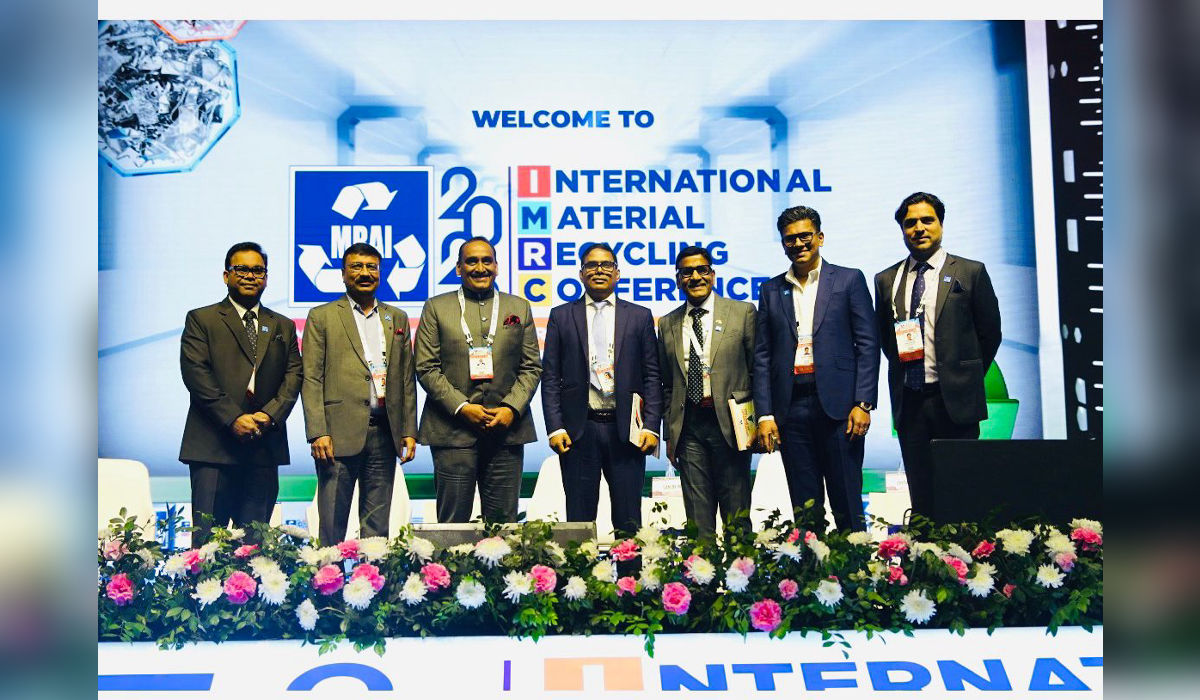
Jaipur: India’s demand for steel scrap is projected to increase significantly as the country expands its steelmaking capacity. Daya Nidhan Pandey, Joint Secretary of the Ministry of Steel, highlighted this at the inaugural session of the 13th International Material Recycling Conference & Exposition (IMRC 2026) held in Jaipur.
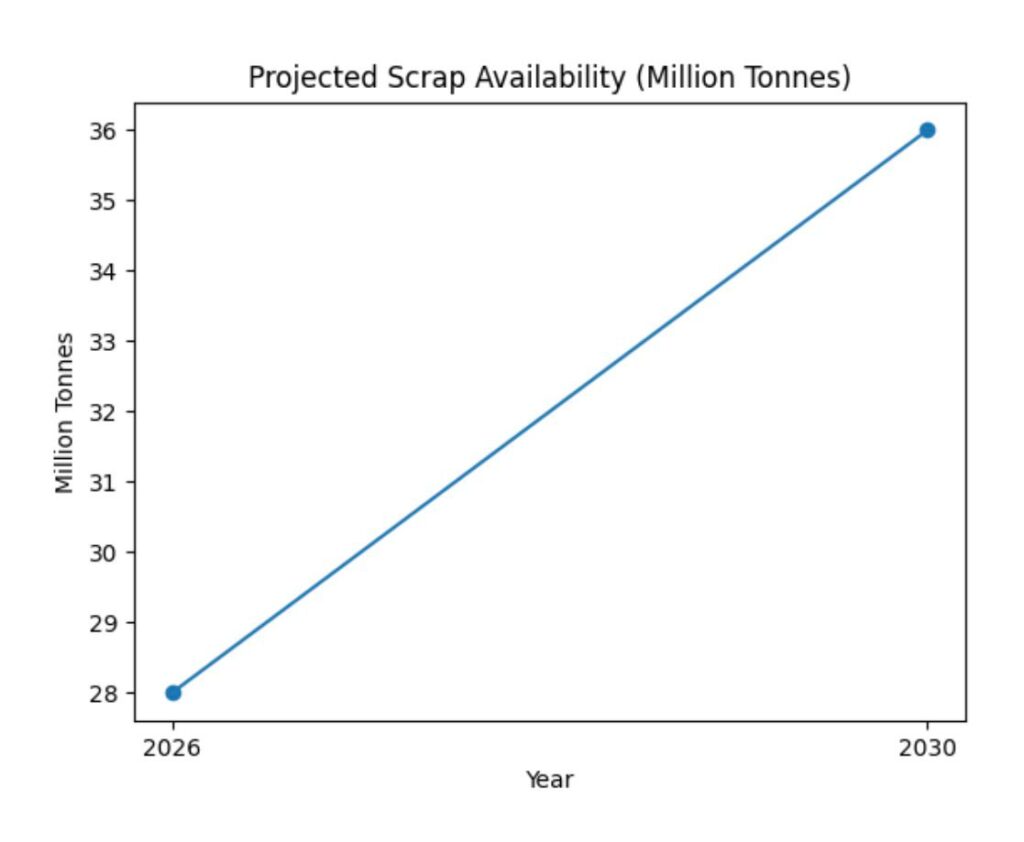
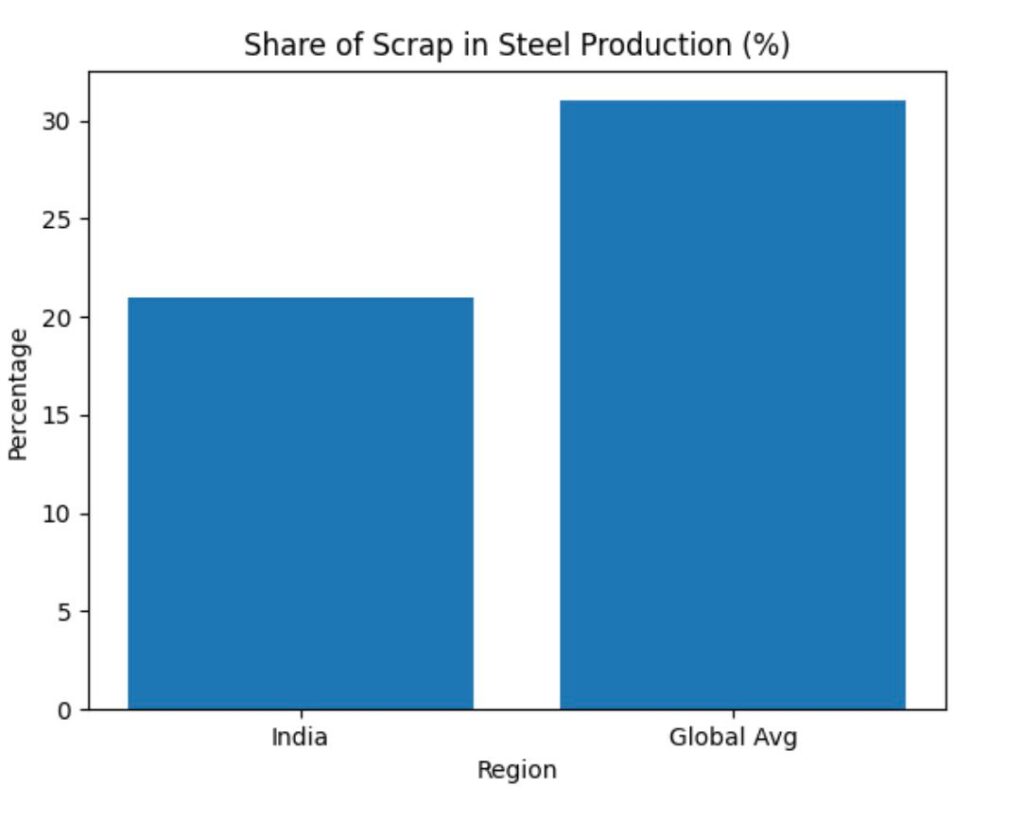
Currently, scrap metal contributes approximately 21% of India’s crude steel production, compared to a global average of nearly one-third. Availability of scrap is expected to reach 36 million tonnes, indicating a substantial increase in demand in the coming years,” Pandey stated.
He also emphasised key policy initiatives aimed at formalising the sector, which include:
– Steel Scrap Recycling Policy (2019)
– Vehicle Scrappage Policy
– Registered Vehicle Scrapping Facilities (RVSFs)
– Extended Producer Responsibility (EPR) norms for end-of-life vehicles and construction waste.
“These measures are integrating scrap management into India’s circular economy framework,” he added.
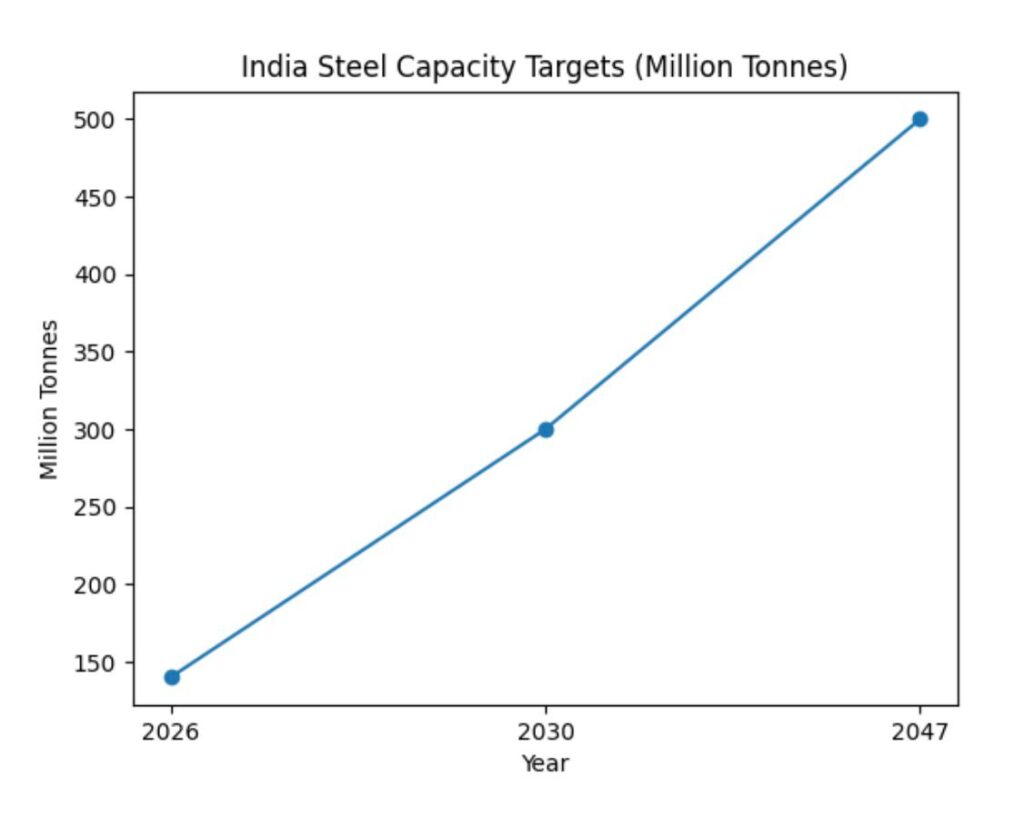
Looking ahead, Pandey mentioned that India aims to increase scrap usage in steelmaking to align with the global average of 31%. “With a target of 300 million tonnes of steel capacity by 2030 and 500 million tonnes by 2047, scrap-based steelmaking will be essential for conserving raw materials, reducing coal imports, lowering emissions, and achieving net-zero emissions by 2070,” he explained.
**MRAI Calls for GST Reduction**
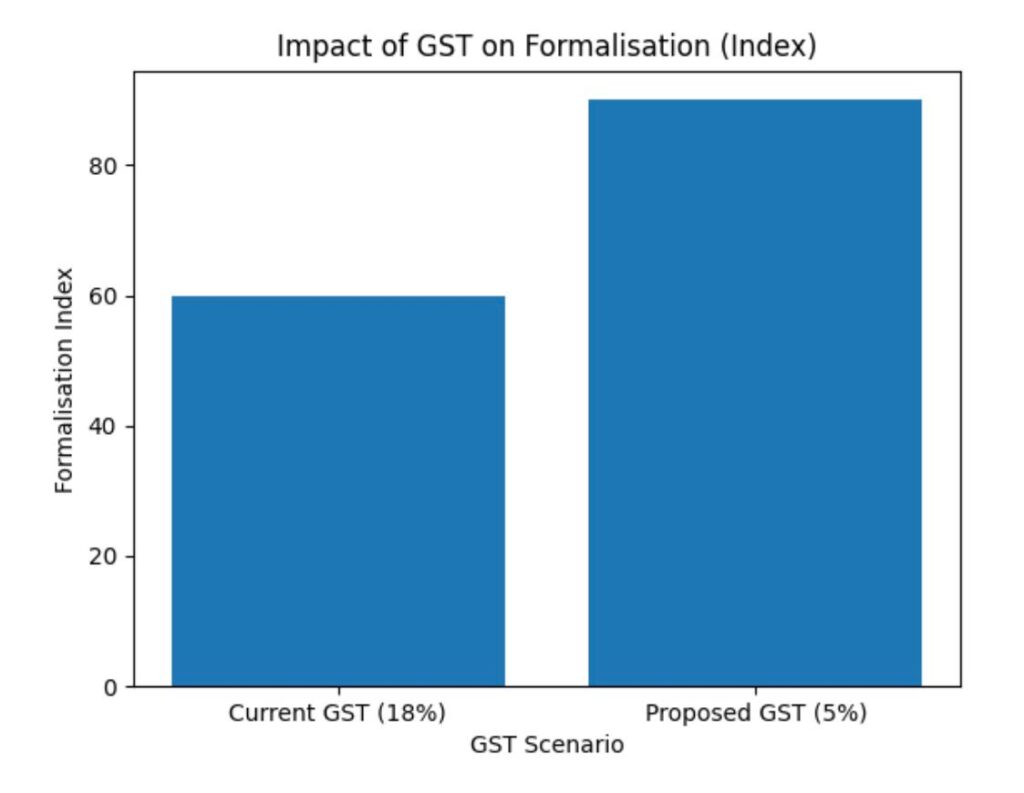
Sanjay Mehta, President of the Material Recycling Association of India (MRAI), urged the government to lower the Goods and Services Tax (GST) on scrap to 5%. He argued that high tax rates are pushing the sector into informality. He also called for the removal of import duties on aluminum scrap and stronger enforcement of EPR regulations across e-waste, tires, and plastics.
“Nearly one-third of India’s scrap is sourced from ragpickers and small workshops. Reducing GST and implementing UPI-based transactions at the initial collection point will help formalize this workforce,” Mehta asserted.
**Industry Outlook**
Dhawal Shah, Senior Vice President of MRAI, remarked that recycling has evolved from being a corporate social responsibility (CSR) initiative to becoming a core business strategy. “With over 1,400 sustainability startups, recycling could surpass mining before 2050,” he noted.
Rajat Agarwal, Managing Director of Gravita India Ltd., stated that capital is no longer a constraint. “Global Environmental, Social, and Governance (ESG) funds are supporting scalable recycling platforms. With strong governance and policy support, Indian recyclers are now competitive climate solution providers on a global scale,” he commented.
**Awards**
During the inaugural session, Lifetime Achievement Awards were presented to Jinesh Shah (Rajhans Impex), Purshottam Parolia (Nihon Ispat), and Hitesh Shah (Mono Steel India). The Global Recycler of the Year award was awarded to Anshul Gupta of PAN Gulf International.
**About IMRC 2026**
The Material Recycling Association of India (MRAI) is organizing IMRC 2026 from January 20–22 at Novotel Jaipur. The event brings together policymakers and industry leaders to discuss the role of recycling in sustainable industrial growth.