X: @anjanasasi
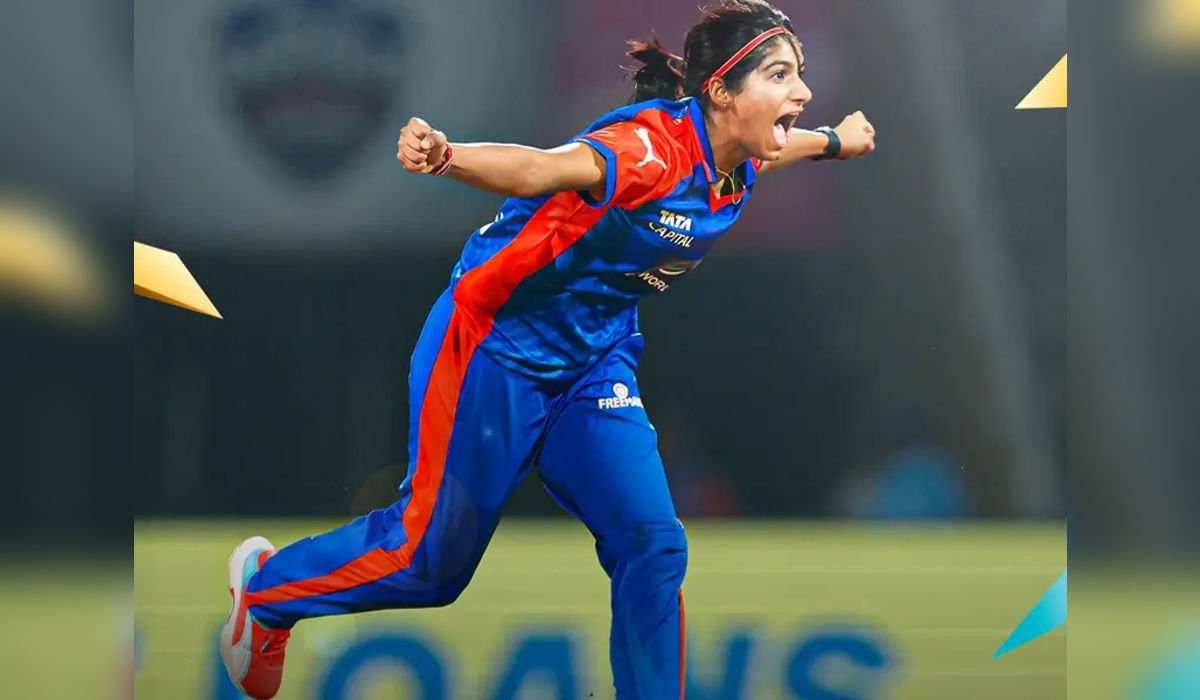
Mumbai: Some performances arrive like announcements. Others feel like poetry — measured, rhythmic, unforgettable. Nandini Sharma’s second appearance in the Women’s Premier League belonged to the latter. In the space of a few overs, she did more than win a match; she wrote herself into the league’s memory, one falling stump at a time.
Five wickets. A hat-trick.
History. She accomplished this feat in just her second WPL outing.
Before this night, the WPL had only seen sporadic displays of such individual dominance. Issy Wong (2023), Deepti Sharma (2024), and Grace Harris (2025) had previously scored hat-tricks. For the Delhi Capitals, it was a spell that irreversibly altered the evening. Nandini saw it as a moment when years of quiet labour found expression on the grandest domestic stage. She became the first uncapped player in WPL history to score a five-wicket victory, which felt both unexpected and inevitable. Nandini did more than just join that list; she reshaped it, becoming the first uncapped player in WPL history to score five times in a row, as well as the fastest.

What made the spell resonate even more deeply was its timing. Thrown the ball in the final over, with pressure tightening and expectations heavy, Nandini responded with calm precision. A hat-trick under floodlights is never accidental; it is born of clarity—knowing exactly what to bowl and believing in it. She did not rush. She did not overthink. She trusted her craft.
That craft has been patiently built. Post-lockdown, bowling against boys who read her pace easily, she realised speed alone would not suffice. So she evolved. Faster through the air, indeed—yet also more intelligent. A misleading slower ball delivered with the back of the hand. Late inswing was acquired not during elite training camps but through extensive, repetitive practice sessions with her parents and brother. Subtle changes of length. Variations disguised until the last moment.
Those tools surfaced immediately in her WPL debut, where she claimed two wickets— including her first-ever WPL scalp, Kamalini, undone by a fuller delivery that tailed in late, drawing a misjudged stroke and announcing Nandini’s arrival at the highest level. By her second match, the same skills deepened into mastery: five wickets, each dismissal a slightly different sentence in a spell written with control and intent.
Even against established names like Sophie Devine, the plan stayed uncomplicated. Bowl your best ball. Then the variation. Then return to the stock delivery. Simplicity, she would say later, was the message from the dugout— and simplicity became her sharpest weapon.
The applause that followed was not confined to the boundary ropes. Her captain, teammates, and senior players rallied around her, lifting her spirits and affirming her belief. In a small pace-bowling group, responsibility came early — and with it, trust. She speaks often of how the Delhi Capitals environment backed her without hesitation and how conversations with Marizanne Kapp sharpened her understanding of pitches and pressure. That support, she says, allowed her to breathe, to bowl freely, and to celebrate not for herself alone but for the crest she wears.
There is a gentler layer beneath the headlines. An eight-year-old who once stepped away because she wasn’t given the ball. A six-month pause filled with doubt. Then a return — quiet, determined, unyielding. The kind of return that now echoes in record books.
Messages flooded her social media following the match from senior Indian players such as Smriti Mandhana and others who acknowledged the significance of her achievement. Still, her gaze remains forward. She smiles when she speaks of the Purple Cap, not as a trophy but as a promise. She hopes to regain it. She hopes to keep it. Hope, for her, is not fragile; it is focused.
Seven wickets in two matches.
A hat-trick that froze time.
A five-for that announced arrival.
As the WPL continues to reveal India’s next generation, Nandini Sharma stands as a reminder that breakthroughs are rarely overnight stories. They are built in backyards, in family nets, in spells bowled long after the applause has faded.
From a child waiting for a chance to bowl to a young fast bowler trusted with the final over, Nandini Sharma is no longer knocking on the door. She has walked in, firmly, and the sound of stumps breaking behind her is impossible to ignore.