Delhi: The announcement of the Padma Awards for 2026 has ignited an intense political discussion, not merely over who was honoured—but why Kerala stands out so sharply in the list, just months ahead of its crucial Assembly elections.
Of the five Padma Vibhushan awards, India’s second-highest civilian honour, four names are directly linked to Kerala. This is the first time in the history of the award that a single state has so overwhelmingly dominated the top category, triggering questions about political timing and intent.
Among the Padma Vibhushan recipients are former Kerala Chief Minister V.S. Achuthanandan, honoured posthumously, along with Justice K.T. Thomas and P. Narayanan, both long associated with Kerala’s intellectual and social landscape. The fourth recipient, Dr. N. Rajam, though currently linked to Banaras Hindu University, is originally from Ernakulam, Kerala, and continues to actively run a music academy in Kochi—further strengthening the state’s presence on the elite list.
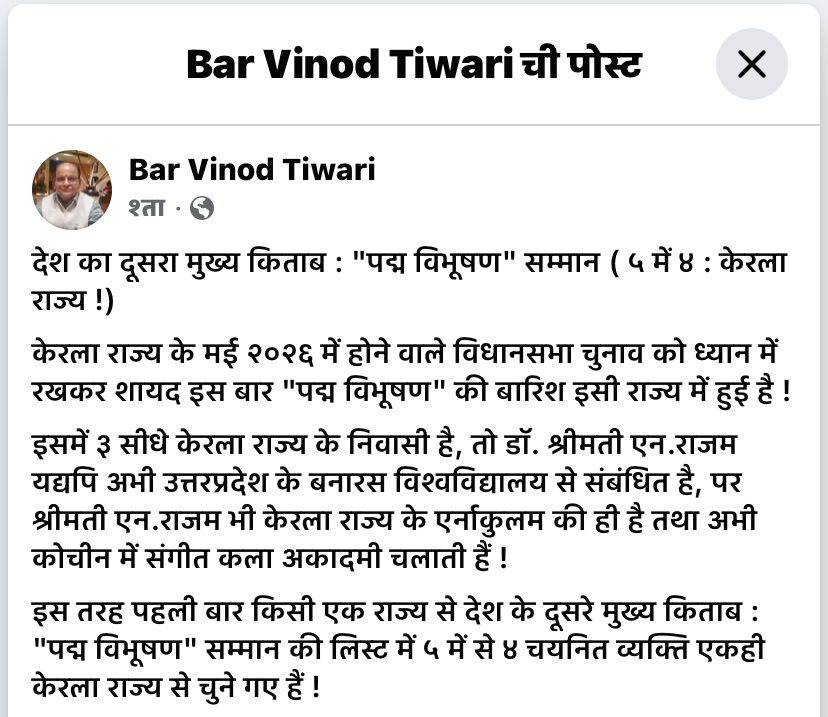
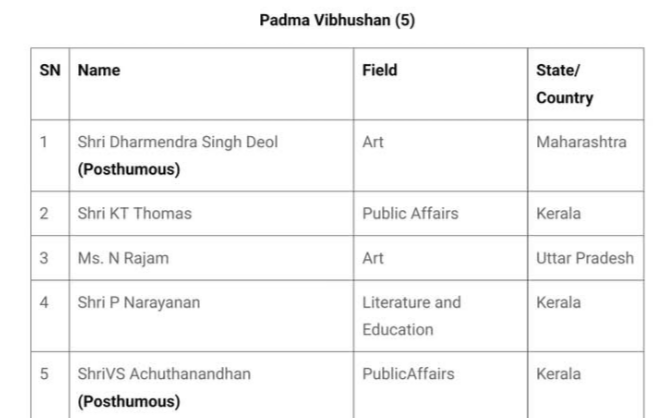
In effect, four out of five Padma Vibhushan awardees have deep roots in Kerala, an extraordinary concentration that coincides with a politically sensitive moment for the state.
The pattern does not stop there. In the Padma Bhushan category, veteran actor Mammootty and SNDP Yogam General Secretary Vellappally Natesan—both influential figures in Kerala’s social and cultural space—were also honoured. Several other Malayalis featured prominently in the Padma Shri list, including former Indian football captain I.M. Vijayan, further amplifying Kerala’s footprint across all three categories.
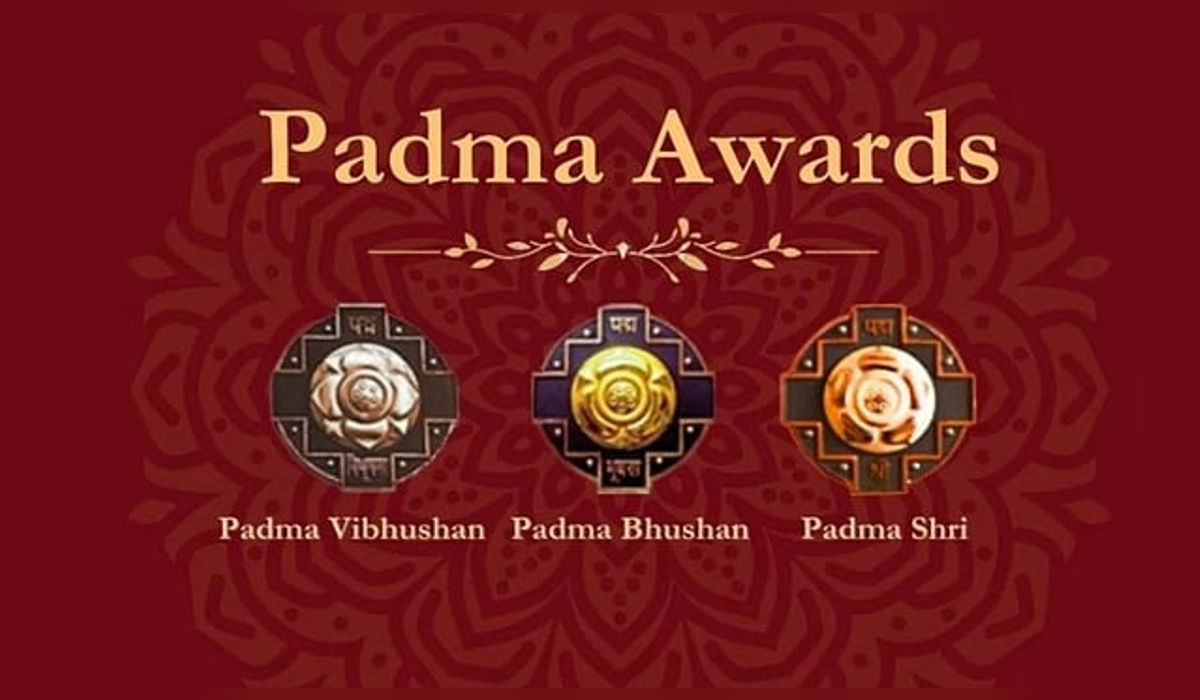
Officially, the Union government announced 131 Padma Awards for 2026, comprising 5 Padma Vibhushan, 13 Padma Bhushan, and 113 Padma Shri, emphasising merit and contribution across diverse fields. Prime Minister Narendra Modi, congratulating the awardees, said their excellence and service had enriched the nation.
Yet, the electoral backdrop has made it impossible to view the honours in isolation.
Kerala is one of the few large states where the BJP has struggled to convert cultural presence into electoral power. Analysts note that recognising towering figures associated with politics, cinema, social reform, sports, and culture—all influential domains in Kerala’s public life—could help soften resistance and create an atmosphere of goodwill ahead of the polls.
While the Padma Awards are constitutionally non-political, their timing, regional clustering, and symbolic value have pushed them into the centre of Kerala’s political discourse. Opposition voices argue that national honours, even when deserved, can function as soft political signals, especially in a state where identity, legacy, and cultural pride play a decisive role in voting behaviour.
The government, however, maintains that the awards reflect long-pending recognition and have no electoral considerations attached.
As Kerala moves closer to election mode, the Padma Awards—traditionally seen as a celebration of national excellence—have unexpectedly become part of a larger political conversation: whether recognition is coincidental, corrective, or carefully calibrated.