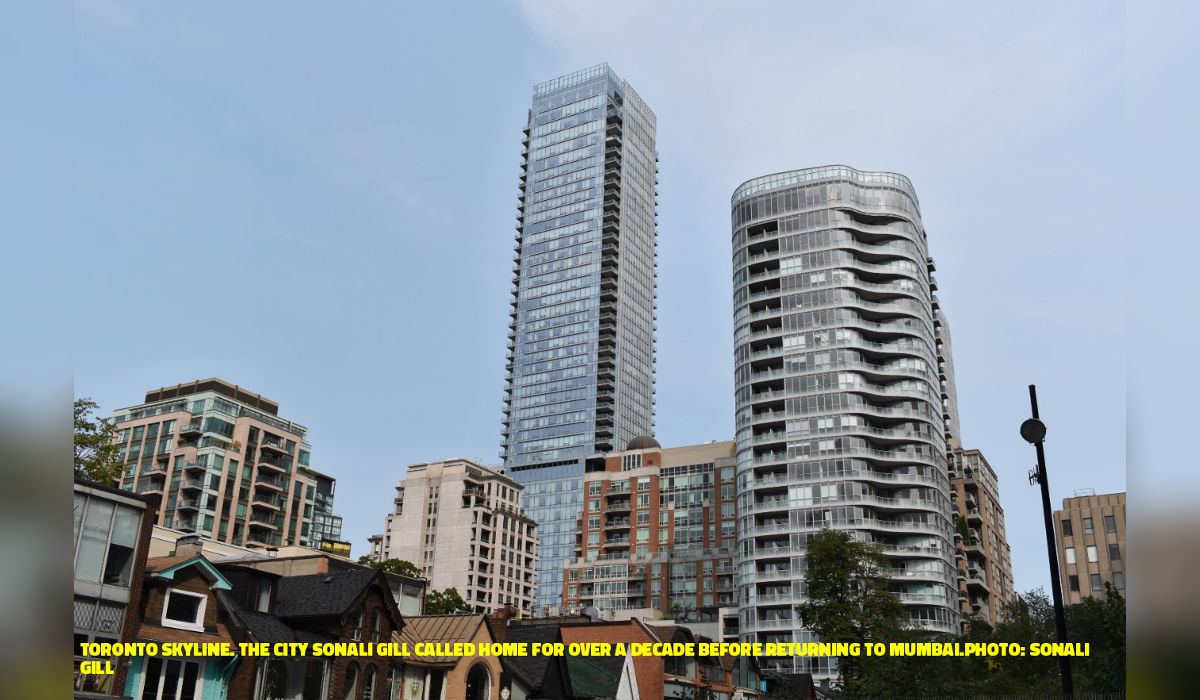
A personal essay exploring what it feels like to return to Mumbai after years abroad and discover that “home” is not always the same place you left behind.
I had lost my ability to cross these potholed, riddle-like roads, regularly populated by angry-sounding cars, SUVs, buses and tempos. I cringe slightly as I write this, because I was not always this inept. Indeed, there was once a time when I could jaywalk with ease and cross the roads fearlessly, without being overwhelmed by the blaring horns of Mumbai.
The fact was that I had not lived in this polarising city since 2018 — at least not as a full-time resident. I travelled between Mumbai and Pune during my college years, staying for brief periods in each city. The upside was that I learned a great deal about what could possibly be dubbed Maharashtra’s cultural capital, as Pune is home to a thriving Marathi-language cultural scene.
So, I expected some initial challenges vis-à-vis living in and navigating Mumbai again.
What I did not expect was how emotionally draining the move would be.
I did not cry when I left Toronto — the city I had called “home” for the past twelve years — but I did feel deeply sad. The strange thing was that the heartbreak emerged roughly a week after I had “settled into” life in Mumbai. All I wanted was to be able to “go home”, because I missed the life I had built for myself.
The pain of losing my place there — where I, perhaps wrongly, felt I truly belonged — was intense partly because the move was the consequence of events beyond my control. There was also a brief period of self-doubt. Had I been foolish to become so deeply attached to Toronto?
On reflection, I realised that it was quite natural to become attached to the place one lives in, particularly if one has found a sense of liberation and peace there. Such an attachment only becomes unhealthy if it turns into an obsession.
Some people dislike the cities they live in and simply tolerate them because of familiarity. Others develop genuine connections with their surroundings by joining local community groups or frequently visiting certain neighbourhood spaces. These “spots” can include local parks, cafés, restaurants, pubs, churches, temples, mosques, or synagogues. All such places were, for me, in Toronto — while I now found myself living in Mumbai.
Despite this, I eventually resigned myself to my circumstances and decided to make the most of them. I had lived in the City of Dreams during my childhood and early adolescence, so I was not a complete stranger. Yet it soon became clear that adjusting again would be easier said than done.
The difficulty of my situation was compounded by the fact that I sometimes struggle in extremely loud environments such as nightclubs or large concert venues. It took me a while to get used to the relentless noise of the city again — a stark contrast to the quieter, more orderly North American city I had left behind. I am somewhat embarrassed to admit that I even bought earplugs in preparation for the boisterous celebrations of Holi, Ganesh Chaturthi and Diwali.
Luckily for me, some of the other challenges were easier to manage.
The famous Bombay taxis were less reliable and efficient than I remembered, but they were still there. The drivers had grown crankier — perhaps understandably, given the near-decimation of their livelihoods by platforms such as Uber, Ola and Rapido — but they too were still there.
I even encountered a few familiar faces from my childhood, including a woman who had once worked at the neighbourhood kirana store. She recognised me when I visited, though I sadly did not recognise her at first.
Some of these well-meaning people welcomed me “home”.
But Mumbai did not quite feel like home.
Everything else felt overwhelming, including the scale and speed of the city’s new infrastructure. The monorail in Sewree, I was told, existed but was rarely used. The metro, however, appeared to be a universal success.
“Everyone” seemed to be using UPI payments, which made me feel slightly like a technological relic, since I was still accustomed to dealing with cash. Most Mumbaikars had apparently become enthusiastic ambassadors of our new cashless era.
Then there were the new roads — especially the one that seemed to dip beneath the sea near Marine Drive. The sheer scale and speed of the project was astonishing. Unlike many others, I felt nervous the first time I travelled on it, partly because I was unsure what — or who — awaited me on the other side.
A newly revamped Worli Sea Face greeted me, offering an up-close view of the Haji Ali dargah. Nearby landmarks like Darya Mahal also appeared transformed.
I was both stupefied and overwhelmed.
This was not the city I had left behind.
In one moment of absent-mindedness, I even forgot to use the Aquaguard and drank water directly from the tap — something that would once have been second nature but now felt oddly reckless. The smog did not defeat me entirely, though it did leave me with a brief cough and a mild fever.
I also realised that I had far less patience than before for moody Uber drivers and the constant background noise of the city.
It amazed me to remember that none of this had bothered me once upon a time — that I had once breezed through this polluted, overburdened, creaking-but-glittering city without a second thought.
How could it still be “home” when I barely recognised it?
Soon after, I travelled to Pune.
Predictably, I was overwhelmed again.
Unlike Mumbai — which I still occasionally call “Bombay”, with sincere apologies to the Shiv Sena — Pune had not changed quite as dramatically. There was a new metro line, of course, but familiar roads like Ganeshkhind Road and Senapati Bapat Marg looked reassuringly similar.
The city’s infamous two-wheelers still zipped through traffic in what often felt like borderline suicidal fashion.
And I still felt like a fish out of water.
After a short stay that gradually felt less overwhelming, I returned to Mumbai — oddly relieved to be back in a city where the traffic was only moderately chaotic and the bikers seemed marginally less reckless.
Perhaps the notion of “home” and “roots” is more subjective than we imagine, because I slowly found myself feeling more at ease in Mumbai.
Yet the quiet ache of wanting to “return home” to Toronto refused to fade.
Like many disruptions in life, this upheaval led to a period of painful but meaningful personal growth.
I found myself both brooding and reflective.
Over time, I came to accept that Toronto had simply been “home for a while”. Perhaps that is true for everyone. We all move through different homes over the course of our lives — childhood homes, student homes, shared apartments, marital homes, and sometimes the first house we buy.
These transitions are natural, even inevitable.
But they are never identical.
No two house moves feel the same, just as no two people experience the idea of “home” in the same way.
I have come to believe that the idea of home is, in many ways, a social and psychological construct — one that evolves over time. It is deeply subjective.
Some people, such as so-called “third culture kids”, struggle to feel fully rooted anywhere. Others move comfortably across cultures and accumulate multiple homes.
Perhaps the most important thing is to remain anchored within oneself — particularly when the pieces of one’s life are constantly shifting.
Unemployment, marriage, divorce, illness, death — these events reshape our lives with startling speed.
And in an age defined by artificial intelligence, rapid digitisation, and the erosion of traditional social networks, those shifts seem to occur faster than ever before.
Perhaps home, in the end, is less a fixed place than a moment in time — a place we inhabit for a while, before life moves us onward again.
- Mumbai life changes
- personal essay home
- belonging and identity