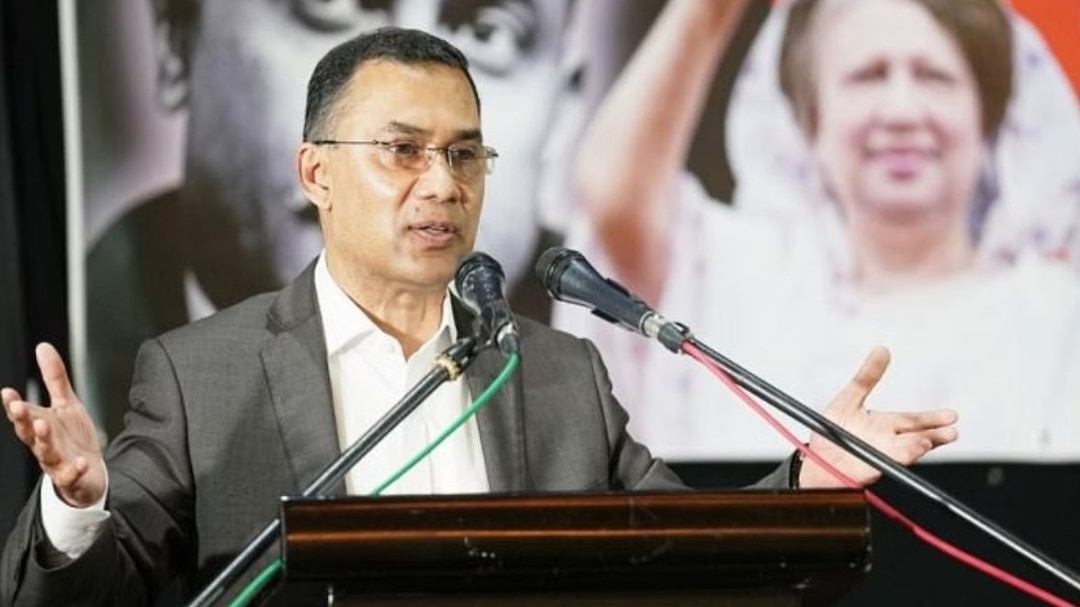
New Delhi: On February 17, Bangladesh will turn a constitutional page. Tarique Rahman will be sworn in as Prime Minister along with his Union Cabinet, following the Bangladesh Nationalist Party’s (BNP) decisive victory in the 13th parliamentary elections. Invitations to South Asian leaders underscore the regional importance of the moment—but the deeper story lies not in ceremony, but in consequence.
For many observers, the election result appeared dramatic: the end of Sheikh Hasina’s long rule and the return of a leader long absent from Bangladeshi politics. Yet the voters’ message was more measured than revolutionary. This was not an ideological swing; it was a rejection of extremes. Authoritarian governance on one side and religious hard-line politics on the other both failed to convince an electorate shaped by the July 2024 protests.
Also Read: Bangladesh After the Ballot: A New Prime Minister, a New Cabinet, and India’s Strategic Test
The student-led movement that forced elections succeeded in mobilisation but faltered in institution-building. New youth parties struggled to scale nationally, and alliances with Jamaat-e-Islami unsettled precisely the young, female, and minority voters who had driven the uprising. Faced with limited options, voters chose the BNP as a stabilising force rather than a transformative one.
This context explains New Delhi’s response.
Prime Minister Narendra Modi’s message congratulating Bangladesh’s incoming leadership was restrained and institutional. There was no personal praise, no ideological language, and no reference to the past. The signal was clear: India is prepared to work with an elected government, not to arbitrate Bangladesh’s internal politics.
For Indian readers, what does the February 17 oath-taking change in practical terms?
Not as much as headlines suggest. Borders will not suddenly harden. Trade routes will remain open. Energy cooperation will continue. Rivers will still demand negotiation. India and Bangladesh are bound by geography, commerce, and infrastructure in ways that outlast electoral cycles. Rhetoric may sharpen and diplomacy may slow, but structural ties endure.
What will change is tone. The Hasina era rested heavily on personal trust with New Delhi. The BNP era will be more procedural, more cautious, and more domestically constrained. This is not necessarily a disadvantage. Institutional diplomacy reduces over-dependence on personalities and lowers the political cost of disagreement.
There is also a wider strategic canvas. China continues to deepen its footprint through infrastructure and defence cooperation. The United States has stepped in with trade incentives to stabilise Bangladesh’s export sector. Dhaka will seek to balance these relationships while preserving autonomy—an approach that aligns more with hedging than alignment.
Also Read: Bangladesh-India Relations in 2025: Shifting Political and Economic Equations
The oath-taking on February 17 thus represents a shift from protest to policy, from transition to governance. For India, the task is to engage calmly, avoid personalisation, and allow institutions to do the work that personalities once did.
Bangladesh’s government has changed. Its geography has not. And in South Asia, that distinction matters more than any oath.