New Delhi: A major political and social controversy has erupted over the University Grants Commission’s (UGC) recently revised regulations aimed at addressing caste-based discrimination in higher education. The rules, officially titled Promotion of Equity in Higher Education Institutions Regulations, 2026, were notified on January 13, 2026, and have sparked nationwide protests, particularly among upper-caste students who claim the guidelines are exclusionary.
Under the new regulations, colleges and universities are required to establish special committees, helplines, and monitoring teams to handle complaints, primarily for SC, ST, and OBC students. While the UGC maintains the rules are meant to prevent discrimination, many students from general categories argue that the framework could marginalize them and expose them to derogatory treatment.
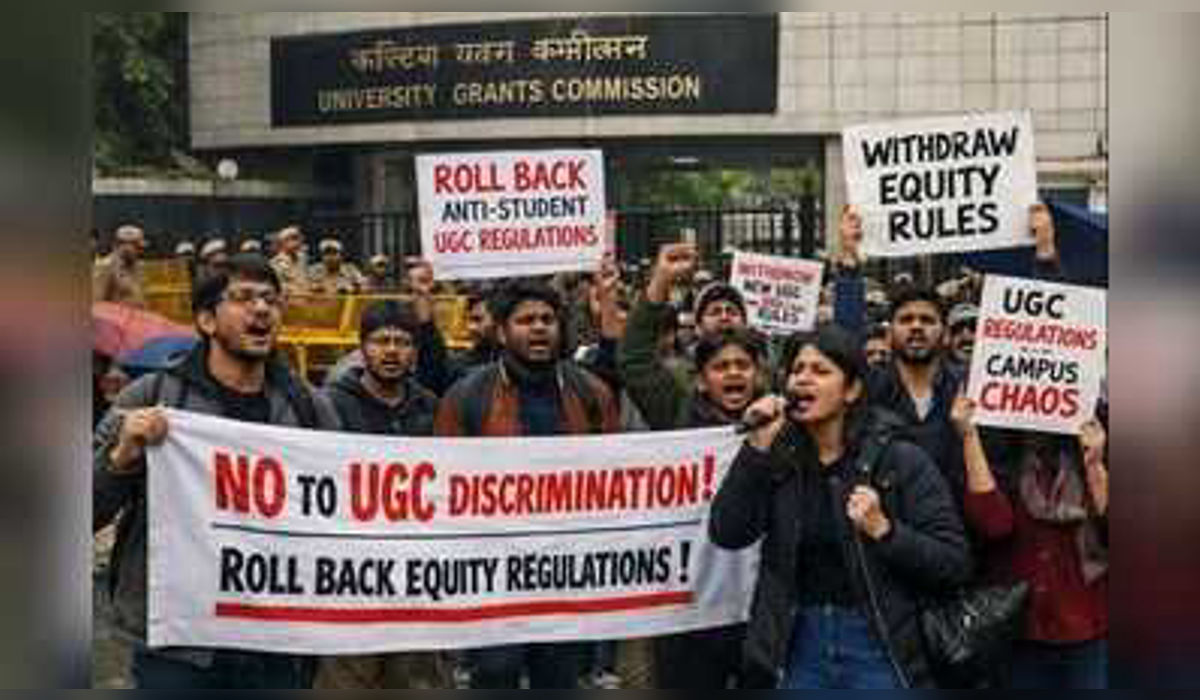
Protests erupted outside the UGC headquarters in Delhi this week, with student leaders demanding a rollback. Organizers called for unity across communities under slogans like “No to UGC Discrimination” and urged students to participate in large numbers.
Adding to the controversy, a Supreme Court plea filed by Vineet Jindal challenged the regulations, claiming that the UGC’s definition of caste-based discrimination is non-inclusive and ignores upper-caste students and faculty who may also face harassment. The plea asserts that Regulation 3(c) fails to provide institutional protection to all individuals affected by caste-based abuse.
The backlash has extended beyond students. Suspended Bareilly City Magistrate Alankar Agnihotri protested outside the District Collectorate, accusing officials of personal targeting and harassment due to his caste. Agnihotri demanded accountability from senior administrators and controversially suggested that President’s rule be imposed to restore constitutional processes, alleging widespread bias against general-category citizens.
Political leaders and public figures have also weighed in. Poet Kumar Vishwas posted a poem on X (formerly Twitter), quoting the late Ramesh Ranjan to criticize the regulations, along with the hashtag #UGC_RollBack. Conversely, left-wing student organizations, including AISA, have welcomed the guidelines, calling them a major victory for marginalized communities.
In a dramatic political fallout, Shyam Sundar Tripathi, Vice President of the BJP Kisan Morcha in Rae Bareli, resigned in protest. In his resignation letter to Prime Minister Narendra Modi, Tripathi condemned the new UGC regulations, describing them as “black laws” that threaten social harmony and undermine self-respect.
The controversy over the UGC’s caste-based reforms continues to divide opinion across India, raising questions about equity, fairness, and constitutional protection in educational institutions. Legal challenges, public protests, and political resignations signal that the debate is far from over.