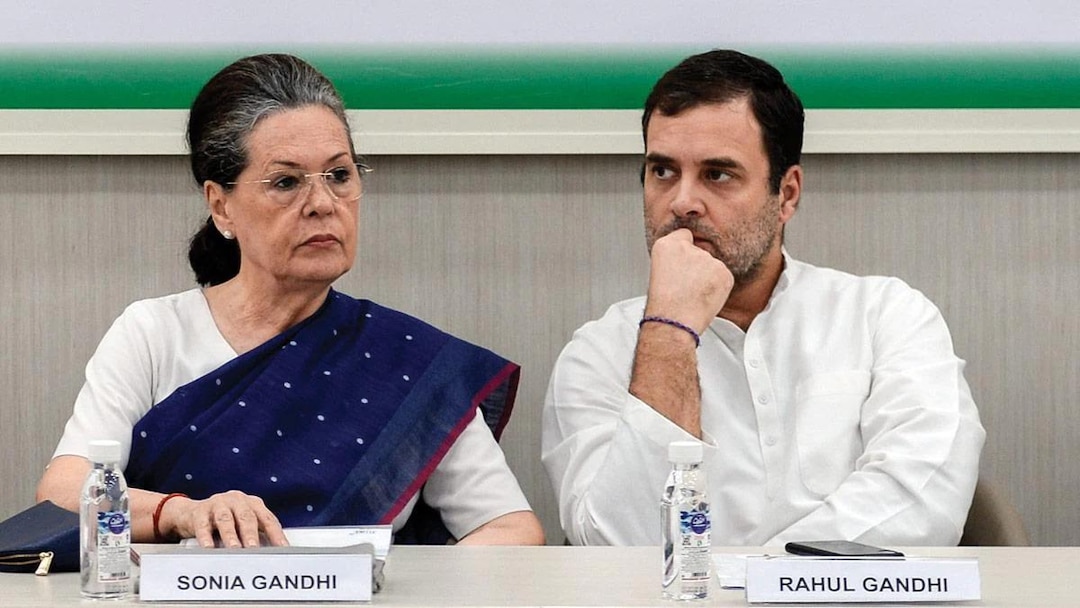
The pathetic performance of the Congress in the Bihar assembly elections has eroded the party’s credentials as the vanguard of the national opposition. The drubbing has also served as a wake-up call to the leadership, signalling that the road ahead will be tough with another set of assembly polls approaching.
Analysts who examined the Bihar outcome have pointed out that the Congress miserably failed to deliver its share of votes to the Mahagathbandhan led by the RJD. This shows the party’s support base has shrunk significantly among the social groups where it was once believed to have enough appeal to provide critical backing to the coalition.
The immediate fallout of the verdict is that the I.N.D.I.A bloc led by the Congress has become virtually non-existent.
The rout in Bihar has further weakened the party high command’s ability to act decisively, as evident from the turmoil in Karnataka.
Despite Rahul Gandhi himself leading a high-voltage campaign in the initial rounds under the ‘vote adhikar’ banner, the party had to contend with a poor tally of 6 seats out of the 64 it contested.
Expectedly, some isolated voices within the party have called for a thorough introspection to identify what went wrong and the urgent steps needed to course-correct.
Over the decades, the Congress has won and lost elections. What makes the current scenario bleak, however, is that the party is proving to be a consistent loser.
Dynastic stranglehold
The Congress has reached a stage where it is unable to disentangle itself from the dynastic stranglehold.
The ultimate power rests with the first family. Even though Rahul Gandhi straddles the political landscape as a tireless crusader for democracy and inclusivity, his own party fails to qualify as an exemplar of practicing what it preaches.
The family’s grip on the Congress is so firm that the party would splinter if the legatees voluntarily abdicated leadership. This makes a compelling case for the dynasty remaining the nucleus, even if the party opts for structural reforms — a reality that limits the scope for meaningful change.
Also Read: Kochi–Muziris Biennale to Turn Kerala’s Port City into an Inclusive Culture Space
No silver bullet
There is no silver bullet that can revive a political party’s fortunes in a highly competitive electoral ecosystem.
In a multi-party democracy, politics is constantly evolving, and parties that fail to adapt to changing circumstances stand to lose.
Since 2014, Congress has steadily proved to be a mismatch to its main rival, the BJP.
There was a time when it was believed that the BJP’s occasional victories might be short-lived, as its core constituency was restricted to the Hindu upper class. But over the past decade, the saffron party has substantially expanded its social base, now commanding support across almost all sections of the Hindu fold and beyond the traditional Hindi heartland.
Overcoming the limitations of its identitarian moorings, the BJP has risen to national dominance through hard work, micro-management, and a hub-and-spoke organisational model with strong command-and-control at the top.
The ascent of Narendra Modi — a leader with deep national appeal — has also played a critical role in converting organisational strength into electoral gains.
In stark contrast, the Congress has stagnated, reacting rather than acting.
The outcome of the 2024 Lok Sabha elections offered the Congress a significant opportunity to build on its gains. However, the subsequent state elections showed that the party had already exhausted much of the momentum from the general elections. Even after defeats in Haryana and Maharashtra, it chose to pin its hopes on issues like ‘vote chori’ and system manipulation — assuming they would trigger nationwide upheaval.
Ideology as a burden
For decades after independence, the Congress dominated Indian politics without being bound by a rigid ideological framework.
It was known for its inclusive appeal across social and economic groups.
From time to time, the party shifted from left-of-centre economics to liberal reform.
Lately, however, it has adopted a vintage socialist and social justice arc championed by Rahul Gandhi — a space already occupied by regional parties in many states. This shift has yielded little electoral benefit, calling for a reconfiguration of its policy messaging.
While maintaining inclusivity, the party must also acknowledge the vitality of private capital driving India’s economic surge.
Immediate tasks ahead
Assembly elections in Assam and Kerala are the immediate challenges. A loss in both states will further diminish the party’s national standing.
In Kerala, where polls are due in April–May 2026, the ruling LDF has already activated its electoral machinery for a hat-trick bid.
The Congress-led UDF, however, is yet to pick up speed. Civic polls next month will offer early clues about the direction the state is headed.
The big challenge
The party’s toughest battles lie in Madhya Pradesh, Rajasthan, Chhattisgarh, and Himachal Pradesh — its traditional battlegrounds against the BJP.
Elections in three of these states fall a year before the next parliamentary polls. Failure to wrest these BJP-ruled states could severely dent the party’s morale nationwide.
Is a Congress-mukt Bharat on the cards?
It would be simplistic to assume India is headed for a Congress-mukt polity.
The Congress remains the only national party besides the BJP.
But it must work hard to regain lost ground. Bursting damp squibs masquerading as powerful bombs will not help. The party needs hard work, organisational democracy, and focused policy initiatives.
There is also a telling shortage of state-level leaders with mass appeal. Many Pradesh Congress Committees are led by individuals with little grassroots connection, often more invested in personal ambitions than organisational revival.
The party must also revive its dormant feeder units — the Youth Congress and NSUI — to rebuild its organisational depth.
Meanwhile, regional parties — mostly family-run political MSMEs — have benefited immensely from the Congress’s decline across states. Any further shrinkage in Congress’s footprint will only strengthen them, with ominous long-term implications for India’s political landscape and national goals.