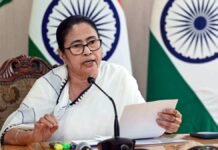
Pahalgam: In a bold and symbolic move aimed at conveying resilience, Jammu and Kashmir Chief Minister Omar Abdullah convened a special cabinet meeting in Pahalgam on Tuesday — the same scenic town that was recently rocked by a deadly terror attack.
Held at the Pahalgam Club, the meeting was not merely administrative. It was a powerful statement that the state government remains undeterred by violence. “Chaired a Cabinet Meeting at Pahalgam today. It was not just a routine administrative exercise, but a clear message – we are not intimidated by cowardly acts of terror,” the chief minister’s office posted on X (formerly Twitter), sharing images of the gathering.
Addressing a press conference after the meeting, Abdullah underlined the administration’s commitment to reviving tourism in the Union Territory despite heightened security concerns and the fallout from the India-Pakistan conflict. “We want the world to recognise tourism in Jammu and Kashmir as a key economic activity. While we must proceed with caution, we are determined to restart tourism in the valley. The past few weeks have been difficult for the country, but Jammu and Kashmir has suffered the most. Our government will determine the necessary steps to move forward, and I believe the Centre will support us,” he said.
In a strong message to adversaries, the Chief Minister’s Office posted, “The enemies of peace will never dictate our resolve. Jammu and Kashmir stands firm, strong, and unafraid.”
The decision to hold a cabinet meeting outside the twin capitals of Srinagar and Jammu — a first for Abdullah’s current term — was widely seen as an expression of solidarity with the people of Pahalgam, who are still reeling from the April 22 terror attack that claimed 26 lives, most of them tourists. Officials noted that the location itself was a message to anti-national elements: governance and democracy will continue, undeterred by fear or violence.
During his earlier term from 2009 to 2014, Abdullah had held similar cabinet meetings in remote and sensitive regions including Gurez, Machil, Tangdhar, Rajouri, and Poonch — areas known for both strategic importance and vulnerability to insurgent activity.
The special cabinet session in Pahalgam came shortly after Abdullah proposed a two-pronged strategy to revive the region’s tourism sector during the NITI Aayog Governing Council meeting chaired by Prime Minister Narendra Modi. At that meeting, Abdullah urged the Centre to instruct public sector undertakings to organise meetings and conferences in Kashmir and called for parliamentary committee meetings to be held in the valley as well.
He believes such initiatives will help reduce fear, restore confidence, and ultimately lead to the revival of tourism, bringing much-needed economic stability and a return to normalcy for the people of Jammu and Kashmir.