X: @the_news_21
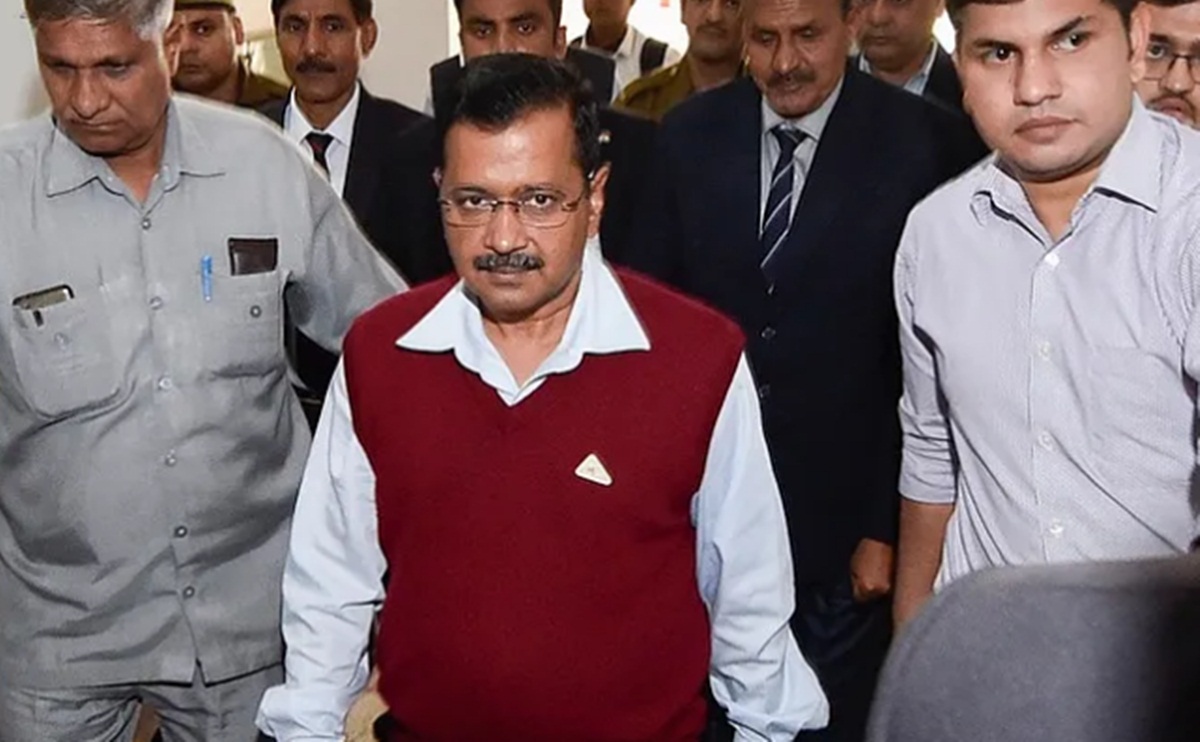
Delhi’s political landscape witnessed another chapter in the ongoing legal saga involving Chief Minister Arvind Kejriwal, who appeared before the Rouse Avenue court via video-conferencing. This appearance comes in response to several summons issued by the Enforcement Directorate (ED), alleging non-compliance related to the excise policy case probe.
Kejriwal’s advocate had petitioned for exemption from physical appearance, citing prior commitments, including discussions on a confidence motion in the Assembly and the ongoing budget session. The court granted this exemption for Saturday, facilitating Kejriwal’s virtual presence.
During the proceedings, Kejriwal reiterated his inability to physically attend the court session due to his official duties. The court subsequently rescheduled his physical appearance for March 16, underscoring the legal gravity of the matter.
The ED’s complaint against Kejriwal underscores the agency’s assertion that his repeated failure to comply with summons demonstrates a deliberate disregard for legal obligations. This stance aligns with the agency’s assertion that such behavior from a public figure could set a detrimental precedent for the general populace.
The court, in its previous summons, had highlighted Kejriwal’s legal obligation to adhere to the ED’s directives. Moreover, the invocation of Section 174 of the IPC, pertaining to non-attendance in obedience to orders from public servants, underscores the legal framework guiding the case.
The ED’s persistence in pursuing legal action against Kejriwal is evident from its filing of a fresh complaint on February 3. This underscores the agency’s commitment to upholding legal integrity irrespective of political affiliations.
In response to the ED’s actions, Kejriwal has vehemently criticized the summonses as “illegal and politically motivated.” He alleges that these legal maneuvers aim to disrupt his political engagements, particularly during election campaigns.
The unfolding legal proceedings not only highlight the complexities of governance and law but also underscore the intersection of politics and judiciary in India’s democratic fabric. As the case progresses, it remains to be seen how the legal system navigates the intricacies of this high-profile matter and its implications for both governance and political discourse in Delhi.
Also Read: RBI’s Decision Sparks FASTag Frenzy: What You Need to Know