Youth culture, Gen Z lifestyle narratives, social media behaviour, digital media
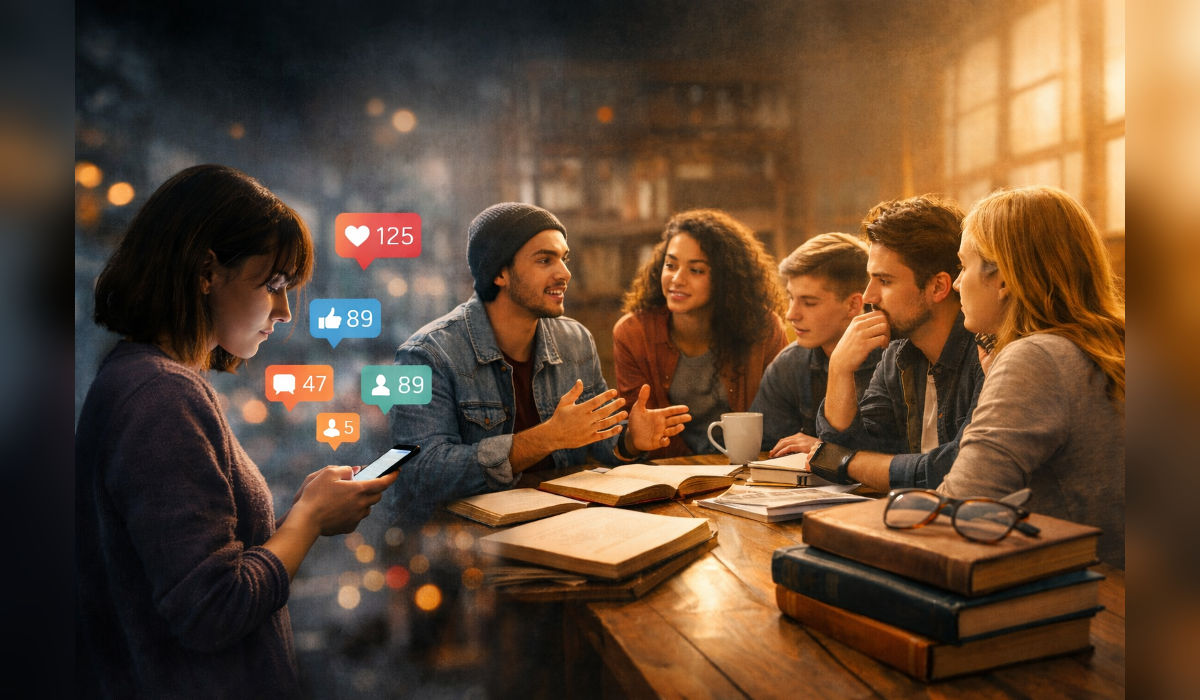
In 2025, young people did not reinvent the internet. They withdrew from its centre.
The change did not arrive with a launch or a language reset. There was no new platform, no coined aesthetic to circulate on mood boards. Instead, Gen Z quietly altered how it occupied familiar spaces. Posting slowed. Explanation thinned. The feed, once a place for immediacy and performance, became selective—sometimes retrospective. Where earlier years rewarded speed and disclosure, 2025 rewarded distance.
Across platforms, visibility no longer meant constant presence. It meant choosing when to appear.
On Instagram, this restraint showed up as intentional scarcity. Writers, photographers and stylists posted less often, but with a sharper sense of composition. Paris-based writer and organiser Lola Olufemi shared fragments rather than statements, blurred photos of desks, marginalia from books, a line of text without context. London photographer Gabriel Moses posted images that resisted narrative altogether: empty streets, studio corners, bodies cropped out of frame. Similar shifts appeared globally. In New York, creators like Grace Wales Bonner blurred the line between fashion, archive and personal reflection, while in Tokyo, young photographers circulated low-resolution street images that looked closer to private notes than public work.
Younger users mirrored this economy. Platform transparency reports across Europe and North America in 2024–25 consistently showed a decline in posting frequency among users aged 18–24, even as total time spent on apps remained stable. People were still watching. They were simply speaking less.
TikTok—long defined by punchlines, speed and payoff—changed tone rather than format. Static or near-silent videos travelled further than heavily edited ones. Creators built audiences by doing very little: cooking without music, sitting on public transport, lying on the floor after work. Longer videos—three minutes and above—saw disproportionate growth among Gen Z, particularly under tags such as “no edit,” “real time,” or “nothing happens.”
India, despite TikTok’s ban, reflected parallel shifts on Instagram Reels and YouTube Shorts. Young creators documented daily life with minimal narration: night shifts ending, local train commutes, meals eaten alone. Delhi- and Mumbai-based accounts circulated clips of working days collapsing into silence, no voiceover, no moral. Lifestyle YouTubers who once relied on productivity arcs increasingly posted “reset-less” vlogs: days that ended exactly where they began. The appeal was not aspiration but recognition.
Structurally, this withdrawal made sense. Media regulators across markets—from Ofcom in the UK to Pew Research Center in the US—have noted a steady decline in daily use of public-facing social platforms among 18–24-year-olds, alongside a sharp rise in private messaging. WhatsApp, Telegram, Discord and Instagram DMs became primary sites of emotional exchange. The public feed shifted toward observation rather than confession. What appeared there often felt processed, something that had already happened, already been felt.
Aesthetics followed behaviour. High-gloss visuals lost cultural currency. Young users deliberately downgraded tools: older iPhones, compact cameras, scanned prints. Tumblr, long assumed dormant, saw renewed uptake among under-25s in multiple regions, functioning as an archive for images that refused optimisation, messy bedrooms, ticket stubs, handwriting photographed at night. These posts did not seek engagement. Their pleasure lay in scale and intimacy.
Economic reality sharpened this turn inward. Across the UK, Europe, India and the US, young adults faced the same pressures: insecure work, rising rents, delayed independence. Labour data throughout 2024–25 showed a growing share of under-30s employed on short-term or informal contracts, while housing costs continued to outpace wages. These conditions shaped content more decisively than any platform trend. Linear life narratives—promotion, relocation, glow-up—felt dishonest.
So young people stopped performing them.
Instead of announcements, they shared endings: quitting jobs, moving back home, shrinking routines. “What I actually do in a week” became a genre defined by repetition. One widely circulated clip showed a retail night-shift worker sitting silently on her bed after clocking out. No soundtrack. No lesson. Millions watched because it was exact.
Rest appeared too, stripped of aspiration. There were no routines to emulate, no wellness checklists. Content showed lying on floors, walking without destinations, cancelling plans. Survey data across multiple markets suggested a growing scepticism among Gen Z toward the wellness and self-optimisation industry. Self-care language felt overexposed, transactional. Time—unbranded and unproductive—became the new marker of value.
Fashion culture absorbed the same logic. Resale platforms reported rising searches among Gen Z for items rather than outfits: work jackets, worn leather, shoes with visible age. Repetition became a signal of taste. Wearing the same coat for months suggested commitment, not stagnation. Hauls, once central to creator economies, began to read as gauche, too loud for the moment.
Music culture fragmented further. Streaming data in 2025 showed no single artist commanding Gen Z attention at scale. Instead, listening clustered around scenes and geographies. South London jazz nights, Manila indie collectives, Bangalore electronic parties hosted in borrowed spaces. Going out still mattered, but documentation softened. Photos arrived late, often untagged. Captions described the walk home, not the room.
What linked these shifts was a recalibration of scale and authority. Young voices in 2025 avoided certainty. They edited themselves mid-post. They deleted without explanation. Credibility came from proximity: this happened today; this is what it felt like; I’m not finished thinking about it.
The year did not produce a defining slogan or look. It produced a new relationship to exposure. After a decade of oversharing by default, Gen Z learned the power of withholding. The culture of 2025 lived there, in pauses, delays, and the deliberate decision to leave parts of life undocumented.